

Why did a casino ask for bank statements in the UK?
TL;DR:
- UK-licensed casinos are required by law to conduct financial and identity checks, including bank statements, to verify funds and assess gambling affordability. Players are only asked to provide relevant information, such as their name, address, and source of income, which they can redact from unrelated transactions, but over-redaction may cause delays. Refusing to submit requested documents can lead to account restrictions or closure, and players should respond promptly and transparently to ensure smooth verification processes.
You log in to your favourite online casino, request a withdrawal, and get a message asking you to upload a bank statement. It feels intrusive, possibly suspicious, and you are left wondering whether something is wrong with your account. If you have asked yourself why did a casino ask for bank statement UK players must provide, you are not alone. The request is becoming far more common across UK-licensed platforms, and the reasons behind it are grounded in law rather than suspicion. This article explains everything clearly.
Table of Contents
- Key takeaways
- Why did a casino ask for bank statement UK regulations demand?
- What triggers a casino bank statement request?
- What information do casinos actually need?
- Your rights and how to respond
- My honest take on bank statement requests
- Find casinos that handle verification properly
- FAQ
Key takeaways
| Point | Details |
|---|---|
| Legal obligation drives requests | UK casinos must carry out affordability and anti-money laundering checks as required by the UKGC. |
| Spending thresholds trigger checks | Hitting £150 net deposits in 30 days or £1,000 in losses within 24 hours can prompt a bank statement request. |
| You can redact sensitive data | Casinos need your name, address, and relevant transactions. Unrelated personal details can be removed safely. |
| Refusing may close your account | Declining to provide documents can result in account restrictions or permanent closure. |
| Disputes have a formal route | If you believe a request is unjustified, you can escalate to an Alternative Dispute Resolution body such as IBAS. |
Why did a casino ask for bank statement UK regulations demand?
The short answer is that UK-licensed casinos are legally required to carry out financial checks on their players, and a bank statement is one of the most reliable documents for completing those checks. These obligations come from two separate but connected areas of regulation.
The first is Know Your Customer (KYC), a standard identity verification process used across financial services. The second, and more specific to gambling, is the affordability check, also called a financial risk check. UKGC legal requirements mean casinos must assess whether a player is gambling within their financial means and whether funds being deposited are legitimate.
These two types of checks serve distinct purposes, and it is worth understanding both:
- KYC verification confirms your identity. It uses your name, address, date of birth, and sometimes a photo ID to make sure you are who you say you are.
- Affordability checks go a step further. They assess whether your level of gambling activity is consistent with what someone in your financial situation could reasonably sustain without harm.
- Anti-money laundering (AML) checks verify that the money entering your casino account is not the proceeds of criminal activity. A bank statement showing regular income and legitimate transactions satisfies this requirement.
“Financial checks do not assess your creditworthiness. They exist to identify vulnerability to gambling harm and to confirm the legitimacy of funds.” Source: SCCG Management
Casinos increasingly use three layers of checks: frictionless background screening via credit reference agencies, automated identity KYC tools using AI, and manual document reviews when automated systems cannot confirm a player’s financial picture. A bank statement request typically means the first two layers were insufficient.
What triggers a casino bank statement request?
Not every player gets asked. The casino bank statement request system is largely automated, triggered by specific patterns in your account activity. Understanding what sets off the alarm makes the process far less mysterious.
Here are the most common triggers used by UK-licensed operators:
- Reaching a net deposit threshold. Hitting £150 in net deposits within a 30-day period can trigger an initial check on some platforms. At this level, operators are required to pause your activity until basic affordability data is confirmed.
- Suffering significant losses. Proposed thresholds suggest that losses of £1,000 within 24 hours or £2,000 within 90 days would automatically prompt a document request.
- Sudden changes in deposit behaviour. If you typically deposit £50 a week and suddenly drop £500 in a single session, the casino’s risk system will flag the account.
- Using multiple payment methods. Switching between different cards, e-wallets, or bank accounts in quick succession can raise AML concerns, as it mirrors behaviour associated with layering illicit funds.
- Requesting a large withdrawal. Withdrawing an unusually large amount, particularly if it exceeds your total deposits, can prompt a source of funds check.
It is worth knowing that up to one in five regular punters may eventually be asked for financial documents under the current regulatory framework. Being asked is not an accusation.
Pro Tip: If you have recently changed jobs, received an inheritance, or had any unusual financial activity, consider adding a brief explanatory note when you submit your documents. This context helps compliance teams process your submission faster and reduces the chance of follow-up requests.

What information do casinos actually need?
This is where many players make things harder for themselves than necessary. There is a widespread belief that you must hand over your full, unredacted bank statement showing every transaction you have ever made. That is not accurate.
The purpose of bank statement for casinos is focused and specific. Compliance teams are looking for a handful of things:
- Your full name and address as they appear on your bank records, matching the details on your casino account.
- Your account number and sort code header information to confirm the statement is genuine and belongs to you.
- Relevant income transactions, such as salary credits, pension payments, or regular transfers, that demonstrate a legitimate source of funds.
- Deposit transactions corresponding to the amounts you have placed into the casino account.
What you do not need to include is everything else. Players can redact sensitive transactions that have no bearing on gambling activity or source of funds verification, such as medical payments, subscriptions, or personal transfers. The key is balance. Over-redaction, where you block out so much that the required data is no longer clear, will get your document rejected and delay the process.
Pro Tip: Always submit an official PDF downloaded directly from your bank’s online portal rather than a photograph of a printed statement. PDFs carry metadata that confirms authenticity, and compliance teams process them far more quickly. Encrypted upload portals are the safest way to send these documents.
Here is what commonly leads to rejected documents:
- Using a photographed paper statement that is blurry or cropped incorrectly.
- Redacting your name, address, or sort code header by mistake.
- Submitting a statement that is more than three months old.
- Providing a statement that does not cover the period when the flagged deposits were made.
The casino identity verification process is designed to be proportionate. You are not expected to justify every penny you have ever spent. For a comprehensive overview of what reputable casinos require during onboarding, the casino security checklist on Geekygambler breaks down each step clearly.
Your rights and how to respond
Knowing your rights here is genuinely useful. You are not powerless, and cooperating does not mean accepting every request without question.
You have the right to ask the casino to explain precisely why the document is being requested and what specific concern prompted it. A reputable, UKGC-licensed operator will be able to provide a clear answer. If the explanation is vague or the request feels disproportionate, you can push back in writing.
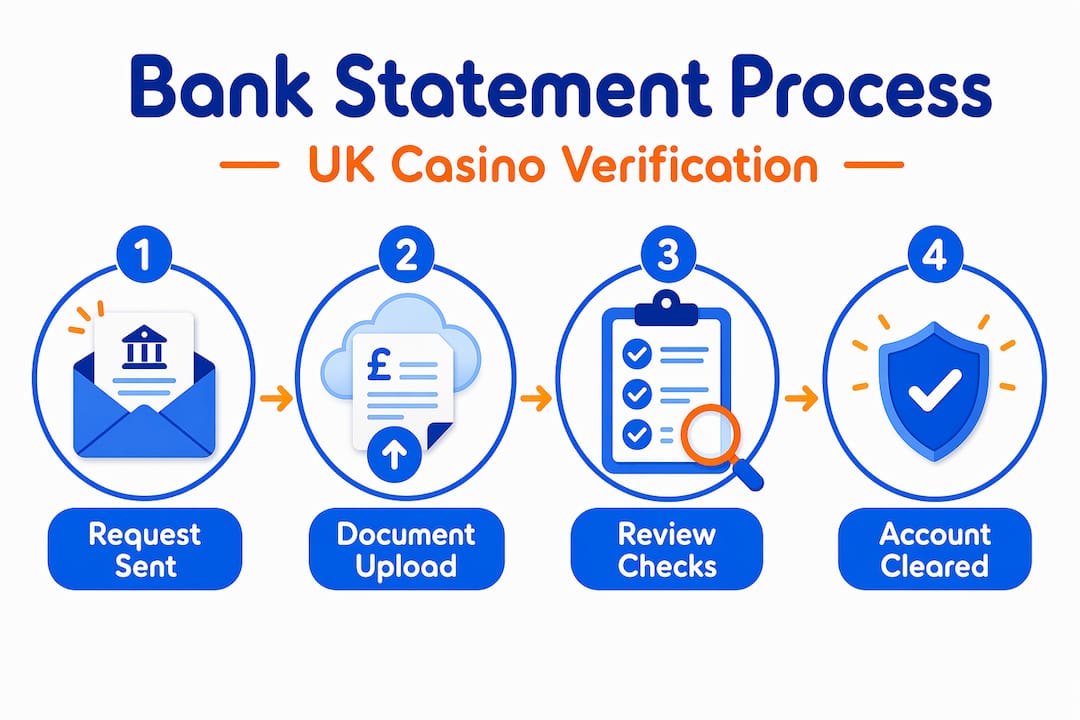
That said, refusing entirely carries real consequences. Declining to provide documents typically results in your account being restricted or closed. Casinos are legally obligated to suspend services if they cannot complete a required check. This is not optional for them.
Here is a practical approach to handling the request well:
- Respond promptly. The longer your account sits in a pending verification state, the more disruptive it becomes to your play.
- Submit the minimum required information with any unnecessary data redacted.
- Keep copies of everything you send and make a note of the date.
- If the casino does not resolve your concern within eight weeks, you can escalate the dispute to an Alternative Dispute Resolution body such as IBAS (Independent Betting Adjudication Service).
- Never send documents via unencrypted email. Use only the casino’s official secure upload portal or live chat document submission tool.
The UK casino verification process at reputable operators is far more transparent than at unlicensed sites. Choosing a casino that communicates clearly about verification from the outset saves a great deal of frustration later. Operators also document proof of funds to confirm that gambling activity is affordable and the money involved is legitimate.
My honest take on bank statement requests
I will be straightforward about this. The first time I encountered one of these requests, I found it jarring. It felt like being asked to prove I could afford a pint at the pub. That reaction is understandable, and I hear it constantly from UK players.
But having spent years watching how the regulatory framework has evolved, my view has shifted considerably. The checks are imperfect. Credit reference agency data is sometimes inaccurate, which means players occasionally receive requests they should not technically trigger. The industry tension between frictionless checks and meaningful player protection is real, and it creates unnecessary friction for low-risk players.
At the same time, I have seen what happens when these safeguards are absent. Players running up losses they cannot sustain. Operators looking the other way. The affordability check framework, however clunky, exists to catch genuine harm before it becomes irreversible.
My advice to anyone caught off guard by a bank statement request is to treat it the same way you would treat a question from your mortgage adviser. Respond calmly, submit what is actually needed, and do not overshare. The check is about your gambling activity, not your financial character.
— Traffic
Find casinos that handle verification properly
If you have been caught out by a poorly communicated verification request, the problem is often the casino rather than the process itself. Well-run, UKGC-licensed platforms explain their documentation requirements before you deposit, not after you try to withdraw. At Geekygambler, our UK casino reviews assess each operator on transparency, verification speed, and how they handle player documentation. We flag casinos that create unnecessary friction and highlight those that get it right. Whether you are looking for your first UK casino or reconsidering a current one, our reviews give you the full picture before you commit.
FAQ
Why did my casino suddenly ask for a bank statement?
Most sudden requests are triggered by reaching a spending or loss threshold, such as £150 in net deposits within 30 days or a significant loss event. The casino’s automated system flags the account for a financial risk check as required by UKGC rules.
Can I refuse to give a casino my bank statement?
You can decline, but refusing to provide documents typically results in account restrictions or closure. If you believe the request is unjustified, you can request an explanation and escalate to IBAS if the matter is unresolved.
Do I have to show my full bank statement?
No. Casinos only need your name, address, account header details, and relevant income and deposit transactions. You can redact unrelated transactions, but take care not to remove required identifying information.
Is a casino bank statement request a sign of fraud?
Not at all. It is a standard part of the UK casino verification process tied to anti-money laundering and player protection obligations. Requests for financial documents are a legal requirement for UKGC-licensed operators, not an indicator that your account has been compromised.
What should I do if my documents keep getting rejected?
Check that your statement is a current official PDF, that your name and address match your casino account exactly, and that you have not redacted the account header. If the problem persists, contact the casino’s compliance team directly and ask for specific guidance on what they require.

