Affiliate Disclosure: This article contains affiliate links. If you click through and register with one of the casino brands featured, Geeky Gambler may receive a commission. This does not affect our editorial rankings — we only feature operators licensed by the UK Gambling Commission. Gambling can be addictive, please play responsibly. 18+ | BeGambleAware.org
Choosing an online casino often comes with questions about safety and fairness, especially as regulations continue to evolve. For both new and seasoned players, understanding how these rules work is essential for making informed decisions and enjoying gaming without unnecessary risk. This article highlights how gambling regulation shapes your experience in 2025, dispelling myths and clarifying the real impact on player protection.
Table of Contents
- Defining Gambling Regulation And Common Myths
- Gambling Laws And Key Regulatory Bodies
- Recent Regulatory Changes Affecting Casino Players
- How Regulation Protects Players And Ensures Fairness
- Obligations, Risks, And Penalties For Operators
- Comparing Regulated Versus Non-Casinos
Key Takeaways
| Point | Details |
|---|---|
| Gambling Regulation Objectives | Gambling regulation aims to protect vulnerable individuals, ensure fair play, and prevent criminal activities while allowing responsible gambling. |
| Key Regulatory Body | The Gambling Commission is the primary regulator, overseeing compliance and enforcing standards across both online and offline platforms. |
| Recent Regulatory Changes | New reforms include mandatory affordability checks and age verification, designed to enhance player protection in the evolving digital gambling landscape. |
| Comparison with Non-Regulated Casinos | Regulated casinos offer comprehensive protections, whereas non-regulated casinos pose significant risks, including potential fraud and lack of player recourse. |
Defining Gambling Regulation and Common Myths
Gambling regulation represents a sophisticated legal framework designed to balance individual freedoms with robust consumer protection. Contrary to popular misconceptions, these regulations are not about completely restricting gambling, but rather creating a safe, transparent environment where players can enjoy entertainment responsibly.
At its core, gambling regulation aims to achieve several critical objectives:
- Protecting vulnerable individuals from potential harm
- Ensuring games are fair and transparent
- Preventing criminal activities like money laundering
- Maintaining the integrity of gambling platforms
- Providing clear mechanisms for dispute resolution
The Government’s approach to gambling oversight has evolved significantly, recognising that modern digital platforms require nuanced, adaptive regulatory strategies. Gambling reform for the digital age emphasises managing risks while preserving consumer choice.

Many people mistakenly believe that gambling regulation means total prohibition, but this couldn’t be further from the truth. UK Parliamentary insights reveal that effective regulation actually seeks to create a balanced ecosystem where recreational gambling can coexist with strong protective measures.
Common Myths About Gambling Regulation:
- Myth: Regulations completely stop gambling
- Reality: Regulations manage and mitigate risks
- Myth: All gambling is inherently harmful
- Reality: Responsible gambling can be a form of entertainment
- Myth: Regulations are about government control
- Reality: Regulations protect consumer interests
Pro tip: Always verify a casino’s licensing status before engaging, as this is your primary safeguard against potential risks.
Gambling Laws and Key Regulatory Bodies
The United Kingdom has developed a comprehensive legal framework to regulate gambling, centred around the Gambling Act 2005, which establishes clear guidelines for maintaining industry integrity and protecting consumers. Gambling legislation in Great Britain sets three fundamental licensing objectives that shape the entire regulatory landscape.
These core objectives include:
- Preventing gambling from becoming a source of crime
- Ensuring all gambling activities remain fair and transparent
- Protecting children and vulnerable individuals from potential exploitation
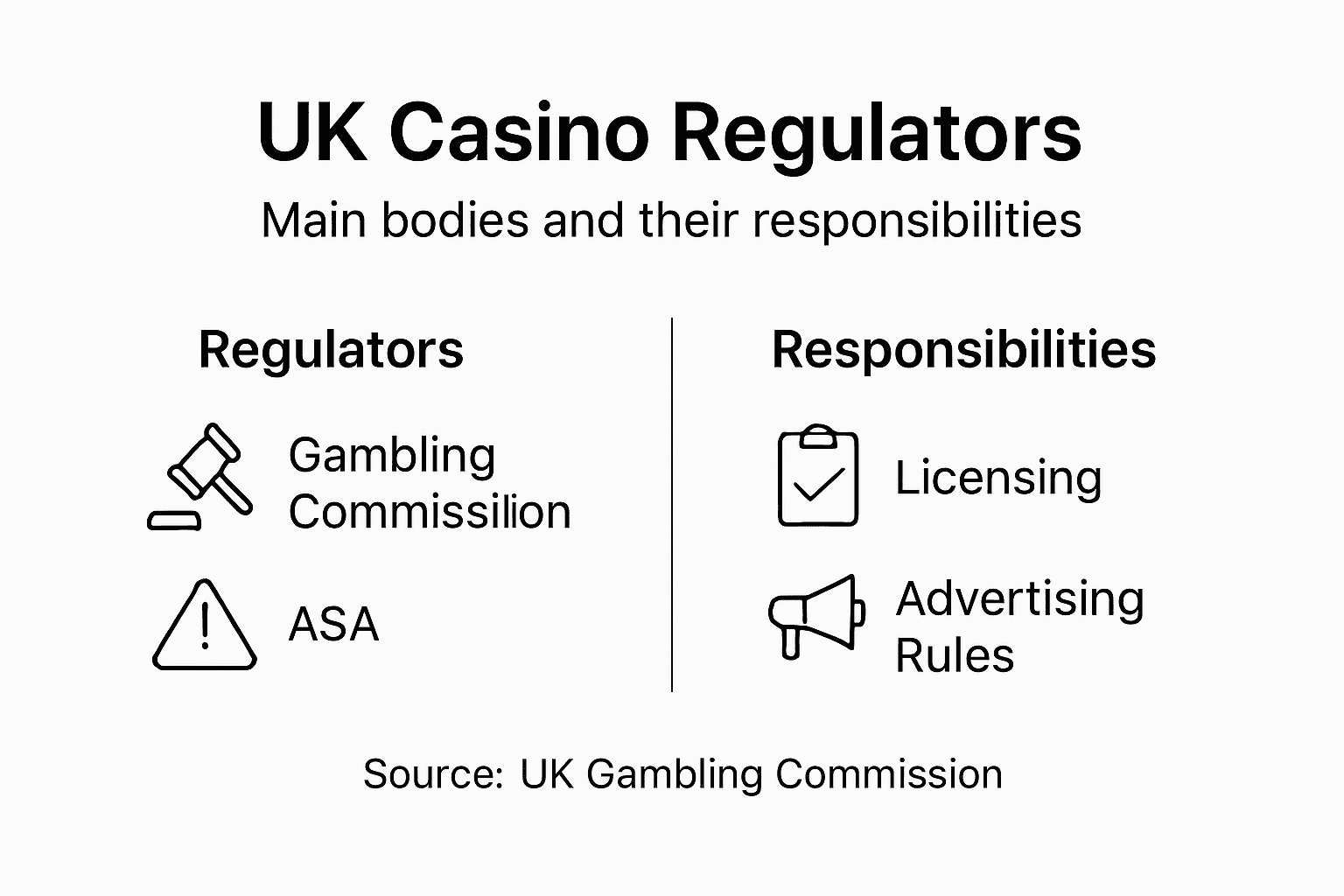
At the heart of this regulatory system sits the Gambling Commission, the primary enforcement body responsible for overseeing gambling operations across the United Kingdom. gambling regulatory framework encompasses both land-based and online gambling platforms, ensuring comprehensive monitoring and enforcement.
Key regulatory bodies involved in gambling oversight include:
- The Gambling Commission (primary national regulator)
- Local Authorities (responsible for premises licensing)
- The UK Gambling Authority
- Digital Markets Unit
- Competition and Markets Authority
The regulatory approach is not about prohibition, but creating a balanced ecosystem that allows responsible gambling while implementing robust safeguards. Operators must obtain specific licenses, adhere to strict codes of practice, and demonstrate continuous compliance with evolving legal standards.
Critical Regulatory Responsibilities:
- Issuing and managing gambling licenses
- Monitoring operator compliance
- Investigating potential misconduct
- Protecting consumer interests
- Preventing financial crimes
Pro tip: Always check an operator’s current licensing status with the Gambling Commission before engaging in any gambling activity.
To better understand the regulatory landscape, here is a summary comparing major gambling regulatory bodies and their primary responsibilities:
| Regulatory Body | Main Focus | Typical Responsibilities |
|---|---|---|
| Gambling Commission | National oversight | Licensing, compliance, enforcement |
| Local Authorities | Local premises regulation | Venue licensing, inspections, local guidance |
| Competition and Markets Authority | Market fairness and competition | Consumer protection, market intervention |
| Digital Markets Unit | Digital platform oversight | Online transparency, digital compliance |
| UK Gambling Authority | Industry standards | Setting rules, industry engagement |
For venue-specific betting context, see World Cup 2026 host cities guide.
Recent Regulatory Changes Affecting Casino Players
The United Kingdom’s gambling landscape is experiencing significant transformations, with recent regulatory reforms targeting player protection and industry accountability. These changes reflect a proactive approach to addressing emerging challenges in digital gambling environments.
Key regulatory modifications include:
- Introduction of a statutory levy on gambling operators
- New stake limits for online slot machines
- Enhanced protections for vulnerable players
- Stricter monitoring of digital gambling platforms
- Increased operator accountability measures
Emerging Regulatory Priorities focus on creating a more responsible gambling ecosystem. Gambling reform proposals aim to modernise existing frameworks, particularly addressing digital-age gambling challenges.
The Government’s 2023 white paper introduces comprehensive reforms designed to:
- Limit potential financial harm
- Protect younger and vulnerable players
- Restrict aggressive marketing practices
- Implement more robust age verification processes
- Create transparent reporting mechanisms
Critical Changes for Casino Players:
- More stringent age verification processes
- Reduced maximum stakes on digital platforms
- Mandatory affordability checks
- Enhanced self-exclusion options
- Increased transparency in game mechanics
Regulatory changes represent a significant shift towards player-centric gambling environments, prioritising safety and responsible engagement.
Pro tip: Regularly review your chosen casino’s compliance with latest regulatory standards to ensure maximum player protection.
The following table outlines how recent regulatory reforms impact casino players:
| New Rule or Reform | Intended Player Benefit | Implementation Example |
|---|---|---|
| Statutory operator levy | Increased funding for player protection | Grants to responsible gambling charities |
| Reduced online slot stakes | Limits potential spending | Lower caps on single wagers |
| Enhanced ID checks | Prevents underage gambling | Age verification at registration |
| Affordability checks | Reduces risk of financial harm | Automated spend reviews |
| Transparent reporting | Easier to understand game fairness | Clear payout disclosures |
How Regulation Protects Players and Ensures Fairness
Regulatory mechanisms in gambling represent a sophisticated system designed to protect players and maintain industry integrity. These comprehensive frameworks go far beyond simple rule enforcement, creating multiple layers of protection for casino players across the United Kingdom.
Key protective strategies include:
- Establishing clear licensing objectives
- Monitoring operator conduct
- Implementing strict fairness standards
- Preventing potential criminal activities
- Safeguarding vulnerable individuals
The Gambling Commission plays a pivotal role in this ecosystem. Consumer protection measures are implemented through rigorous compliance checks, ensuring operators adhere to robust codes of practice that prioritise player safety and game transparency.
Operators must demonstrate commitment to several critical principles:
- Maintaining game fairness
- Protecting player funds
- Preventing underage gambling
- Supporting responsible gambling practices
- Providing clear dispute resolution mechanisms
Critical Player Protection Elements:
- Random number generator (RNG) certification
- Mandatory responsible gambling tools
- Independent game auditing
- Transparent payout reporting
- Comprehensive player verification processes
Effective regulation transforms gambling from a potentially risky activity into a controlled, transparent form of entertainment.
Pro tip: Always verify a casino’s regulatory credentials and check for independent auditing certifications before engaging in any gambling activity.
Obligations, Risks, and Penalties for Operators
Gambling operator compliance represents a complex landscape of legal responsibilities and potential consequences. Casino operators must navigate an intricate regulatory environment that demands rigorous adherence to multiple standards and protocols.
Key Regulatory Obligations Include:
- Implementing robust anti-money laundering procedures
- Maintaining transparent financial reporting
- Conducting thorough player verification processes
- Providing responsible gambling tools
- Ensuring game fairness and randomness
The potential risks for non-compliance are substantial. Regulatory enforcement actions can result in severe penalties that fundamentally threaten an operator’s business sustainability.
Potential Penalties for Regulatory Breaches:
- Substantial financial fines
- Temporary license suspension
- Complete license revocation
- Public reputation damage
- Potential criminal investigations
Critical Compliance Requirements:
- Continuous risk assessments
- Regular independent audits
- Comprehensive staff training
- Transparent customer communication
- Immediate reporting of suspicious activities
Regulatory compliance is not merely a legal obligation, but a fundamental commitment to player protection and industry integrity.
Pro tip: Maintain meticulous documentation of all compliance efforts to demonstrate proactive regulatory adherence.
Comparing Regulated Versus Non-Casinos
gambling regulations represent a gold standard of player protection, creating a stark contrast with less structured international gambling environments. The regulatory landscape dramatically influences player safety, financial security, and overall gaming experience.
Key Differences Between Regulated and Non-Casinos:
- Comprehensive player protection mechanisms
- Rigorous financial transparency requirements
- Mandatory responsible gambling tools
- Robust dispute resolution processes
- Stringent anti-money laundering protocols
Risks in Non-Regulated Casinos:
- Limited player recourse
- Potential financial fraud
- Absence of fairness guarantees
- Minimal responsible gambling support
- Increased vulnerability to exploitative practices
International gambling research consistently highlights the profound differences between regulated and unregulated gambling environments. Non-casinos often operate without comprehensive legal frameworks, exposing players to significantly higher risks.
Critical Comparative Factors:
- Licensing and oversight
- Player fund protection
- Fairness verification
- Harm prevention mechanisms
- Transparency in operations
Regulatory compliance is not a bureaucratic formality, but a fundamental safeguard protecting players from potential exploitation.
Pro tip: Always prioritise casinos licensed by reputable regulatory bodies, particularly those overseen by the UK Gambling Commission.
Ensuring Your Casino Experience Is Safe and Transparent
Navigating the complex landscape of gambling regulation can feel overwhelming. With strict rules designed to protect players from harm, ensure fairness, and prevent criminal activities, finding trustworthy online casinos becomes essential. The article highlights the importance of verifying licensing status, checking compliance with regulatory standards, and prioritising player protection. These are critical steps every player should take to enjoy gaming responsibly and securely.

At Geeky Gambler, we understand these challenges and have created a comprehensive platform that focuses entirely on Licensed casinos. Our expert reviews cover crucial safety features including licensing verification, fairness audits, and transparency in bonus offers. You can explore detailed guides on casino bonuses and read the latest industry insights to make confident, informed choices. Take the guesswork out of online gambling by trusting our independent assessments and discover regulated casinos that put player safety first. Start your secure gaming journey today by visiting Geeky Gambler and check out our carefully curated casino recommendations designed with regulations in mind.
Frequently Asked Questions
What is the purpose of gambling regulation?
Gambling regulation aims to protect vulnerable individuals, ensure fair and transparent gaming, prevent criminal activities, maintain platform integrity, and provide clear dispute resolution mechanisms.
How does gambling regulation protect players?
Regulation protects players through licensing objectives, monitoring operator conduct, implementing fairness standards, and safeguarding vulnerable individuals, ensuring a safe gambling environment.
What are the main objectives of the Gambling Act 2005?
The Gambling Act 2005 establishes three key objectives: preventing gambling from becoming a source of crime, ensuring fair and transparent gambling activities, and protecting children and vulnerable individuals from exploitation.
What are the penalties for gambling operators who fail to comply with regulations?
Gambling operators that breach regulations may face severe penalties, including substantial financial fines, temporary or permanent license suspension, damage to their public reputation, and potential criminal investigations.