

Casino Licensing in the UK: Ensuring Safe Play
Over ninety percent of British players choose licensed online casinos for greater peace of mind. In the world of online gambling, trusting a site is not just about flashy games or big bonuses but the strict standards that come with a genuine licence. Understanding how British regulators enforce licences and debunking common myths can help you identify safe choices and avoid risky gambling traps.
Table of Contents
- Casino Licensing Defined And Common Myths
- Main Casino Licence Types In The UK
- How UK Casino Licensing Actually Works
- Legal Standards And Licensing Criteria
- Player Protections And Operator Obligations
Key Takeaways
| Point | Details |
|---|---|
| Understand Casino Licensing | Casino licensing in the UK ensures player safety and industry integrity, requiring operators to continuously comply with strict regulations. |
| Types of Licences | There are three primary licence types: remote operating licences for online casinos, non-remote licences for physical ones, and personal management licences for key personnel. |
| Ongoing Compliance is Essential | A casino licence is not permanent; operators must demonstrate ongoing compliance through regular audits and reviews to maintain their status. |
| Player Protection is Paramount | Operators are legally required to implement responsible gambling tools and monitor player behaviour to safeguard against gambling-related harm. |
Casino Licensing Defined and Common Myths
Navigating the world of online gambling requires understanding the critical role of casino licensing in protecting players. In the United Kingdom, casino licensing represents a sophisticated regulatory framework designed to ensure player safety and maintain industry integrity. The Gambling Commission’s licensing principles form the cornerstone of this comprehensive oversight system.
Licensing in the UK is far more than a simple bureaucratic process. It involves rigorous standards that gambling operators must meet to protect consumers. These standards include preventing criminal activity, ensuring game fairness, and protecting vulnerable individuals from potential gambling harm. Regulatory guidance emphasises protecting individuals and maintaining transparent gambling practices, which means licensed casinos must demonstrate robust mechanisms for responsible gambling.
Common myths about casino licensing often mislead players. Many believe that a licence simply means an online casino is trustworthy, but the reality is more nuanced. A legitimate UK gambling licence requires continuous compliance, regular audits, and stringent background checks on casino operators. Operators must prove they have systems to detect and prevent money laundering, verify player identities, and provide fair gameplay. Contrary to popular belief, a licence is not a permanent status but an ongoing commitment to maintaining high operational standards.
Understanding these licensing requirements helps UK players make informed decisions. When exploring online casinos, always verify the licence number, check its current status with the Gambling Commission, and recognise that a genuine licence represents a commitment to player protection and fair gaming practices.
Main Casino Licence Types in the UK
The United Kingdom maintains a sophisticated system of casino licensing that ensures comprehensive regulation across different gambling sectors. Specific casino licensing guidelines from the Gambling Commission outline three primary licence types that gambling operators must obtain to legally conduct business: remote operating licences, non-remote operating licences, and personal management licences.
Remote operating licences cover online gambling platforms, enabling casinos to provide digital gambling services to UK players. These licences require stringent compliance with digital safety protocols, including robust age verification systems, secure payment processing, and mechanisms to prevent potential money laundering. Non-remote operating licences, by contrast, apply to traditional brick-and-mortar casino establishments, focusing on physical gambling environments and their specific regulatory requirements.
Personal management licences represent a crucial accountability mechanism, targeting individual casino executives and key personnel. The Gambling Commission’s licensing process mandates that these individuals demonstrate personal integrity, financial stability, and a comprehensive understanding of gambling regulations. This approach ensures that casino leadership is directly responsible for maintaining ethical standards and player protection.

Beyond these core licence types, the UK’s regulatory framework includes additional specialised permissions. These might cover specific gambling activities like casino game development, payment processing, or software provision. UK players can take comfort in knowing that each licence represents a thorough vetting process designed to create a transparent, fair, and secure gambling ecosystem.
How UK Casino Licensing Actually Works
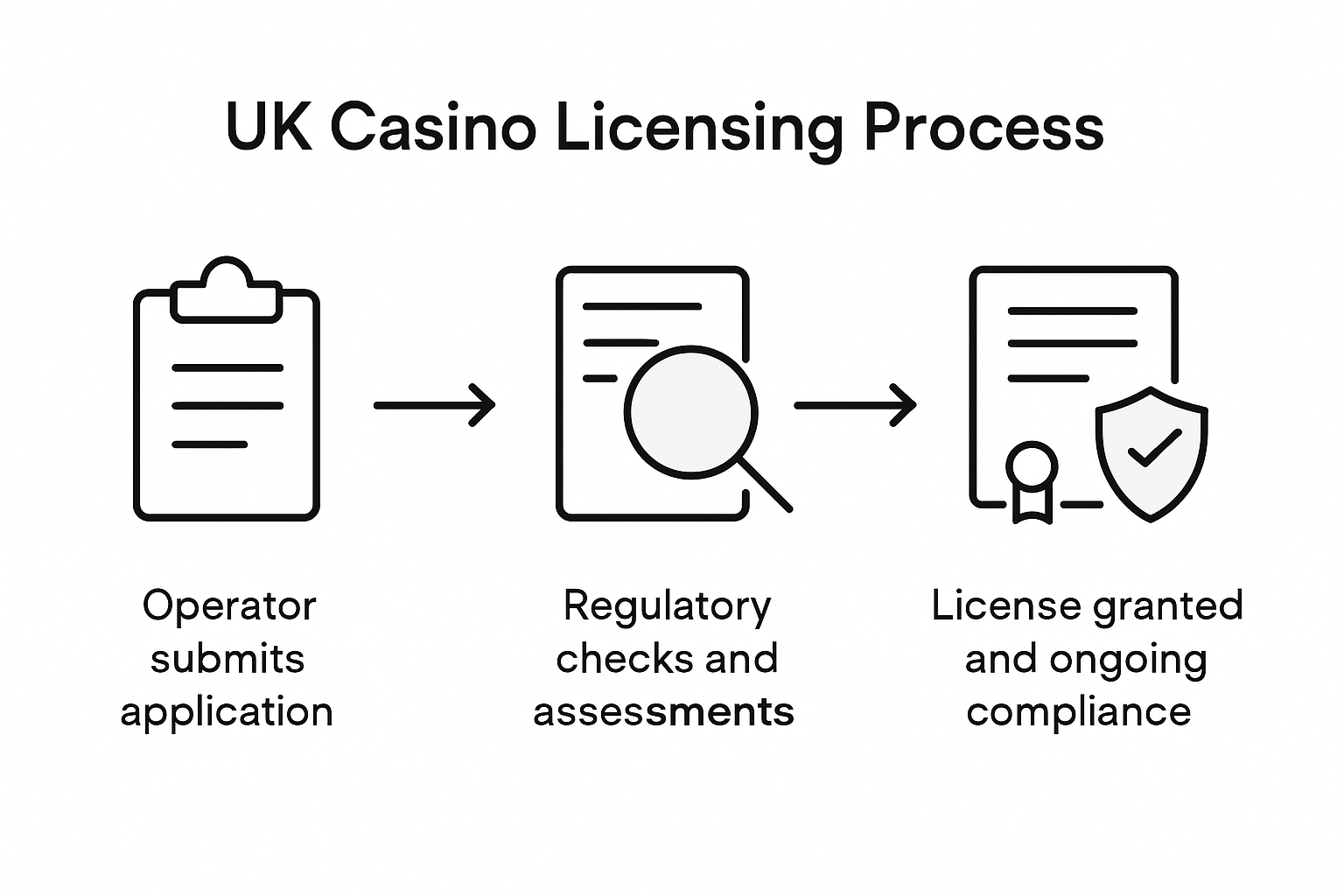
The casino licensing process in the United Kingdom represents a comprehensive and rigorous system designed to protect players and maintain industry integrity. Detailed licensing procedures from the Gambling Commission outline a multi-step approach that scrutinises every aspect of potential gambling operators before granting official permission to operate.
Initially, prospective casino operators must submit an extensive application demonstrating their ability to meet stringent regulatory requirements. This involves providing comprehensive documentation about the business’s financial stability, ownership structure, and proposed gambling activities. Key assessment areas include background checks on company directors, detailed business plans, and robust mechanisms for preventing money laundering, ensuring fair gameplay, and protecting vulnerable individuals from gambling-related harm.
Casino licensing guidance emphasises ongoing compliance as a critical component of the licensing framework. Operators aren’t simply granted a permanent licence but must continuously prove their commitment to regulatory standards. This involves regular audits, financial reviews, and demonstrating active implementation of responsible gambling practices. Failure to maintain these standards can result in severe penalties, including licence suspension or complete revocation.
The ultimate goal of this intricate licensing process is creating a transparent and safe gambling environment. By implementing such comprehensive checks and maintaining continuous oversight, the UK ensures that online and offline casinos operate with the highest levels of integrity, protecting players’ interests and maintaining the reputation of the gambling industry.
Legal Standards and Licensing Criteria
The United Kingdom’s gambling regulatory framework establishes extremely precise legal standards that casino operators must meet to obtain and maintain their operating licences. Comprehensive licensing criteria from the Gambling Commission scrutinise multiple dimensions of potential gambling businesses, including organisational integrity, financial stability, and personal competence of key management personnel.
Critical assessment areas include thorough background checks on company directors and key stakeholders, ensuring they have no history of fraudulent activities or criminal connections. Operators must demonstrate robust financial management capabilities, proving they can honour player winnings and maintain sufficient capital reserves. Additionally, businesses must implement comprehensive risk management strategies that protect players from potential exploitation, including advanced age verification systems and mechanisms to prevent money laundering.
Regulatory guidance emphasises strict compliance with data protection and anti-money laundering regulations, creating a multilayered approach to player safety. This means casino operators must not only protect financial transactions but also safeguard players’ personal information, implement responsible gambling protocols, and maintain transparent operational practices. The legal standards are designed to be proactive, requiring ongoing evidence of compliance rather than merely retrospective punishment.
Ultimately, these rigorous legal standards represent more than bureaucratic hurdles. They are carefully constructed safeguards that protect vulnerable individuals, ensure fair gameplay, and maintain the gambling industry’s reputation. By setting such comprehensive criteria, the UK demonstrates a commitment to creating a safe, transparent, and accountable gambling environment that prioritises player protection above all else.
Player Protections and Operator Obligations
The United Kingdom’s gambling regulatory framework places player protection at its core, establishing comprehensive obligations that casino operators must fulfil to ensure player safety and responsible gambling. Detailed guidelines from the Gambling Commission outline specific measures designed to safeguard players from potential gambling-related harm and create a transparent, secure online gambling environment.
Operators are legally required to implement sophisticated responsible gambling tools that help players manage their gambling behaviour. These include mandatory self-exclusion options, deposit limits, time-out mechanisms, and advanced age verification systems. Financial safeguards are equally critical, with operators compelled to verify player identities, prevent underage gambling, and establish clear pathways for players to seek help if gambling becomes problematic.
Regulatory policies mandate proactive customer interaction protocols that require casino operators to monitor player behaviour for signs of potential gambling addiction. This involves developing comprehensive data protection strategies, tracking unusual betting patterns, and having trained staff ready to intervene when a player demonstrates high-risk gambling characteristics. These obligations extend beyond mere compliance, representing a fundamental commitment to player welfare.
Ultimately, these player protection measures transform licensing from a bureaucratic process into a dynamic system of ongoing player support. By requiring continuous monitoring, immediate intervention capabilities, and robust support mechanisms, the UK’s regulatory approach ensures that player safety remains the paramount concern in the online gambling landscape.
Make Safe Choices with Licensed UK Casinos Today
Understanding the complexities of casino licensing in The United Kingdom is essential for every player who wants a secure and fair gambling experience. The article highlights the challenges of verifying licence legitimacy and ongoing operator obligations that protect you from unfair practices and gambling harm. At Geeky Gambler, we tackle this problem by providing trusted insights into licensed UK casinos, ensuring you gain access to operators that meet the highest regulatory standards and player protection requirements.

Explore our comprehensive platform at Geeky Gambler, where independent reviews verify fairness and compliance with UK licensing regulations. Benefit from detailed guides on bonuses, game variety, and secure payment methods that uphold the strict standards described in the licensing frameworks. Don’t gamble blindly. Visit Geeky Gambler now and start playing with confidence at trusted UK casinos. Your safe and enjoyable gaming journey begins here.
Frequently Asked Questions
What is casino licensing in the UK?
Casino licensing in the UK is a regulatory framework established to protect players and ensure the integrity of the gambling industry. It involves rigorous standards that operators must meet to operate legally.
What are the main types of casino licences in the UK?
The primary types of casino licences in the UK include remote operating licences for online casinos, non-remote operating licences for brick-and-mortar casinos, and personal management licences for key personnel in the industry.
How does the casino licensing process work?
The casino licensing process involves submitting a detailed application that includes background checks on key personnel, financial documentation, and evidence of compliance with anti-money laundering and responsible gambling regulations. Continuous compliance is mandatory for maintaining the licence.
What player protections are in place under UK casino licensing?
UK casino licensing mandates operators to implement responsible gambling measures, such as self-exclusion options, deposit limits, and monitoring player behaviour for signs of addiction, ensuring a safe and secure gambling environment.


