

Transparency in Casinos – Impact on Player Trust and Safety
Finding a trustworthy online casino can feel challenging when you cannot see the dealer or check the cards yourself. For UK players, transparency is not just reassuring, it is a crucial safeguard. Licensed operators now invest in clear communication and verified fair play to win your trust, making it easier to spot reliable sites and avoid hidden risks in the process.
Table of Contents
- How Transparency Builds Player Trust
- Transparency’s Role in Fair Play Assurance
- Legal Standards for Transparency in the UK
- Risks of Opaque Practices and Player Protections
Key Takeaways
| Point | Details |
|---|---|
| Transparency Builds Trust | Clear communication regarding game mechanics and audited fairness fosters player confidence in online casinos. |
| Honest Practices Attract Loyalty | Players are more likely to return to casinos that transparently disclose information about games, bonuses, and payouts. |
| Legal Standards Enforce Compliance | UK regulations require casinos to publish vital information, providing a framework for player protection against opaque practices. |
| Proactive Player Engagement | Players should actively verify a casino’s transparency by checking licensing and audit reports before engaging. |
content
How Transparency Builds Player Trust
Trust doesn’t happen by accident in online casinos. It’s built brick by brick through honest practices and clear communication. When you can see exactly how games work and what the odds are, you feel more confident playing.
The absence of physical cues in online gambling makes transparency even more crucial. You can’t see the dealer, inspect the equipment, or watch the ball spin. This is why digital fairness proofs and clear communication about game outcomes become your window into fair play. Without these safeguards, suspicion fills the gap.
Trust Through Honest Communication
Transparent casinos tell you exactly what’s happening behind the scenes. This includes:
- Clear explanations of how games generate results
- Honest descriptions of bonus terms and conditions
- Real-time information about your account balance and transactions
- Direct contact channels for customer support
When a casino hides information or uses confusing language, players naturally become suspicious. You start wondering what they’re trying to hide.
Credibility Through Verified Fairness
Casinos that open their systems to independent testing demonstrate real confidence. Licensed UK operators undergo regular audits to verify game fairness. When you can see evidence of these tests, trust grows immediately.
Key indicators of trustworthy casinos:
- Published audit reports from independent testing labs
- Clear display of licensing information
- Transparent RTP (Return to Player) percentages for each game
- Third-party certifications visible on their website
These aren’t optional extras. They’re proof the casino has nothing to hide.
Transparency creates a feedback loop: honest casinos attract loyal players, which means more business, which incentivises maintaining those standards.
Why Players Stay When Trust Exists
Once you trust a casino, you keep coming back. Fair play standards matter, but transparent communication matters equally. Knowing exactly what you’re getting into removes anxiety from the experience.
Players who feel informed make better decisions. They understand the risks, appreciate the bonuses honestly, and respect the operator. This relationship strengthens loyalty far more than flashy promotions ever could.
Pro tip: Before playing at any new casino, spend five minutes checking their licensing page and reading recent audit reports—this simple step filters out unreliable operators immediately.
Transparency’s Role in Fair Play Assurance
Fair play isn’t a promise—it’s a provable fact. Transparency transforms trust from a feeling into something verifiable. When casinos openly disclose how their games work, players stop guessing and start knowing.

How Testing Proves Fairness
Independent testing of random number generators eliminates bias and manipulation from game software. Third-party auditors run thousands of tests to confirm games behave as advertised. Without this verification, claims about fairness remain empty words.
Licensed UK casinos must undergo regular audits from accredited testing labs. These aren’t optional checks—they’re mandatory requirements enforced by regulators. When results are made public, players gain genuine assurance.
What Transparency Actually Looks Like
Transparent casinos display specific information where you can find it:
- Published audit certificates from independent labs
- Clear RTP (Return to Player) percentages for each game
- Detailed explanations of how games generate random results
- Regular compliance reports showing audit history
- Accessible information about bonus terms and conditions
This openness separates trustworthy operators from questionable ones. You shouldn’t have to hunt for fairness evidence.
Technology Supporting Fair Play
Advanced verification processes and real-time monitoring enable stronger safeguards against rigging. Modern systems track every game outcome, creating an audit trail you can reference. Real-time data means outcomes are recorded instantly, preventing manipulation after the fact.
This technological transparency works alongside regulatory oversight to create multiple layers of protection.
When casinos embrace transparency about testing and technology, they signal confidence in their systems and commitment to player protection.
Why This Matters to You
Transparency removes uncertainty from play. You’re not betting against a black box—you’re playing against proven fair outcomes generated by audited systems. This distinction transforms your experience from anxious to informed.
Players deserve to see the evidence. Reputable casinos understand this and make it readily available.
Pro tip: Before depositing, download a casino’s audit report from their website—if they don’t link to it easily, that’s your first warning sign.
Legal Standards for Transparency in the UK
The UK doesn’t leave transparency to chance. The Gambling Commission enforces strict rules that demand operators show their hand completely. These legal standards aren’t suggestions—they’re binding requirements for every licensed casino.
What the Law Requires
Clear disclosure of licensing details forms the foundation of UK transparency law. Every casino must display its licence number, regulator details, and how to contact them. Deposit and withdrawal procedures must be clearly explained, not buried in dense documents.
These aren’t optional flourishes. They’re mandatory conditions of holding a UK licence.
Financial and Player Protection Requirements
Operators must demonstrate genuine financial responsibility through legal standards:
- Documented financial transparency showing assets and liabilities
- Proof of player protection mechanisms (segregated customer funds)
- Compliance with anti-money laundering legislation
- Regular audits verifying these standards are maintained
The Gambling Commission verifies each requirement through ongoing surveillance. Casinos can’t simply claim compliance—they must prove it with documentation.
Auditability and Public Access
Comprehensive transparency demands emphasise auditability as a core legal obligation. This means records must exist that regulators can inspect and players can request. Information about game fairness, licensing history, and complaint procedures must be publicly accessible.
This regulatory framework transforms transparency from marketing language into verifiable fact.
Why These Standards Matter to You
Legal requirements protect you directly. When a casino meets these standards, you know regulators have verified their claims. You’re not trusting marketing—you’re relying on enforced accountability.
UK gambling laws provide specific protections that operators must follow or lose their licence. Breaching transparency requirements carries serious consequences, from fines to licence revocation.
Legal standards create teeth for transparency—operators comply because the cost of non-compliance exceeds any short-term benefit.
Checking for Legal Compliance
Before playing, verify that a casino meets these legal standards. Licensed operators display their credentials openly. If information is hidden or vague, that’s a red flag.
The UK system works because transparency is law, not choice.
Pro tip: Visit the Gambling Commission’s register on their website to confirm a casino’s licence status and any disciplinary history before depositing money.
To help you understand the checks for UK casino transparency, here’s a quick reference:
| Checkpoint | What to Look For | Why It Matters |
|---|---|---|
| Licence Number | Visible on homepage | Ensures legal operation |
| Audit Reports | Accessible, recent certificates | Verifies fair gaming |
| RTP Disclosure | Published percentages for all games | Confirms odds transparency |
| Bonus Conditions | Clearly explained terms and limits | Prevents hidden traps |
| Complaint Procedure | Easy-to-find resolution process | Supports player protection |
Risks of Opaque Practices and Player Protections
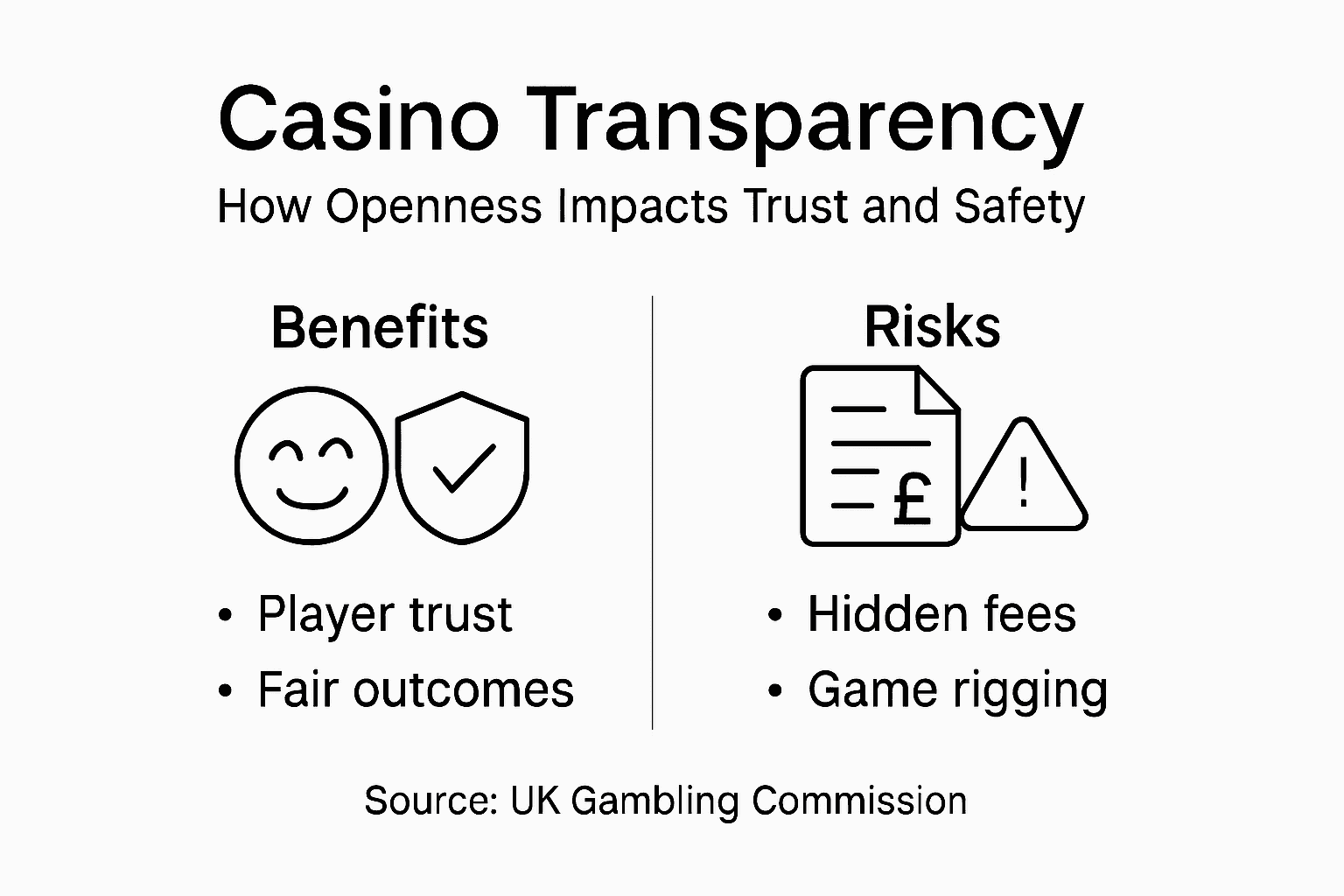
Opaque casinos are dangerous casinos. When operators hide how games work, how money moves, or what terms actually mean, players become victims waiting to happen. Transparency isn’t luxury—it’s protection.
What Hidden Practices Cost Players
When casinos operate without transparency, players face serious risks. Games can be manipulated without detection. Fees appear from nowhere. Terms shift in ways that favour the house unfairly. Without disclosure, you’re essentially playing blind.
Opaque operators count on you not understanding the rules. That’s the entire business model.
Specific Risks Players Face
Hidden practices create measurable dangers:
- Unfair game manipulation that produces artificially poor odds
- Concealed fees that reduce your winnings unexpectedly
- Unclear bonus terms that trap you into impossible conditions
- No recourse when things go wrong
- Personal data vulnerability with no accountability
Each risk compounds. A rigged game plus hidden fees plus murky terms equals financial harm.
Here’s a comparison of transparent and opaque casino practices to illustrate their impact on player experience:
| Aspect | Transparent Casino Practice | Opaque Casino Practice |
|---|---|---|
| Game Fairness | Publicly audited and certified games | No evidence of independent audits |
| Bonus Terms | Clear, accessible conditions | Complex or hidden requirements |
| Account Security | Real-time monitoring and oversight | No openness about data protection |
| Complaint Resolution | Direct, responsive channels | No clear procedure or contact |
| Regulatory Standing | Visible licensing and compliance | Undisclosed or outdated licences |
How Regulation Protects You
The UK system fights opacity through mandatory oversight. Regulatory oversight and mandatory disclosure create consequences for hiding information. Casinos that fail transparency checks lose their licence.
This enforcement creates genuine protection, not just promises.
Fair Gaming Standards as a Safeguard
Established fair gaming standards set minimum transparency requirements. These standards define what information must be disclosed and how clearly. Operators ignoring them face investigation and penalties.
These standards exist because players were harmed when they didn’t.
Collaborative Protection
Player protection requires teamwork. Regulators, operators, advocacy groups, and players all contribute. Regulators enforce standards. Responsible operators comply. Advocacy groups hold everyone accountable. You verify compliance before playing.
Opaque practices thrive in silence—transparency is the antidote because it exposes problems immediately and makes them costly to ignore.
Your Role in Staying Safe
You can’t rely solely on regulation. Understanding casino terms and conditions protects you from hidden traps. Read bonus terms. Check licensing information. Ask questions when something seems unclear.
Responsible play means actively verifying transparency, not passively trusting.
Pro tip: If a casino’s terms and conditions are difficult to find or written in deliberately confusing language, that’s a warning sign to play elsewhere.
Discover Transparent Casinos That Earn Your Trust Today
Transparency is the foundation of player safety and confidence in online casinos. If you are tired of hidden terms, unclear fairness, and opaque practices that leave you questioning where your money really goes then you need a trusted guide by your side. Geeky Gambler highlights only licensed UK casinos proven to meet strict transparency and fairness standards so you can play without fear.

Explore our comprehensive reviews to find casinos offering clear licensing information, audited fair play, and honest bonus conditions. Start playing smarter by accessing verified information on bonuses, payment options, and security measures—making your experience both safe and rewarding. Visit Geeky Gambler now to access trusted insights and direct bonus links that put transparency first. Don’t wait to protect your gameplay and maximise your winnings with confidence.
Frequently Asked Questions
What is the importance of transparency in online casinos?
Transparency in online casinos helps build player trust by providing clear information about game mechanics, bonus terms, and financial transactions. It ensures players feel secure and confident in their gaming experience.
How do independent audits contribute to trust in casinos?
Independent audits verify the fairness of games and the accuracy of Random Number Generators (RNGs). Published audit reports from accredited labs serve as proof that the casino operates fairly, reassuring players about their chances of winning.
What should I look for to evaluate a casino’s transparency?
You should check for visible licensing information, accessible audit reports, clear Return to Player (RTP) percentages, and straightforward bonus terms. This information signifies a commitment to player protection and fair play.
How can opaque practices affect players?
Opaque practices in casinos can lead to unfair manipulation of games, hidden fees, and unclear bonus conditions. This lack of transparency compromises player safety and can result in financial loss and diminished trust.


