

Why casino audits matter for UK players in 2026
Most UK players believe online casinos are automatically safe simply because they hold a licence. Yet behind every legitimate gaming platform stands a rigorous audit process that continuously verifies fairness, security, and regulatory compliance. Without these independent checks, even licensed operators could drift into non-compliance, exposing you to rigged games, weak security, or inadequate player protections. Casino audits are the invisible safeguard ensuring your gaming experience remains fair and secure. This guide explains exactly how audits protect you and why they matter more than you might think.
Table of Contents
- Key takeaways
- How casino audits ensure regulatory compliance in the UK
- Verifying game fairness: random number generation and return to player testing
- How audits enhance security and player protection beyond fairness
- Audit enforcement and challenges: impact on players and grey market risks
- Explore trusted UK casino bonuses and top game providers
- Why casino audits are essential: frequently asked questions
Key Takeaways
| Point | Details |
|---|---|
| Regulatory audits | Independent audits verify that UK licensed operators meet UK Gambling Commission requirements including RNG certification, RTP verification, and AML controls. |
| Certification seals | Certifications from recognised testing laboratories should be verifiable on the lab’s verification page. |
| RNG and RTP testing | Audits test RNGs and verify RTP across all titles using established statistical methods to confirm genuine randomness and payout accuracy. |
| Consequences of non compliance | Failure to maintain audit standards can lead to licence suspension and substantial fines imposed by the UK Gambling Commission. |
How casino audits ensure regulatory compliance in the UK
The UK Gambling Commission operates one of the world’s strictest regulatory frameworks. Every licensed operator must undergo regular audits covering game fairness, anti-money laundering procedures, and social responsibility measures. Casino audits ensure regulatory compliance with UKGC requirements, including RNG certification, RTP verification, and AML controls mandatory for licensing. These audits happen annually at minimum, with additional spot checks triggered by player complaints or regulatory concerns.
Third-party testing houses such as eCOGRA, iTech Labs, and GLI conduct independent certifications aligned with international standards like ISO/IEC 17025. These laboratories assess whether operators meet their licensing conditions and maintain adequate player protection systems. The process examines technical systems, financial controls, and operational procedures to verify ongoing compliance.
Audit requirements extend beyond initial licensing. Operators must demonstrate continuous adherence to UKGC regulatory standards throughout their operational lifespan. Key audit areas include:
- Random number generator certification and ongoing testing protocols
- Return to player percentage verification across all game titles
- Anti-money laundering controls and transaction monitoring systems
- Responsible gambling tools including deposit limits and self-exclusion mechanisms
- Financial stability assessments to ensure player funds remain protected
Failure to maintain audit compliance carries serious consequences. The UKGC can suspend licences, impose operating restrictions, or levy substantial fines against non-compliant operators. This enforcement mechanism ensures licensed casinos maintain protection standards that safeguard your interests.
Pro tip: Always verify a casino displays current certification seals from recognised testing laboratories. These badges should link directly to the testing house’s verification page, confirming the certification remains valid and covers the games you play.
Verifying game fairness: random number generation and return to player testing
Game fairness depends entirely on properly functioning random number generators. These algorithms produce the unpredictable outcomes that make casino games genuinely random rather than predetermined. Audits verify fairness via RNG testing using statistical suites like Dieharder, NIST SP 800-22, and Chi-square tests to confirm true randomness.
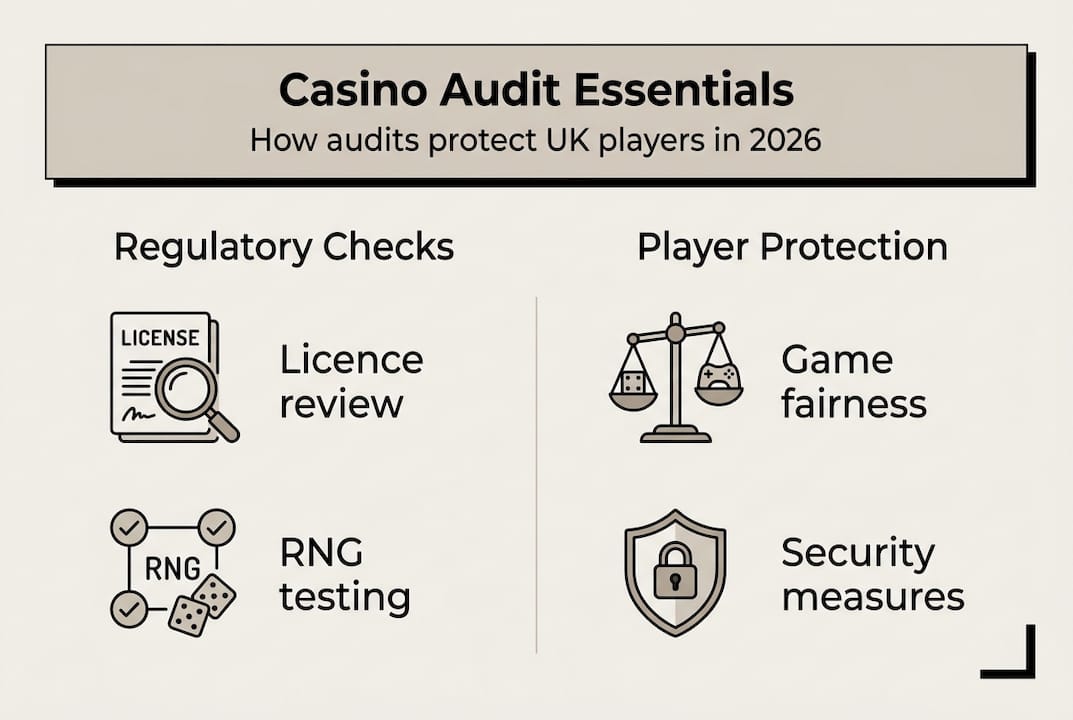
Testing laboratories subject RNGs to millions of simulated game rounds, analysing the results for any statistical anomalies that might indicate predictable patterns. These tests measure entropy, distribution uniformity, and sequence independence to ensure outcomes remain genuinely random. A properly certified RNG passes multiple statistical batteries before receiving approval.
| Test type | Purpose | Pass criteria |
|---|---|---|
| Dieharder suite | Detects non-random patterns across multiple statistical dimensions | All sub-tests pass at 95% confidence |
| NIST SP 800-22 | Evaluates randomness through 15 distinct statistical tests | Minimum 96% of sequences pass each test |
| Chi-square analysis | Measures outcome distribution against expected probabilities | P-value exceeds 0.01 threshold |
| Autocorrelation testing | Identifies dependencies between sequential outcomes | Correlation coefficient below 0.05 |
Return to player percentages receive equally rigorous scrutiny. Auditors verify that games pay out at their advertised rates over statistically significant sample sizes. For example, a slot advertising 96% RTP must demonstrate that payout rate across millions of spins. The auditing role in fairness extends to confirming game mathematics match published specifications.
Comprehensive fairness testing follows this sequence:
- Initial RNG certification before any games go live on the platform
- Game mathematics verification to confirm rules operate as advertised
- RTP analysis across extended play sessions measuring actual payout rates
- Periodic retesting at intervals determined by RNG testing frequency standards
- Continuous monitoring systems that flag anomalies requiring investigation
Game math integrity checks ensure that bonus features, multipliers, and special symbols trigger at correct probabilities. Auditors review the source code and run simulations to verify the game behaves exactly as its paytable promises. This prevents operators from advertising generous features that rarely activate in actual play.
Pro tip: Check whether a casino publishes its RTP percentages and displays recent audit certificates. Transparent operators make this information easily accessible, demonstrating confidence in their fairness credentials.
How audits enhance security and player protection beyond fairness
Whilst game fairness grabs headlines, audits serve equally vital functions in verifying platform security and player safeguards. Audits enhance security and player protection by checking platform security standards like ISO 27001, financial reserves, responsible gaming tools, and AML controls. These assessments ensure casinos maintain robust defences against cyber threats and financial misconduct.
Security audits examine encryption protocols, data storage practices, and access controls protecting your personal information. Auditors verify that casinos implement industry-standard security measures including:
- SSL/TLS encryption for all data transmission between your device and casino servers
- Secure payment processing that segregates financial data from other systems
- Regular penetration testing to identify and patch security vulnerabilities
- Access logging and monitoring to detect unauthorised system access attempts
Financial audits confirm operators maintain sufficient reserves to cover player balances. This protects you if the casino faces financial difficulties, ensuring your deposits and winnings remain secure. The UKGC requires operators to hold player funds in segregated accounts separate from operational capital.

Anti-money laundering controls receive intensive scrutiny following high-profile enforcement actions. The UKGC imposed £19 million in AML-related fines during 2023, demonstrating serious consequences for inadequate controls. Auditors assess transaction monitoring systems, customer due diligence procedures, and suspicious activity reporting mechanisms. These checks protect both you and the broader financial system from criminal exploitation.
Responsible gambling audits evaluate whether casinos provide effective player protection tools. Auditors test deposit limits, reality checks, self-exclusion systems, and vulnerable customer identification processes. A security checklist for casinos includes verification that these tools function properly and remain easily accessible.
“Responsible gaming audits go beyond checking boxes. They assess whether protection measures genuinely help players maintain control, examining everything from the prominence of limit-setting tools to the effectiveness of intervention procedures for at-risk customers.”
Know Your Customer procedures also fall under audit scrutiny. The KYC guide for players explains how these checks prevent underage gambling and verify player identities. Auditors confirm casinos implement robust age verification before allowing real-money play. They also assess how effectively operators identify and support problem gamblers through behavioural monitoring systems.
Comprehensive casino AML and compliance programmes integrate multiple protection layers. Audits verify these systems work together cohesively, creating a secure environment that balances player convenience with necessary safeguards.
Audit enforcement and challenges: impact on players and grey market risks
Enforcement statistics reveal audits drive real accountability. UKGC compliance assessments show 85.7% good ratings for April to June 2025, yet failures trigger substantial penalties. Platinum Gaming received a £10 million fine in 2025 for compliance breaches, demonstrating the financial consequences of audit failures.
| Enforcement action | Amount | Reason | Year |
|---|---|---|---|
| Platinum Gaming fine | £10 million | AML and social responsibility failures | 2025 |
| Aggregate industry fines | £19 million | AML-related breaches | 2023 |
| Licence suspensions | 12 cases | Serious compliance failures | 2024 |
| Operating restrictions | 28 cases | Moderate compliance issues requiring remediation | 2024 |
These enforcement actions directly benefit you by removing or reforming operators who fail to maintain proper standards. When audits uncover serious deficiencies, the UKGC acts swiftly to protect players from continued exposure to substandard operations.
Yet audit systems face significant challenges that limit their effectiveness. Grey market casinos operating without proper licensing evade audit requirements entirely, using fake certification seals to create false legitimacy. These unlicensed operators pose serious risks since no independent body verifies their fairness or security. Players who venture outside licensed markets lose the protection that audits provide.
The traditional audit model contains inherent conflicts of interest. Audits face challenges including the user-pays model risking auditor leniency, since casinos pay testing laboratories directly. This financial relationship potentially compromises auditor independence, though professional standards and regulatory oversight mitigate this risk.
Static audit reports present another limitation. Traditional audits provide snapshots of compliance at specific moments rather than continuous monitoring. A casino might pass its annual audit yet drift into non-compliance months later. This gap creates windows where problems can develop undetected between formal audit cycles.
Emerging solutions address these limitations through technology:
- Artificial intelligence systems that monitor game outcomes continuously, flagging anomalies in real time
- Blockchain-based audit trails providing transparent, tamper-proof records of all transactions
- Automated compliance monitoring that alerts regulators immediately when systems deviate from approved parameters
- Continuous RNG testing that samples game outcomes constantly rather than periodically
These innovations promise more robust protection by shifting from periodic audits to ongoing surveillance. However, they require significant investment and regulatory framework updates before becoming standard practice across the industry.
You can protect yourself by choosing operators that demonstrate commitment to transparency. Identifying secure casinos involves checking for current licensing, recent audit certificates, and membership in responsible gambling organisations. Avoid any casino that cannot provide clear evidence of independent verification.
Explore trusted UK casino bonuses and top game providers
Now that you understand how audits protect your gaming experience, put that knowledge into practice by choosing properly certified casinos. Every operator we feature maintains current UKGC licensing and undergoes regular independent audits, ensuring your play remains fair and secure.

Discover the latest online casino bonuses designed specifically for UK players. These offers come from audited casinos that meet strict fairness and security standards, letting you boost your bankroll with confidence. From welcome packages to ongoing promotions, you’ll find rewards that enhance your gaming whilst maintaining the protection audits provide.
Explore games from industry-leading providers like BGaming and Evolution, whose titles undergo rigorous testing before reaching UK players. These developers maintain their own quality certifications, adding extra assurance beyond casino-level audits. Whether you prefer slots, live dealer games, or table classics, you’re choosing entertainment backed by multiple layers of independent verification.
Why casino audits are essential: frequently asked questions
How do I verify a casino’s audit credentials are legitimate?
Check the casino displays certification seals that link directly to the testing laboratory’s verification page. Valid certifications include the certificate number, issue date, and expiry date. You can cross-reference these details on the testing house’s official website. Legitimate casinos also prominently display their UKGC licence number, which you can verify through the benefits of UKGC casinos regulatory database.
What happens if a casino fails an audit?
The UKGC requires immediate corrective action when audits reveal compliance failures. Minor issues trigger remediation plans with follow-up audits to verify corrections. Serious breaches result in operating restrictions, financial penalties, or licence suspension until the operator demonstrates full compliance. In extreme cases, the UKGC revokes licences permanently, forcing the casino to cease UK operations.
How often are online casino games tested for fairness?
Initial certification occurs before games launch, with periodic retesting typically happening annually or bi-annually depending on the testing laboratory’s protocols. High-profile games or those generating player complaints may receive more frequent scrutiny. Many modern casinos implement continuous monitoring systems that sample game outcomes constantly, providing ongoing verification between formal audit cycles.
Do all casino games receive the same level of audit scrutiny?
Live dealer games face different testing protocols than RNG-based games since human dealers introduce the randomness element. Auditors verify camera systems prevent cheating, shuffling procedures remain random, and dealing follows proper protocols. Slot games undergo extensive RNG testing and RTP verification. Table games require game mathematics verification to confirm rules operate correctly. Each game category receives scrutiny appropriate to its specific fairness mechanisms.
Can audited casinos still experience technical problems affecting fairness?
Audits verify systems function correctly at the time of testing, but technical glitches can occasionally occur between audit cycles. Reputable casinos maintain monitoring systems that detect anomalies quickly and take games offline until engineers resolve issues. If you suspect a game is malfunctioning, stop playing immediately and report the issue to customer support. Licensed casinos must investigate such reports and compensate players if technical faults affected outcomes.

