

How AI transforms online gambling: security, strategy and play
TL;DR:
- AI drives online gambling growth by shaping odds, monitoring behaviour, and enhancing security for players. It enables real-time fraud detection, responsible gambling interventions, and personalised experiences while being regulated for fairness and data privacy. However, understanding AI’s subtle influence and ensuring responsible use remain essential for safe and fair betting.
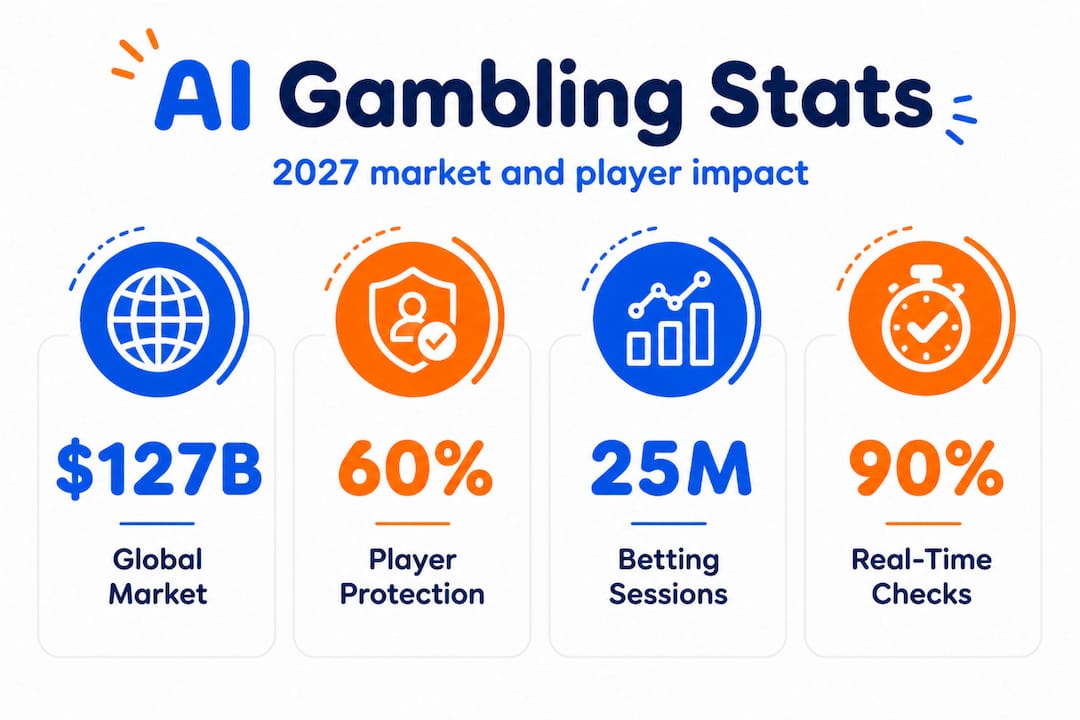
The global online gambling market is projected to exceed $127 billion by 2027, and a significant portion of that growth is being driven by artificial intelligence. Most players assume their results are purely down to luck and the spin of a reel, but behind every bet you place on a UK-licensed site, AI is quietly shaping the odds, monitoring your behaviour, and safeguarding your account. This article breaks down exactly how that works, covering everything from fraud detection and responsible gambling tools to smarter odds-setting and the regulation that keeps it all in check.
Table of Contents
- AI basics in online gambling: what you need to know
- How AI improves security and responsible gambling
- AI in odds setting and smarter betting strategies
- Regulation, fairness and the risks of AI in UK gambling
- What most guides miss: the subtle risks and rewards of AI in your betting life
- Explore smarter, safer gambling with Geeky Gambler
- Frequently asked questions
Key Takeaways
| Point | Details |
|---|---|
| AI powers modern gambling | From odds adjustment to player interventions, artificial intelligence shapes today’s UK online casinos. |
| Player safety boosted | AI systems monitor behaviour to help prevent problem gambling and fraud more effectively than manual methods. |
| Regulation is crucial | Strict UK rules mean AI must be fair, transparent, and respectful of player privacy at all times. |
| Stay in control | Smart bettors use personal limits and ask about how AI on a site works before playing. |
AI basics in online gambling: what you need to know
Artificial intelligence, in the gambling context, refers to software systems that learn from data, identify patterns, and make decisions with little or no human input. That covers a broad range of tools, from machine learning algorithms that adjust odds in real time, to natural language processing (NLP) systems that power live chat support. These are not futuristic ideas. They are running on UK casino sites right now.
The simplest way to think about AI in gambling is this: where a human analyst once reviewed data manually and made a decision, an AI system now does it in milliseconds and at far greater scale. Operators use AI for dynamic odds adjustment and risk management in betting, meaning the price you see on a market is influenced by machine learning, not just a bookmaker’s intuition.
Here is a clear comparison of how AI-driven tasks stack up against traditional manual processes:
| Task | Traditional approach | AI-driven approach |
|---|---|---|
| Odds setting | Human traders using spreadsheets | Real-time machine learning models |
| Fraud detection | Manual account reviews | Automated anomaly detection |
| Customer support | Human agents, limited hours | 24/7 AI chatbots with NLP |
| Problem gambling detection | Periodic manual checks | Continuous behavioural monitoring |
| KYC verification | Manual document review | Automated image and data analysis |
The core benefits AI brings to players include:
- Faster, fairer games: Randomisation algorithms ensure game outcomes are genuinely unpredictable.
- Quicker account checks: Automated KYC reduces delays when you sign up or withdraw.
- More responsive support: AI chatbots handle common queries instantly, around the clock.
- Personalised experience: Platforms surface games and offers that match your actual preferences.
For operators, the gains are equally significant. Reduced fraud losses, lower compliance costs, and the ability to serve millions of players simultaneously without a proportional increase in staff. Understanding these foundations helps you appreciate why the industry is investing so heavily in AI, and why keeping up with future trends in online gambling is increasingly important for every UK player.
How AI improves security and responsible gambling
Now that you know the basics, let’s look at how AI protects players and helps create a safer betting environment.
The most meaningful application of AI for UK gamblers is arguably in player protection. Rather than waiting for a player to self-report a problem, AI systems watch for the early warning signs automatically. These include a sudden increase in bet sizes, significantly longer session times, repeated deposits within a short window, and chasing losses after a run of bad outcomes.

AI supports responsible gambling by monitoring behaviour for problem play signs and triggering interventions, such as automated messages, cooling-off prompts, or direct outreach from a welfare team. This happens in real time, not after weeks of manual review.
Here is how AI-powered protection compares to manual methods:
| Measure | Manual detection | AI detection |
|---|---|---|
| Speed of identification | Days or weeks | Real time |
| Volume of players monitored | Limited by staff capacity | All players simultaneously |
| Consistency | Variable (human error) | Highly consistent |
| Intervention type | Reactive, after complaint | Proactive, before escalation |
| KYC / AML checks | Slow document review | Instant automated verification |
AI also plays a vital role in Know Your Customer (KYC) and Anti-Money Laundering (AML) processes. When you join a UK-licensed casino, your identity documents are verified against databases in seconds. Understanding KYC in UK gambling is worth your time, because it directly affects how quickly you can deposit and withdraw. AML systems flag unusual transaction patterns that might indicate illicit funds.
However, the technology is not without flaws. The UK Gambling Commission highlights risks of poorly configured AI in AML, requiring oversight and effectiveness checks to ensure the system does not generate excessive false positives or miss genuine threats. A poorly calibrated model might flag a legitimate high-stakes player as suspicious, or worse, miss a genuine case of financial crime entirely.
A practical example: imagine a player who has been betting steadily for months suddenly doubles their deposit frequency over a weekend. An AI system flags this as a potential trigger. The operator’s responsible gambling team is alerted, and the player receives a personalised check-in message. That kind of proactive outreach would simply not be possible at scale without machine learning. You can learn more about casino licensing and regulations to understand the legal framework that makes this mandatory for UK operators.
Pro Tip: When evaluating a new casino, look for clear information about how they handle AI-driven interventions. A reputable operator will explain their responsible gambling tools, including whether those tools include automated monitoring and what happens if you are flagged.
AI in odds setting and smarter betting strategies
Beyond safeguarding players, AI is changing how odds are set and bets are placed, and here is what that means for your betting experience.
Odds-setting has traditionally been a blend of expertise, market data, and gut instinct. Modern sportsbooks have replaced much of that process with machine learning models that process thousands of data points simultaneously. Injuries, weather conditions, historical head-to-head records, in-play momentum, and even social media sentiment can all feed into the algorithm. The result is odds that shift faster and more accurately than any human trader could manage alone.
What does dynamic odds adjustment actually mean for you as a bettor? It means prices move quickly. A sharp bet placed by a professional punter in one part of the world can cause an operator’s AI to recalibrate odds within seconds, before you even see the change. It also means genuine value windows are shorter. The innovations in UK online casinos increasingly reflect this reality, with operators deploying AI not just to set prices but to offer personalised markets based on your betting history.
AI-powered tipster services and data tools are also growing in popularity. These platforms claim to use predictive models to identify value bets, analysing historical data far beyond what any individual could process. Key points to consider:
- No system is infallible. Even the most sophisticated model cannot account for truly random events.
- Overfitting is a real risk. A model trained too specifically on past data may perform poorly on new events.
- Bias in training data can lead to systematically skewed predictions, particularly in lower-profile leagues or niche sports.
- Unpredictability is inherent. Sports and casino games contain randomness that no algorithm can fully eliminate.
- Operators have an edge. Their AI systems are more powerful than any consumer-facing tool, so be realistic about your advantage.
Pro Tip: No matter how convincing an AI-driven betting tool appears, always set your own deposit and loss limits before you start. AI can offer a useful steer, but it should never be treated as a guarantee of outcome.
The projected market size of $127 billion by 2027 reflects how central AI-driven market expansion has become to the industry’s growth story. Players who understand the mechanics are better placed to use these tools intelligently rather than being led by them.
Regulation, fairness and the risks of AI in UK gambling
With AI playing a growing role in every bet, it is vital to know how UK law and regulation aim to keep the system fair and transparent.
The UK Gambling Commission requires licensed operators to demonstrate transparency in how they use AI, protect player data under GDPR (the General Data Protection Regulation, which governs how your personal information is used), and carry out regular reviews of their AI systems. UK gambling regulation is among the strictest in the world, but the speed of AI development means regulators are constantly playing catch-up.
UK regulators emphasise transparency, data privacy under GDPR, and benchmarks for AI risk detection models to ensure fairness and effectiveness. This means operators cannot simply deploy an AI tool and walk away. They must prove it works, document how it makes decisions, and be prepared to explain those decisions to regulators.
Real-world AI failures in gambling have included:
- High-risk gamblers slipping through automated screening because their behaviour did not match the model’s trained patterns.
- AI chatbots inadvertently directing players towards unlicensed or illegal gambling sites through poor content moderation.
- AI-generated identity documents being used to defeat automated KYC systems, raising serious AML concerns.
- Intervention systems triggering incorrectly, applying time-outs to players who had not shown genuine signs of harm, causing frustration and complaints.
These failures are not hypothetical. They are documented risks acknowledged by regulators and operators alike. The UK Gambling Commission’s guidance is explicit: AI tools must be configured correctly and reviewed continuously, not set up once and left to run unchecked.
“Poorly configured AI in AML and responsible gambling tools creates significant risks for operators and players alike. Effectiveness checks, human oversight, and regular recalibration are essential to ensure these systems serve their intended purpose.” — UK Gambling Commission
When choosing a casino, look for these signs that their AI use is regulated and responsible:
- Clear responsible gambling policy available on the site.
- Evidence of third-party auditing of game fairness (eCOGRA, iTech Labs).
- GDPR-compliant privacy policy explaining how AI uses your data.
- Named self-exclusion and cooling-off tools that are easy to activate.
- Published AML policy with a named Money Laundering Reporting Officer.
Understanding UK gambling laws gives you a sharper lens for evaluating whether a site is genuinely compliant or simply ticking boxes.
What most guides miss: the subtle risks and rewards of AI in your betting life
Here at Geeky Gambler, we have reviewed hundreds of UK-licensed casinos, and we have noticed a persistent gap in how AI is discussed. Most coverage focuses on the headline benefits: faster fraud detection, personalised games, smarter odds. What gets far less attention is the subtler way AI can nudge your behaviour, often without you realising it.
Think about personalised bonus offers. An AI system knows your playing history intimately. It knows which games keep you engaged longest, which bonus formats make you deposit again, and how much of a nudge it takes to bring you back after a quiet period. While AI boosts personalisation and efficiency, ethical concerns include a lack of human oversight in interventions and the potential to promote harmful behaviours via targeted nudges. That is not a fringe concern. It is a documented risk acknowledged at industry level.
The practical implication is this: a promotional offer that feels perfectly tailored to you probably is perfectly tailored to you, by a system that has analysed your weaknesses as much as your preferences. That is not inherently sinister, but it does mean passive trust is not enough. You need to actively set your own limits and challenge offers that feel like they are pulling you back to the tables.
Chatbots are another area where the gap between perception and reality is wide. When you interact with a casino’s support chat, you may believe you are getting consistent, accurate advice. The reality is that chatbots in casino support vary enormously in quality. A poorly configured bot can give wrong information about withdrawal limits, self-exclusion processes, or bonus terms. If something important is at stake, always escalate to a human agent.
Our advice: before you sign up anywhere, activate deposit limits, set a session time reminder, and read the responsible gambling page. Do not wait for the AI to intervene. Take control first, and use the platform’s tools proactively rather than reactively. A genuinely well-run, AI-enabled casino should make those controls prominent and easy to use. If they are buried in a sub-menu, that tells you something.
Explore smarter, safer gambling with Geeky Gambler
Applying everything you have read here starts with choosing operators who take AI seriously, not just as a commercial tool, but as a genuine means of protecting players and delivering a fair, transparent experience.

At Geeky Gambler, we independently review and rate UK-licensed casinos with all of this in mind. Our assessments cover security credentials, responsible gambling tools, bonus terms, and the quality of the platforms behind the games. You can browse our curated selection of leading game providers to find out which studios are pushing the boundaries of fair and engaging play. We also keep our top casino bonuses page updated with the latest verified offers, so you can claim promotions from operators who meet our standards for transparency and player protection. Let us do the groundwork so you can play with confidence.
Frequently asked questions
How does AI detect problem gambling?
AI monitors betting patterns and session lengths to flag risky behaviours, such as sudden deposit increases or loss-chasing, and triggers automated interventions before problems escalate.
Can AI affect the fairness of online gambling?
Yes, and the risks are real: poorly configured AI in AML or responsible gambling tools can unfairly block legitimate players or miss genuine cases of harm, which is why UK law demands regular oversight and transparency.
Does AI give players an advantage in betting?
AI can surface dynamic odds adjustments and personalised insights, but outcomes are never guaranteed, and the operator’s AI systems will always have more data and processing power than consumer-facing tools.
Is my private data safe with AI-powered casinos?
UK regulators require GDPR compliance and strict benchmarks for AI risk models, meaning reputable licensed operators must explain how your data is used and protect it from misuse or unauthorised access.


