

Role of Licensing in Gambling – Ensuring Fair Play in the UK
Choosing a new online casino should feel exciting, not risky. When real money and personal information are involved, understanding how Gambling Licensing works in the United Kingdom makes all the difference. Licensing authorities use strict rules to protect players, prevent crime, and ensure fairness. This guide reveals what UK gamblers need to know about casino licensing principles, the main types of licences, legal safeguards, operator responsibilities, and the dangers of unlicensed gambling—helping you make safer gaming choices every time.
Table of Contents
- Definition And Purpose Of Gambling Licensing
- Types Of Gambling Licences In The UK
- Legal Frameworks Governing UK Licences
- Responsibilities Of Licensed Operators
- Risks Linked To Unlicensed Gambling
Key Takeaways
| Point | Details |
|---|---|
| Importance of Gambling Licensing | Gambling licensing protects players, prevents criminal activity, and ensures fair operations within the UK gambling industry. |
| Types of Gambling Licences | There are three main types of licences: Operating, Personal, and Premises, each serving distinct regulatory purposes. |
| Dangers of Unlicensed Gambling | Engaging with unlicensed platforms poses severe risks such as fraud, lack of consumer protection, and accountability for operator misconduct. |
| Regulatory Compliance Duties | Licensed operators must adhere to stringent social responsibility codes and ensure robust monitoring to protect vulnerable players. |
Definition and Purpose of Gambling Licensing
Gambling licensing represents a critical regulatory framework designed to protect players and maintain integrity within the United Kingdom’s gambling industry. Casino licensing principles establish essential guidelines that govern how gambling operators must conduct their business to ensure public safety and fairness.
The primary purposes of gambling licensing extend far beyond simple administrative procedures. These regulations serve three fundamental objectives:
- Prevent criminal activities within gambling establishments
- Protect vulnerable individuals from potential exploitation
- Ensure gambling activities are conducted transparently and fairly
Under the Gambling Act 2005, licensing authorities have a statutory responsibility to implement stringent oversight mechanisms. These mechanisms require operators to meet comprehensive standards that safeguard consumer interests and maintain the industry’s reputation.
The licensing process involves multiple layers of scrutiny, including:
- Rigorous background checks on gambling operators
- Assessment of financial stability
- Evaluation of proposed gambling premises
- Ongoing compliance monitoring
- Regular performance reviews
By enforcing these strict licensing conditions, UK regulatory bodies create a structured environment that minimises potential risks associated with gambling activities.
Pro tip: Always verify a casino’s current licensing status before engaging with any online gambling platform to ensure your personal safety and financial protection.
Types of Gambling Licences in the UK
The United Kingdom maintains a comprehensive regulatory framework for gambling, with distinct licence categories designed to cover various aspects of gambling operations. These licences ensure that different types of gambling activities are properly regulated and monitored by relevant authorities.
Three primary types of gambling licences exist in the UK:
- Operating Licences: Required for businesses providing gambling facilities or manufacturing gambling equipment
- Personal Licences: Issued to individuals holding key roles in gambling operations
- Premises Licences: Authorising specific locations where gambling activities can be conducted
Each licence type serves a unique purpose in maintaining industry standards and protecting consumer interests. Operators often need multiple licence types depending on their specific business model and the range of gambling services they provide.
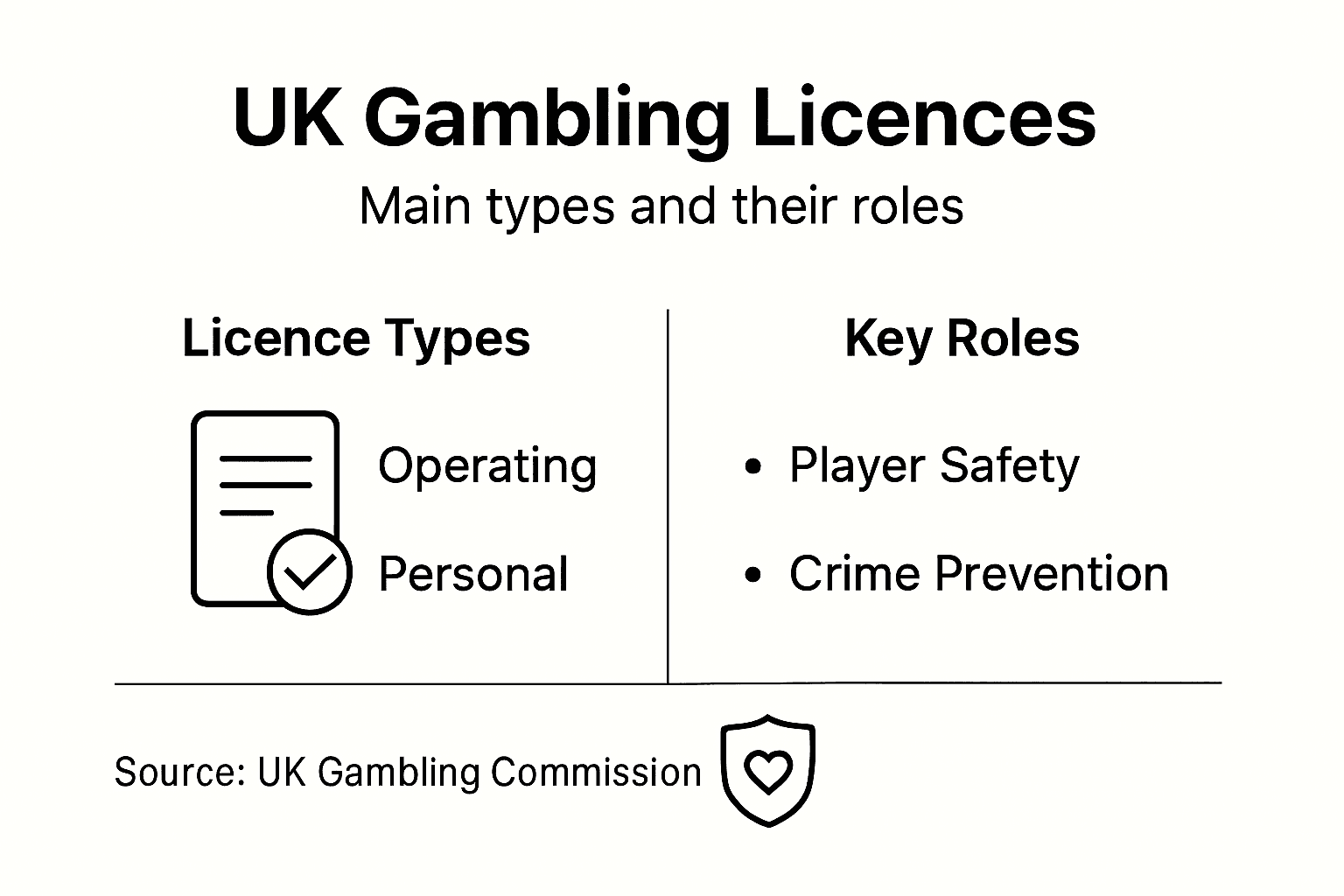
Here’s a summary of the main UK gambling licence types and who they are intended for:
| Licence Type | Main Purpose | Typical Holder | Examples |
|---|---|---|---|
| Operating Licence | Regulates overall gambling provision | Gambling businesses | Online casinos, betting companies |
| Personal Licence | Covers key staff roles | Individual employees | Casino managers, compliance officers |
| Premises Licence | Authorises specific physical sites | Location owners/operators | Bingo halls, betting shops, arcades |
Specific gambling licence categories include:
- Bingo hall licences
- Betting shop licences
- Adult gaming centre licences
- Family entertainment centre licences
- Casino operational licences
- Sporting track gambling licences
Some smaller-scale operators might qualify for exemptions under certain conditions, particularly regarding personal licences. However, most commercial gambling entities must obtain comprehensive licensing to legally operate within the United Kingdom.
Obtaining the correct gambling licence is not just a legal requirement, but a commitment to maintaining professional standards and protecting consumer interests.
The licensing process involves rigorous background checks, financial assessments, and ongoing compliance monitoring to ensure that gambling operations meet strict regulatory conditions.

Pro tip: Always verify the specific licence requirements for your particular gambling activity to ensure full legal compliance and avoid potential regulatory penalties.
Legal Frameworks Governing UK Licences
The cornerstone of gambling regulation in the United Kingdom is the Gambling Act 2005, which established a comprehensive legal framework for overseeing gambling activities. This pivotal legislation created the Gambling Commission and defined the fundamental principles governing gambling operations across the country.
Key components of the legal framework include:
- Establishing clear licensing objectives
- Defining regulatory responsibilities
- Creating mechanisms for consumer protection
- Implementing strict compliance standards
- Preventing criminal exploitation of gambling activities
The Gambling Commission plays a crucial role in implementing these legal frameworks by:
- Issuing detailed codes of practice
- Monitoring operator compliance
- Enforcing licensing conditions
- Protecting vulnerable individuals
- Ensuring gambling remains crime-free
Statutory Instruments form an essential part of the regulatory landscape, providing detailed guidance on how licensing authorities should interpret and apply the overarching legislation. These instruments cover various aspects of gambling operations, from financial requirements to marketing standards.
Legal frameworks are not just bureaucratic procedures, but essential safeguards protecting both gambling operators and consumers from potential misconduct.
The regulatory approach involves comprehensive codes of practice that address multiple dimensions of gambling activities. These codes mandate specific requirements for:
- Staff training and competence
- Financial transparency
- Marketing and advertising standards
- Complaint handling procedures
- Social responsibility provisions
Local licensing authorities retain significant discretion in applying these frameworks, allowing for nuanced responses to regional gambling environments while maintaining national standards.
Pro tip: Always review the most recent version of gambling regulations, as legal frameworks can evolve to address emerging challenges in the gambling industry.
Responsibilities of Licensed Operators
Licensed gambling operators in the United Kingdom bear substantial responsibilities that extend far beyond simply offering gambling services. Social responsibility code provisions mandate comprehensive obligations designed to protect players and maintain industry integrity.
Core responsibilities of licensed operators include:
- Ensuring fair and transparent gambling practices
- Protecting vulnerable individuals from potential harm
- Implementing robust age verification mechanisms
- Monitoring and preventing problematic gambling behaviour
- Maintaining strict financial transparency
- Training staff in responsible gambling protocols
The technical obligations for operators are equally rigorous, encompassing:
- Imposing mandatory deposit limits
- Continuously monitoring gambling activities
- Enforcing strict platform restrictions
- Maintaining technically compliant gambling systems
- Rapidly addressing potential operational risks
Regulatory Compliance represents a critical aspect of an operator’s licence. This involves comprehensive technical standards compliance that scrutinises every aspect of gambling platform operations.
Responsible gambling is not just a regulatory requirement, but a fundamental ethical commitment to player welfare.
Operators must conduct detailed local risk assessments, demonstrating proactive approaches to identifying and mitigating potential gambling-related harms. This includes developing sophisticated systems to detect and intervene when gambling behaviour becomes potentially problematic.
Failure to meet these extensive responsibilities can result in severe consequences, including licence suspension or complete revocation. The Gambling Commission maintains stringent oversight to ensure operators consistently meet these demanding standards.
Pro tip: Regularly review and update your internal compliance procedures to stay ahead of evolving regulatory requirements and protect both your licence and your players.
Risks Linked to Unlicensed Gambling
Unlicensed gambling represents a significant threat to player safety and financial security in the United Kingdom. Criminal justice research reveals profound risks associated with operators functioning outside regulatory frameworks.
The primary dangers of unlicensed gambling include:
- Complete absence of consumer protection mechanisms
- High probability of fraudulent practices
- Increased vulnerability to financial exploitation
- No mechanisms for addressing problem gambling
- Potential exposure to criminal networks
- Zero accountability for operator misconduct
Financial risks are particularly acute for vulnerable individuals. These platforms operate without oversight, meaning players have:
- No guaranteed payment of winnings
- No protection against unfair game mechanics
- Limited recourse for disputes
- Potential for identity theft
- Risk of uncontrolled personal data usage
Systemic Vulnerabilities in unlicensed gambling create environments ripe for manipulation. Gambling vulnerability studies demonstrate how these platforms can exacerbate mental health challenges and financial instability.
Unlicensed gambling is not merely an alternative marketplace, but a dangerous ecosystem that preys on player vulnerability.
Beyond immediate financial risks, unlicensed gambling contributes to broader societal problems including increased debt, potential criminal involvement, and long-term psychological harm. The lack of regulatory safeguards means players are essentially gambling without a safety net.
The table below compares licensed and unlicensed gambling platforms across crucial safety dimensions:
| Dimension | Licensed Platforms | Unlicensed Platforms |
|---|---|---|
| Consumer Protection | Strong safeguards and oversight | No protection, higher risks |
| Payment Security | Guaranteed, regulated processes | Payment often unreliable |
| Fair Game Assurance | Regular audits, transparent systems | Games may be unfair or manipulated |
| Data Privacy | Compliance with privacy laws | Vulnerable to data misuse |
Criminal organisations frequently exploit these unregulated spaces, using gambling platforms as mechanisms for money laundering and other illicit activities. Players become unwitting participants in potentially serious criminal enterprises.
Pro tip: Always verify a gambling platform’s licensing status through official UK regulatory channels before engaging in any online gambling activities.
Discover Licensed UK Casinos That Put Fair Play First
Navigating the complex world of gambling licences and regulations can feel overwhelming but it is crucial for your safety and enjoyment. This article highlights key concerns such as ensuring operators have a valid licence, safeguarding against unlicensed platforms, and understanding the responsibilities trusted providers must uphold. At Geeky Gambler, we understand these challenges and take the guesswork out of choosing where to play by focusing solely on licensed, reliable UK casino sites.

Start playing with confidence today. Visit Geeky Gambler to explore expertly reviewed casinos that meet the strict licensing demands outlined by the Gambling Act 2005. Each site features transparent information on bonuses, secure payments, and responsible gambling measures so you can avoid the risks of unlicensed operators. Don’t risk your money or peace of mind – make safe choices with licensed UK casinos recommended by professionals who prioritise your protection and enjoyment.
Frequently Asked Questions
What is the purpose of gambling licensing?
Gambling licensing serves to protect players, prevent criminal activities, and ensure that gambling is conducted fairly and transparently. It establishes a regulatory framework that operators must adhere to for the safety of consumers.
What types of gambling licences are there?
In the UK, there are three main types of gambling licences: Operating Licences for gambling businesses, Personal Licences for individuals in key roles, and Premises Licences for physical locations where gambling occurs.
Why is it important to check a gambling platform’s licensing status?
Verifying a gambling platform’s licensing status is crucial to ensure your safety and financial protection. Unlicensed platforms pose risks such as lack of consumer protections, potential fraud, and exposure to criminal activities.
What are the risks associated with unlicensed gambling?
Unlicensed gambling presents significant risks, including no consumer protection, high chances of fraud, lack of recourse for disputes, and greater exposure to exploitation and criminal networks.


