

Why set deposit limits in UK online casinos: safer play
Nearly 43–46% of UK casino players are confused about how deposit limits actually work, yet these tools are among the most effective ways to protect your bankroll and reduce gambling-related stress. Many players either skip setting limits entirely or choose figures so high they offer no real protection. That’s a missed opportunity. Deposit limits are not about restricting your fun; they’re about giving you genuine control over your spending so you can enjoy casino games without the anxiety of wondering where your money went. This guide breaks down exactly how deposit limits work in UK casinos, why the evidence strongly supports using them, and how to set them up properly.
Table of Contents
- What are deposit limits and how do they work?
- Benefits of setting deposit limits for UK casino players
- Common challenges and misconceptions about deposit limits
- How to set deposit limits: practical steps for UK players
- Find safe UK casinos and maximise your limits
- Frequently asked questions
Key Takeaways
| Point | Details |
|---|---|
| Deposit limits explained | UK casinos now require deposit limits based on gross deposits, helping players control their spending. |
| Evidence of benefits | Most UK players say deposit limits lead to better budgeting, less impulsive spending, and reduced stress. |
| Challenges exist | Confusion around gross vs net limits and strict policies highlight the need for player education. |
| Practical action | Setting limits is simple: use operator prompts, review regularly, and benefit from UKGC protections. |
What are deposit limits and how do they work?
A deposit limit is a cap on how much money you can add to your casino account within a set time period. You can typically choose a daily, weekly, or monthly limit, and once you hit that cap, no further deposits are accepted until the period resets. It sounds simple, but the details matter quite a lot.
Understanding the deposit limit types in the UK is essential before you set one. Historically, casinos offered both gross limits (total deposits made) and net limits (deposits minus withdrawals). From June 2026, the UKGC mandates gross-only deposit limits, meaning your limit is based purely on what you put in, not what you take out. This change removes a major source of confusion.
The UKGC also requires operators to prompt every player to set a financial limit before making their first deposit. Operators must also remind players to review their limits regularly. If you set multiple limits across different time periods, the most restrictive one always applies. Want to raise a limit? A cooling-off period of 24 to 72 hours kicks in first, giving you time to reconsider.
Here’s a quick overview of how the two limit types compare:
| Feature | Gross deposit limit | Net deposit limit |
|---|---|---|
| What it measures | Total deposits made | Deposits minus withdrawals |
| Clarity for players | High | Low (often misunderstood) |
| UKGC standard from June 2026 | Yes | No longer permitted |
| Risk of confusion | Minimal | Significant |
Key things to know about how deposit limits function:
- Daily limits reset every 24 hours and are the most immediate form of control
- Weekly limits suit players who prefer a broader budget view
- Monthly limits are ideal for tracking overall gambling spend
- Decreasing a limit takes effect immediately; increasing one requires a waiting period
- Operators must make limit settings easy to find and access at any time
For a broader look at how the UKGC shapes casino safety, it’s worth understanding the regulator’s wider role in protecting UK players.
Benefits of setting deposit limits for UK casino players
The data here is striking. According to UKGC research, 75% of players say deposit limits stop impulsive deposits, and 70% say they prevent overspending altogether. Those are not small numbers. They reflect a genuine, measurable shift in player behaviour when limits are in place.

Setting a limit before you start playing removes the temptation to chase losses. When you’ve hit your cap, the decision is made for you. There’s no internal debate, no “just one more deposit.” That psychological relief is something many players underestimate until they experience it.
The benefits of deposit limits extend beyond just stopping overspending. Players who use them consistently report:
- Greater confidence in their ability to manage their gambling budget
- Reduced anxiety about unexpected losses or runaway sessions
- Healthier habits built over time, as limits encourage intentional play rather than reactive spending
- Better awareness of actual spend, since gross limits make the numbers transparent
Deposit limits also empower players with control and help build sustainable gambling habits over the long term. Think of it like setting a weekly food budget. You don’t stop eating; you just make more deliberate choices.
Exploring the full range of responsible gambling tools available to UK players can complement your deposit limit strategy and give you even more control.
Pro Tip: Set your deposit limit before your first session, not after a losing streak. Limits set in a calm, rational moment are far more effective than those set reactively.
Common challenges and misconceptions about deposit limits
Despite the clear benefits, deposit limits are underused and widely misunderstood. Usage rates among UK players remain below 25%, and many of those who do set limits choose figures so high they provide no meaningful protection.
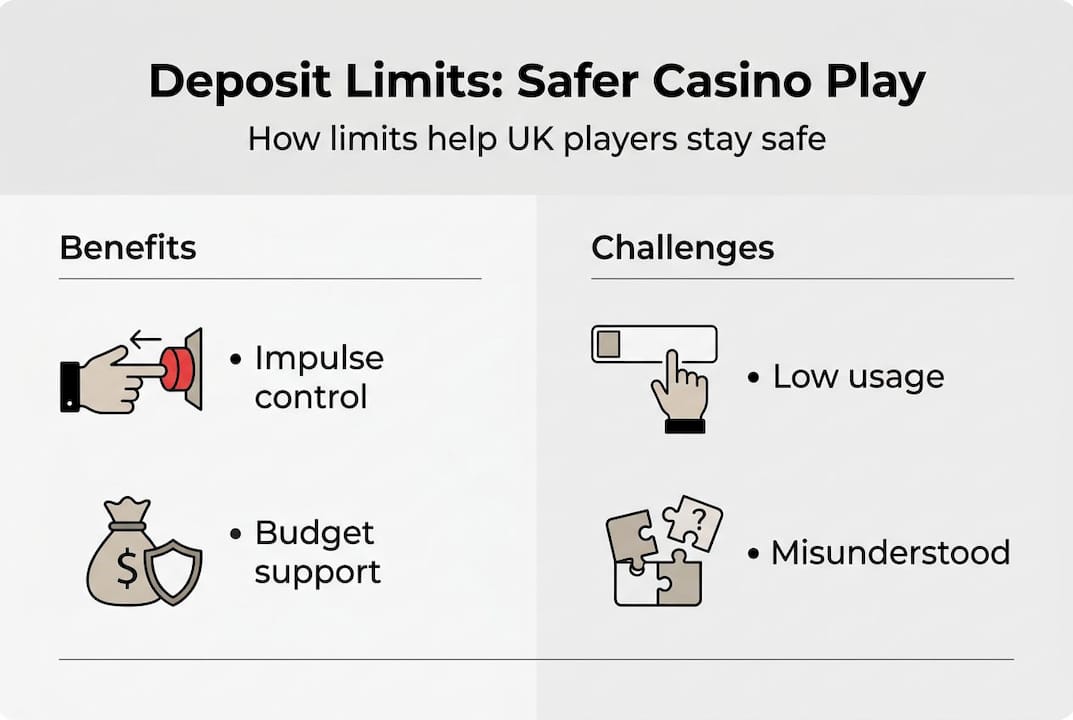
The confusion around limit types is well documented. UKGC research found that 44% of players answered incorrectly on net limits, and 39% got gross limits wrong. That’s a significant proportion of players operating with a fundamentally flawed understanding of the tool they’re using.
Here are the most common misconceptions UK players hold about deposit limits:
- “Net limits are stricter than gross limits.” Not necessarily. Net limits subtract withdrawals, which can make the effective cap much looser than it appears.
- “Setting a high limit is better than no limit.” A limit set at ten times your actual budget offers no real protection.
- “Deposit limits affect my winnings.” They don’t. Limits only cap what goes in, not what comes out.
- “I can raise my limit instantly if I need to.” No. A mandatory cooling-off period applies to all increases.
- “Deposit limits are only for problem gamblers.” This is perhaps the most damaging myth. Limits are a budgeting tool for everyone.
There’s also a broader policy concern worth noting. Evidence from European markets shows that 51 to 70% of players subject to very strict mandatory limits migrate to unregulated black market sites. This is why the UKGC’s approach focuses on clarity and player education rather than blanket restrictions.
For more context on what responsible gambling actually means in the UK, and how regulation shapes player safety, both are worth reading alongside this guide. Research published in peer-reviewed journals also explores how deposit limit policies affect behaviour across different regulatory environments.
How to set deposit limits: practical steps for UK players
Setting a deposit limit is straightforward once you know what to look for. Under UKGC rules, limits must be offered before your first deposit, and operators are required to make the process simple and accessible at all times.
Here’s how to do it properly:
- During registration: When you sign up at a UKGC-licensed casino, you’ll be prompted to set a deposit limit before you can make your first payment. Don’t skip this step.
- Choose the right period: Daily limits give the tightest control. Weekly or monthly limits suit players who prefer flexibility within a broader budget.
- Set a realistic figure: Base your limit on what you can genuinely afford to lose, not what you hope to win. A good rule of thumb is your entertainment budget for the month, divided by the number of sessions you plan.
- Review every six months: Operators are required to remind you to review your limits at least every six months. Use these prompts. Your financial situation changes, and your limits should reflect that.
- Adjust carefully: If you want to increase a limit, the 24 to 72 hour cooling-off period is there for a reason. Use that time to genuinely assess whether the increase is necessary.
Additional tips for getting the most from your limits:
- Combine deposit limits with session time limits for even stronger budget control
- Check your transaction history regularly to see how close you’re getting to your cap
- Use the responsible gambling guide to understand the full toolkit available to you
- Familiarise yourself with casino deposit methods so you understand how different payment options interact with your limits
- Review casino site security tips to ensure the platform you’re using handles your financial data safely
Pro Tip: If you ever feel the urge to raise your limit mid-session, log out first. The cooling-off period only helps if you actually wait it out.
Find safe UK casinos and maximise your limits
Knowing how deposit limits work is only half the equation. The other half is choosing a casino that makes responsible gambling genuinely easy, not just a checkbox buried in the settings.

At Geeky Gambler, we review and list only UKGC-licensed casinos that meet strict standards for player protection, fair play, and transparent bonus terms. If you’re looking to put your deposit limit knowledge into practice, start by exploring our curated online casino bonuses to find offers that work within your budget. You can also browse top-rated games from trusted providers like BGaming and Pragmatic Play, both known for fair RTP rates and engaging gameplay. Every casino we feature is vetted for responsible gambling tools, so you can play with confidence.
Frequently asked questions
Are deposit limits mandatory at UK online casinos?
Yes, UKGC requires operators to prompt every player to set a deposit limit before their first deposit, though the specific amount is chosen by the player.
Do deposit limits prevent withdrawals or winnings?
No, deposit limits only cap how much you can add to your account. Withdrawals are excluded from the calculation entirely, so your winnings remain fully accessible.
What happens if I try to increase my deposit limit?
A mandatory 24 to 72 hour cooling-off period applies to all increases, and if you have multiple limits set, the most restrictive one always takes precedence.
Why are gross deposit limits used in the UK?
The UKGC standardised limits as gross-only to reduce confusion, since research showed a large proportion of players misunderstood how net calculations worked, undermining the tool’s effectiveness.

