Affiliate Disclosure: This article contains affiliate links. If you click through and register with one of the casino brands featured, Geeky Gambler may receive a commission. This does not affect our editorial rankings — we only feature operators licensed by the UK Gambling Commission. Gambling can be addictive, please play responsibly. 18+ | BeGambleAware.org
The thrill of exploring new online casino promotions can quickly fade if safety and control are overlooked. Many players believe responsible gambling is about personal restraint alone, but the Gambling Commission’s shared responsibility model means operators, regulators, and players all contribute to a safer environment. Understanding these core principles and dispelling common misconceptions gives you practical tools to enjoy licensed casino options confidently, protecting both your finances and well-being.
Table of Contents
- Responsible Gambling: Core Principles And Misconceptions
- Essential Tools And Techniques For Safe Play
- Legal Duties And Player Protections In 2026
- Recognising Risks And Signs Of Gambling Harm
- Common Mistakes And How To Avoid Them
Key Takeaways
| Point | Details |
|---|---|
| Shared Responsibility | Responsible gambling involves operators, regulators, and players all contributing to a safer gambling environment. |
| Recognising Warning Signs | Be aware of gradual signs of problem gambling, such as spending more than intended or neglecting responsibilities. |
| Use of Tools | Employ practical management tools like deposit limits and self-exclusion to maintain control over gambling activity. |
| Upcoming Regulations | Expect enhanced player protections and financial controls in 2026, ensuring a safer gambling experience. |
Responsible gambling: Core principles and misconceptions
Responsible gambling isn’t just about individual willpower. The Gambling Commission emphasises a shared responsibility model where operators, regulators, and players all play active roles in creating a safer gambling environment.
Misconception one: it’s purely the player’s problem. Many believe gambling harm stems entirely from personal choices. However, regulatory frameworks emphasise shared responsibility including operator duties alongside player accountability. This shift recognises that addiction isn’t simply a character flaw.
Misconception two: responsible gambling means never gambling. This couldn’t be further from the truth. Most people gamble safely without developing problems. Responsible gambling is about maintaining control, understanding risks, and knowing when to stop—not complete abstinence.
Core Principles That Actually Matter
Three essential principles underpin safer gambling:
- Preventing crime in gambling operations through licensed, regulated platforms
- Ensuring fairness so games operate transparently with genuine odds
- Protecting vulnerable people, especially children and those susceptible to harm
Operators must implement these proactively. They can’t simply offer help tools and call it responsible gambling. Real responsibility means early intervention before harm escalates.
To help clarify the core principles of responsible gambling, here is a summary of how each principle impacts operators and players:
| Principle | Operator Responsibilities | Player Benefits |
|---|---|---|
| Preventing crime | Use licensed platforms, comply with laws | Lower risk of fraud or scams |
| Ensuring fairness | Transparent odds, unbiased game operation | Trustworthy gaming environment |
| Protecting vulnerable | Early intervention, proactive safeguards | Reduced risk of harm |
This summary illustrates the shared responsibility model underpinning UK safer gambling.
Misconception three: modern gambling isn’t addictive. Research shows that current gambling products use design techniques deliberately crafted to encourage prolonged play. Understanding addictive commercial gambling helps explain why some players struggle with control despite good intentions.
Responsible gambling requires both individual awareness and industry accountability. Neither works alone.
Misconception four: signs of problem gambling are obvious. Warning signs often develop gradually—spending more than planned, chasing losses, gambling to escape negative emotions. Many players don’t recognise these patterns until serious harm occurs.
Key warning signs include:
- Playing longer than intended
- Spending more money than budgeted
- Neglecting work, family, or hobbies
- Feeling anxious or irritable when unable to gamble
- Hiding gambling activity from others
Misconception five: you can’t get help without hitting rock bottom. Support exists at every stage. Early intervention actually works better than waiting for crisis point.
Pro tip: Set strict spending and time limits before you play, write them down, and review them regularly. Treating gambling like any entertainment budget—with fixed costs you never exceed—prevents most problems from developing.
Essential tools and techniques for safe play
The difference between casual gambling and problem gambling often comes down to using the right tools. operators provide numerous features designed to help you maintain control and play within your limits.

Tools You Should Know About
Several practical tools exist to help manage your gambling activity:
- Deposit limits cap how much you can spend in a set period (daily, weekly, or monthly)
- Time-outs pause your account for a chosen duration when you need a break
- Reality checks pop-up reminders showing how long you’ve played and money spent
- Self-exclusion temporarily closes your account to prevent access
These aren’t optional extras. They’re core features that safer gambling practices recommend using proactively, not just when problems emerge.
GAMSTOP: Your National Safety Net
GAMSTOP is a national self-exclusion scheme that blocks access across multiple licensed online casinos simultaneously. If you register, you’ll be excluded from all participating operators for a minimum of six months up to five years.
Why use it? Because one deposit limit at one casino isn’t enough if you can simply switch to another site. GAMSTOP solves this by creating a unified barrier across the entire licensed market.
Self-exclusion tools work best when used early, before gambling becomes a financial or emotional problem.
Setting Realistic Limits
Deposit limits only work if you set them honestly. Think about your monthly entertainment budget. If you spend £50 on cinema, meals, and hobbies combined, don’t set a £200 gambling limit and expect restraint.
Effective limits follow these principles:
- Match your actual disposable income, not what you wish you had
- Start lower than you think you need—you can always adjust upwards
- Use weekly limits rather than monthly to prevent end-of-month spending sprees
- Link limits to money you genuinely don’t need for bills or savings
Support When You Need It
Tools prevent problems, but what if you’re already struggling? The National Gambling Helpline offers free, confidential support 24/7. Beyond crisis support, treatment services include counselling and behavioural therapies available through the NHS and third sector organisations.
For England specifically, see England World Cup 2026 squad preview.
You don’t need to reach crisis point to access help. Early intervention works.
Pro tip: Combine three tools for maximum effectiveness: set a deposit limit, enable reality checks, and use time-outs after every session. This layered approach catches problems before they escalate.
Legal duties and player protections in 2026
2026 brings substantial changes to gambling regulation. These aren’t just bureaucratic adjustments—they directly affect how casinos operate and what protections you receive when you play.
Tax Changes Reshaping the Industry
From April 2026, operators face increased Remote Gaming Duty from 21% to 40%. This nearly doubles the tax burden on online casinos, fundamentally changing their business models.
What does this mean for players? Operators may adjust promotional offers, change game selections, or alter pricing structures. Some may exit the market entirely. These changes deliberately target higher-risk games to discourage excessive promotion of problematic products.
Additional changes include the removal of Bingo Duty from April 2026 and a new 25% remote betting rate launching in April 2027. These aren’t random policy shifts—they’re designed to disincentivise harm whilst maintaining a viable licensed industry.
Your New Player Protections
Whilst operators face higher taxes, you gain stronger protections. Effective October 2025, new mandatory rules enhance financial control and transparency:
- Deposit limit prompts appear before your first deposit, forcing you to set realistic spending caps
- Six-monthly review reminders require you to reassess and adjust limits regularly
- Fund protection disclosure shows clearly whether your money is protected if the casino becomes insolvent
- Biannual notifications inform you if deposits aren’t held in segregated accounts
These aren’t optional features—operators must implement them as licence conditions.
For quick reference, here is a comparison of new player protection measures from October 2025:
| Protection Feature | How It Works | Key Benefit for Players |
|---|---|---|
| Deposit limit prompt | Before first deposit, set limits | Helps prevent overspending |
| Six-monthly review reminder | Regular review of limits | Encourages financial awareness |
| Fund protection disclosure | Clear information about safeguards | Ensures players know their money is safe |
| Biannual deposit notifications | Updates on fund segregation | Alerts players to potential risks |
This table highlights the practical impacts of upcoming regulation changes for casino players.
Stronger protections and higher industry taxes work together to shift gambling towards sustainability and safety.
What Operators Must Do
Licensed casinos now have specific legal duties beyond traditional fairness and security:
- Implement mandatory deposit limit prompts before accepting any money
- Store customer funds separately from operating accounts
- Disclose precisely how customer money is protected
- Update players every six months on their fund protection status
- Comply with updated Licence Conditions and Codes of Practice
- Report on their player protection measures
Non-compliance results in licence suspension or revocation. This enforcement power ensures operators take protections seriously.
Choosing Compliant Casinos
Play only at licensed operators displaying current Gambling Commission approval. Verify they’re listed on the official register and display their licence number prominently.
Check their terms for deposit limit functionality and fund protection statements. Legitimate operators welcome transparency about these protections. If you can’t find clear information, that’s a red flag.
Pro tip: Before registering at any casino, screenshot or note their fund protection statement and licence details. This creates a record if you ever need to dispute a transaction or report concerns.
Recognising risks and signs of gambling harm
Gambling harm doesn’t announce itself loudly. It creeps in gradually, often masked by excitement or rationalised as temporary. Learning to spot the warning signs—in yourself or loved ones—enables early intervention before serious damage occurs.
Three Domains of Harm
Research shows gambling-related harm manifests across financial, relationship, and health dimensions. Understanding these three areas helps you recognise problems developing.
Financial harm is most obvious but often appears too late. You might notice:
- Spending money intended for essentials like food, rent, or utilities
- Borrowing from friends, family, or lenders to fund gambling
- Hidden accounts or secret gambling activity
- Selling possessions to raise cash
- Mounting debts or defaulted bills
Relationship harm develops silently. Partners and family members often suffer first. Watch for:
- Increased arguments about money or time spent gaming
- Emotional distance or withdrawn behaviour
- Broken promises to reduce gambling
- Isolating from friends and social activities
- In severe cases, domestic conflict or violence
Health harm encompasses both mental and physical effects. Common signs include:
- Anxiety, depression, or mood swings
- Sleep disruption or fatigue
- Neglecting physical health and hygiene
- Substance use increasing alongside gambling
- Thoughts of self-harm or suicide
Multiple harms occurring together signal serious problems requiring immediate professional intervention.
Risk Groups and Vulnerability
Certain groups face disproportionate harm. Research identifies younger males and individuals from lower-income ethnic minority backgrounds as higher-risk populations. However, vulnerability is dynamic and multifaceted, influenced by life events like bereavement, job loss, or relationship breakdown.
You might slip into vulnerability temporarily through crisis, then recover. Others experience legacy harm—ongoing negative effects even after stopping gambling. Both require different support approaches.
Spotting the Pattern
One isolated warning sign doesn’t confirm problem gambling. Look for patterns and escalation. Someone occasionally gambling beyond their budget differs greatly from someone consistently chasing losses, hiding activity, and borrowing money.
Take action when you notice:
- Multiple warning signs appearing together
- Behaviours intensifying over weeks or months
- The person minimising or denying problems
- Failed attempts to reduce gambling
- Mood changes linked to gambling results
If a friend or family member shows these signs, approach conversations gently without judgment. Shame prevents people seeking help.
Pro tip: If you recognise warning signs in yourself, write them down immediately with dates and context. This creates clarity about patterns and provides evidence to share with professional support services when you seek help.
Common mistakes and how to avoid them
Even experienced players fall into predictable traps. These aren’t character flaws—they’re psychological patterns that casinos understand and exploit. Recognising them gives you a significant advantage.
The Big Five Mistakes
Most gambling problems stem from five repeating errors. Understanding each one helps you spot it before it costs serious money.
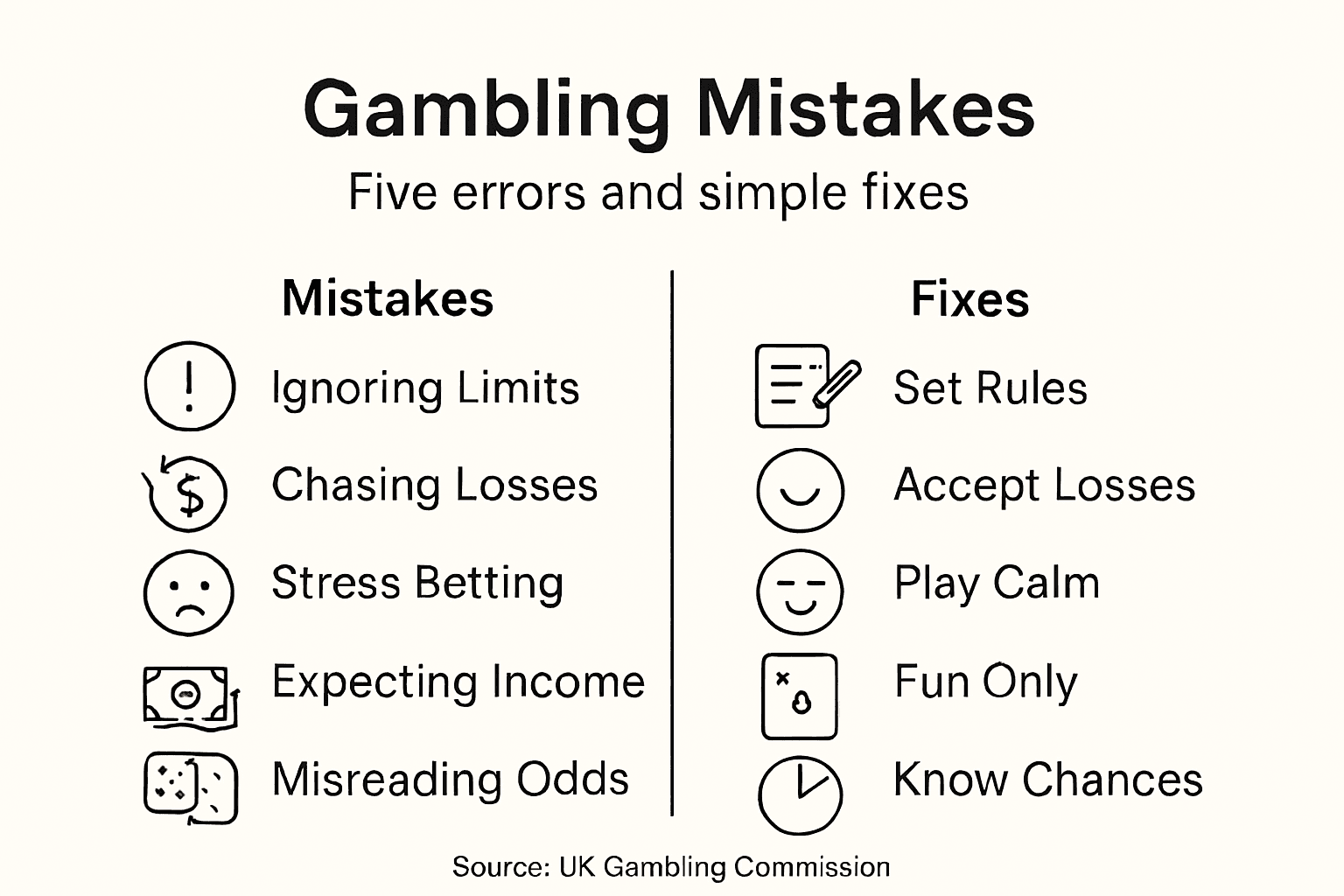
Mistake one: ignoring your limits. You set a deposit limit, then ignore it because “just this once.” Gambling management tools like deposit limits work only when you actually use them. Setting limits means nothing if you override them when emotions run high.
Mistake two: chasing losses. You lose £50, so you deposit another £100 to “win it back.” This is statistically guaranteed to lose more money. Every session is independent. Past losses don’t influence future outcomes.
Mistake three: gambling whilst stressed or drinking. Alcohol impairs judgment. Stress clouds decision-making. Combining either with gambling guarantees poor choices. Play only when calm and sober.
Mistake four: believing gambling is income. It isn’t. The house edge ensures long-term losses. Thinking of gambling as reliable money-making leads to chasing losses and excessive play.
Mistake five: misunderstanding the odds. You might think you’re “due a win” or spot patterns in random outcomes. Games use random number generators. Patterns don’t exist.
How Operators Exploit These Mistakes
Casinos profit from these errors. They use marketing deliberately designed to encourage excessive play, highlight big wins whilst hiding typical losses, and offer bonuses with conditions that keep you playing longer.
Responsible operators minimise these tactics. Poor operators amplify them. Operators committed to harm reduction avoid aggressive marketing and provide clear information about risk and house edge instead of promoting gambling as entertainment income.
Your responsibility is recognising these tricks and choosing operators who respect player wellbeing.
Your Defence Strategy
Defend yourself using three layers:
- Before playing: Set strict limits in writing and stick to them absolutely. Don’t negotiate with yourself.
- While playing: Enable reality checks. Track time and money spent continuously. Stop immediately when limits approach.
- After playing: Review what happened. Did you follow your plan? If not, why?
Mistakes repeat because we don’t examine them. Writing notes after sessions reveals patterns you’d otherwise miss.
Pro tip: Keep a simple gambling journal noting date, time, money spent, and whether you followed your limits. Review it weekly to spot patterns emerging before they become problems.
Empower Your Gambling Experience with Responsible Choice
Understanding the challenges of responsible gambling is the first step towards safer play. This article highlights the critical need for shared responsibility, realistic limit setting, and recognising warning signs before problems arise. If you want to stay informed about licensed casinos that prioritise fairness, transparency, and protect your wellbeing, Geeky Gambler offers expert guidance tailored for players like you.
Explore comprehensive reviews of trustworthy online casinos and discover exclusive bonuses that respect responsible gambling practices. Visit Geeky Gambler to make informed decisions that balance entertainment with control. Act now to benefit from the latest industry insights and secure your safest gambling journey today. Start your safe play adventure with trusted casino ratings and detailed guidance right here.
Frequently Asked Questions
What is responsible gambling?
Responsible gambling refers to practices and principles aimed at ensuring players gamble safely and within their limits, promoting control and awareness.
What are some signs of problem gambling I should look out for?
Key warning signs include playing longer than intended, spending more money than budgeted, neglecting personal responsibilities, and feeling anxious when not gambling.
How can I set realistic limits for gambling?
To set realistic limits, consider your actual disposable income, start lower than you think you need, and use weekly rather than monthly limits to avoid overspending.
What support is available for those struggling with gambling?
Support options include the National Gambling Helpline for immediate assistance and treatment services like counselling available through the NHS and various organisations.