
How-to guides, strategy, RTP, variance, bankroll, and withdrawals for UK casino players.

Casino compliance officer reviewing bank statement

Why did a casino ask for bank statements in the UK?


TL;DR:

  • UK-licensed casinos are required by law to conduct financial and identity checks, including bank statements, to verify funds and assess gambling affordability. Players are only asked to provide relevant information, such as their name, address, and source of income, which they can redact from unrelated transactions, but over-redaction may cause delays. Refusing to submit requested documents can lead to account restrictions or closure, and players should respond promptly and transparently to ensure smooth verification processes.

You log in to your favourite online casino, request a withdrawal, and get a message asking you to upload a bank statement. It feels intrusive, possibly suspicious, and you are left wondering whether something is wrong with your account. If you have asked yourself why did a casino ask for bank statement UK players must provide, you are not alone. The request is becoming far more common across UK-licensed platforms, and the reasons behind it are grounded in law rather than suspicion. This article explains everything clearly.

Table of Contents

Key takeaways

Point Details
Legal obligation drives requests UK casinos must carry out affordability and anti-money laundering checks as required by the UKGC.
Spending thresholds trigger checks Hitting £150 net deposits in 30 days or £1,000 in losses within 24 hours can prompt a bank statement request.
You can redact sensitive data Casinos need your name, address, and relevant transactions. Unrelated personal details can be removed safely.
Refusing may close your account Declining to provide documents can result in account restrictions or permanent closure.
Disputes have a formal route If you believe a request is unjustified, you can escalate to an Alternative Dispute Resolution body such as IBAS.

Why did a casino ask for bank statement UK regulations demand?

The short answer is that UK-licensed casinos are legally required to carry out financial checks on their players, and a bank statement is one of the most reliable documents for completing those checks. These obligations come from two separate but connected areas of regulation.

The first is Know Your Customer (KYC), a standard identity verification process used across financial services. The second, and more specific to gambling, is the affordability check, also called a financial risk check. UKGC legal requirements mean casinos must assess whether a player is gambling within their financial means and whether funds being deposited are legitimate.

These two types of checks serve distinct purposes, and it is worth understanding both:

  • KYC verification confirms your identity. It uses your name, address, date of birth, and sometimes a photo ID to make sure you are who you say you are.
  • Affordability checks go a step further. They assess whether your level of gambling activity is consistent with what someone in your financial situation could reasonably sustain without harm.
  • Anti-money laundering (AML) checks verify that the money entering your casino account is not the proceeds of criminal activity. A bank statement showing regular income and legitimate transactions satisfies this requirement.

“Financial checks do not assess your creditworthiness. They exist to identify vulnerability to gambling harm and to confirm the legitimacy of funds.” Source: SCCG Management

Casinos increasingly use three layers of checks: frictionless background screening via credit reference agencies, automated identity KYC tools using AI, and manual document reviews when automated systems cannot confirm a player’s financial picture. A bank statement request typically means the first two layers were insufficient.

What triggers a casino bank statement request?

Not every player gets asked. The casino bank statement request system is largely automated, triggered by specific patterns in your account activity. Understanding what sets off the alarm makes the process far less mysterious.

Here are the most common triggers used by UK-licensed operators:

  1. Reaching a net deposit threshold. Hitting £150 in net deposits within a 30-day period can trigger an initial check on some platforms. At this level, operators are required to pause your activity until basic affordability data is confirmed.
  2. Suffering significant losses. Proposed thresholds suggest that losses of £1,000 within 24 hours or £2,000 within 90 days would automatically prompt a document request.
  3. Sudden changes in deposit behaviour. If you typically deposit £50 a week and suddenly drop £500 in a single session, the casino’s risk system will flag the account.
  4. Using multiple payment methods. Switching between different cards, e-wallets, or bank accounts in quick succession can raise AML concerns, as it mirrors behaviour associated with layering illicit funds.
  5. Requesting a large withdrawal. Withdrawing an unusually large amount, particularly if it exceeds your total deposits, can prompt a source of funds check.

It is worth knowing that up to one in five regular punters may eventually be asked for financial documents under the current regulatory framework. Being asked is not an accusation.

Pro Tip: If you have recently changed jobs, received an inheritance, or had any unusual financial activity, consider adding a brief explanatory note when you submit your documents. This context helps compliance teams process your submission faster and reduces the chance of follow-up requests.

Woman reading casino document request email

What information do casinos actually need?

This is where many players make things harder for themselves than necessary. There is a widespread belief that you must hand over your full, unredacted bank statement showing every transaction you have ever made. That is not accurate.

The purpose of bank statement for casinos is focused and specific. Compliance teams are looking for a handful of things:

  • Your full name and address as they appear on your bank records, matching the details on your casino account.
  • Your account number and sort code header information to confirm the statement is genuine and belongs to you.
  • Relevant income transactions, such as salary credits, pension payments, or regular transfers, that demonstrate a legitimate source of funds.
  • Deposit transactions corresponding to the amounts you have placed into the casino account.

What you do not need to include is everything else. Players can redact sensitive transactions that have no bearing on gambling activity or source of funds verification, such as medical payments, subscriptions, or personal transfers. The key is balance. Over-redaction, where you block out so much that the required data is no longer clear, will get your document rejected and delay the process.

Pro Tip: Always submit an official PDF downloaded directly from your bank’s online portal rather than a photograph of a printed statement. PDFs carry metadata that confirms authenticity, and compliance teams process them far more quickly. Encrypted upload portals are the safest way to send these documents.

Here is what commonly leads to rejected documents:

  • Using a photographed paper statement that is blurry or cropped incorrectly.
  • Redacting your name, address, or sort code header by mistake.
  • Submitting a statement that is more than three months old.
  • Providing a statement that does not cover the period when the flagged deposits were made.

The casino identity verification process is designed to be proportionate. You are not expected to justify every penny you have ever spent. For a comprehensive overview of what reputable casinos require during onboarding, the casino security checklist on Geekygambler breaks down each step clearly.

Your rights and how to respond

Knowing your rights here is genuinely useful. You are not powerless, and cooperating does not mean accepting every request without question.

You have the right to ask the casino to explain precisely why the document is being requested and what specific concern prompted it. A reputable, UKGC-licensed operator will be able to provide a clear answer. If the explanation is vague or the request feels disproportionate, you can push back in writing.
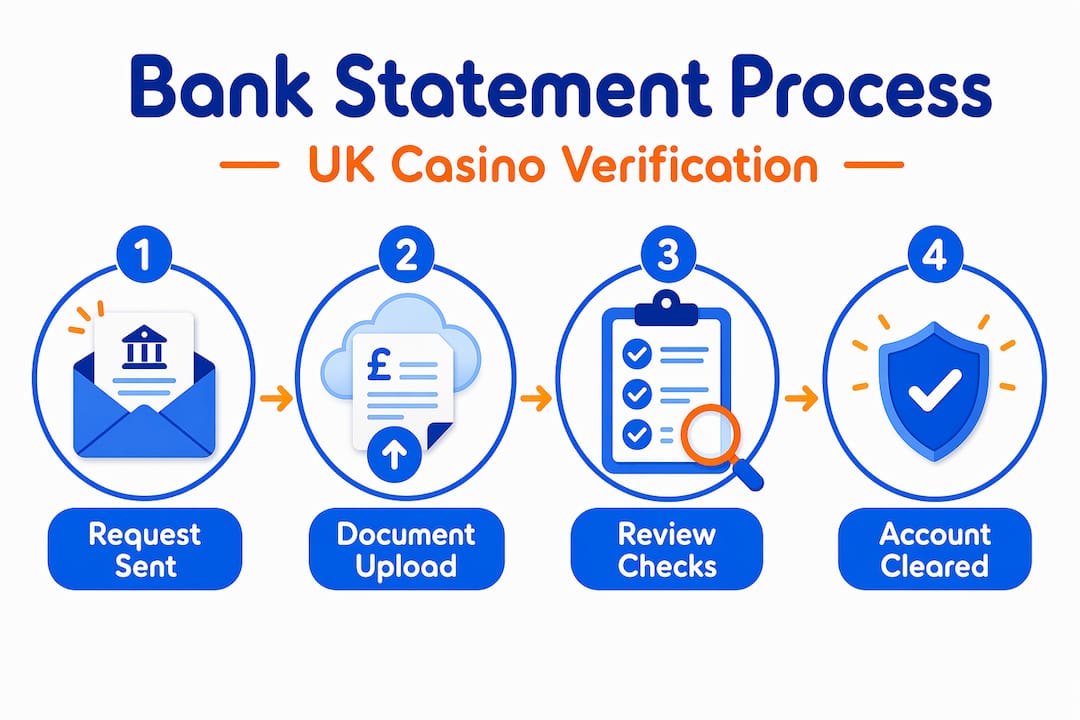
Infographic showing UK casino verification steps

That said, refusing entirely carries real consequences. Declining to provide documents typically results in your account being restricted or closed. Casinos are legally obligated to suspend services if they cannot complete a required check. This is not optional for them.

Here is a practical approach to handling the request well:

  • Respond promptly. The longer your account sits in a pending verification state, the more disruptive it becomes to your play.
  • Submit the minimum required information with any unnecessary data redacted.
  • Keep copies of everything you send and make a note of the date.
  • If the casino does not resolve your concern within eight weeks, you can escalate the dispute to an Alternative Dispute Resolution body such as IBAS (Independent Betting Adjudication Service).
  • Never send documents via unencrypted email. Use only the casino’s official secure upload portal or live chat document submission tool.

The UK casino verification process at reputable operators is far more transparent than at unlicensed sites. Choosing a casino that communicates clearly about verification from the outset saves a great deal of frustration later. Operators also document proof of funds to confirm that gambling activity is affordable and the money involved is legitimate.

My honest take on bank statement requests

I will be straightforward about this. The first time I encountered one of these requests, I found it jarring. It felt like being asked to prove I could afford a pint at the pub. That reaction is understandable, and I hear it constantly from UK players.

But having spent years watching how the regulatory framework has evolved, my view has shifted considerably. The checks are imperfect. Credit reference agency data is sometimes inaccurate, which means players occasionally receive requests they should not technically trigger. The industry tension between frictionless checks and meaningful player protection is real, and it creates unnecessary friction for low-risk players.

At the same time, I have seen what happens when these safeguards are absent. Players running up losses they cannot sustain. Operators looking the other way. The affordability check framework, however clunky, exists to catch genuine harm before it becomes irreversible.

My advice to anyone caught off guard by a bank statement request is to treat it the same way you would treat a question from your mortgage adviser. Respond calmly, submit what is actually needed, and do not overshare. The check is about your gambling activity, not your financial character.

— Traffic

Find casinos that handle verification properly

https://geekygambler.com

If you have been caught out by a poorly communicated verification request, the problem is often the casino rather than the process itself. Well-run, UKGC-licensed platforms explain their documentation requirements before you deposit, not after you try to withdraw. At Geekygambler, our UK casino reviews assess each operator on transparency, verification speed, and how they handle player documentation. We flag casinos that create unnecessary friction and highlight those that get it right. Whether you are looking for your first UK casino or reconsidering a current one, our reviews give you the full picture before you commit.

FAQ

Why did my casino suddenly ask for a bank statement?

Most sudden requests are triggered by reaching a spending or loss threshold, such as £150 in net deposits within 30 days or a significant loss event. The casino’s automated system flags the account for a financial risk check as required by UKGC rules.

Can I refuse to give a casino my bank statement?

You can decline, but refusing to provide documents typically results in account restrictions or closure. If you believe the request is unjustified, you can request an explanation and escalate to IBAS if the matter is unresolved.

Do I have to show my full bank statement?

No. Casinos only need your name, address, account header details, and relevant income and deposit transactions. You can redact unrelated transactions, but take care not to remove required identifying information.

Is a casino bank statement request a sign of fraud?

Not at all. It is a standard part of the UK casino verification process tied to anti-money laundering and player protection obligations. Requests for financial documents are a legal requirement for UKGC-licensed operators, not an indicator that your account has been compromised.

What should I do if my documents keep getting rejected?

Check that your statement is a current official PDF, that your name and address match your casino account exactly, and that you have not redacted the account header. If the problem persists, contact the casino’s compliance team directly and ask for specific guidance on what they require.


Man reading UK gambling tax rules online

Are UK online gambling winnings taxable? Full guide


TL;DR:

  • Most UK players are not required to pay tax on gambling winnings because operator-paid duties protect their earnings.
  • However, if gambling activity resembles a trade due to frequency, organization, or profitability, HMRC might consider winnings taxable income, requiring professional advice.

Most UK players are sitting on a legal privilege they barely know about. Gambling winnings are not taxed as Income Tax or Capital Gains Tax for individual players in the UK, which makes Britain one of the most player-friendly jurisdictions on earth. Yet confusion still runs rampant, largely because players compare their experience to the heavily taxed systems in the United States and parts of Europe. This guide cuts through the noise, explains exactly where UK law stands, and flags the rare situations where tax might actually apply to you.

Table of Contents

Key Takeaways

Point Details
Winnings usually untaxed Most UK players do not pay any tax on gambling winnings from licensed operators.
Operator pays the duty Gambling taxes are paid by the operators, not by individual gamblers.
Beware business-like activity If your gambling resembles a business, HMRC could treat your winnings as taxable income.
Interest is taxable Income earned from investing your winnings, such as interest, is taxable and must be declared.
Keep records and stay compliant Simple record keeping helps you track winnings and any taxable downstream income to stay on the right side of the law.

How UK law treats your online gambling winnings

Before anything else, it helps to understand what the law actually says and why it was written this way.

In UK tax law, a “winning” from gambling is not treated as “income” in the conventional sense. Income Tax applies to earnings from employment, self-employment, and certain investments. Capital Gains Tax applies to profits from selling assets. Gambling winnings fit neither category because gambling is legally viewed as a leisure activity rather than a commercial venture. The logic is straightforward: if you can lose money on a bet, the gain cannot be reliably classified as earned income.

The entity that does pay tax is the operator, not you. Under UK law, gambling duties are paid by operators, not players. HMRC administers these through specific levies including Remote Gaming Duty and General Betting Duty. When you spin a slot or place a football accumulator, the casino or bookmaker has already accounted for their tax obligation before you even log in.

HMRC’s position, in plain terms: Individual players do not have a tax liability on gambling winnings from UK-licensed operators. The operator pays duties to HMRC; the player keeps their winnings in full.

This is fundamentally different from the United States, where players must report all gambling winnings as taxable income and operators are required to issue tax forms above certain thresholds. In several EU countries, a withholding tax is deducted directly from large wins. The UK chose a different path, placing the fiscal burden entirely on operators, which is one reason why understanding UK gambling laws matters for anyone who plays regularly.

Here is a quick comparison of how the UK system stacks up against other major jurisdictions:

Country Player pays tax on winnings? Operator pays duty? Notes
United Kingdom No Yes Remote Gaming Duty, General Betting Duty
United States Yes Yes Federal + state taxes may apply
Germany Yes (since 2021) Yes 5% tax on stakes in some categories
Ireland No Yes Similar model to UK
France Varies Yes Depends on game type

As a UK resident playing at a licensed site, you fall into the most favourable column. The key benefits for players include:

  • No requirement to report winnings on a tax return
  • No tax deducted at source from your withdrawals
  • No threshold above which winnings become taxable
  • No distinction between small wins and jackpot amounts
  • Freedom to use winnings however you choose without a tax consequence at point of receipt

Staying informed about responsible gambling in the UK remains important regardless of the tax position, but at least you can do so without worrying that the taxman will take a cut of your lucky streak.

When could your gambling winnings ever be taxable?

While the general rule is reassuring, there is a genuine exception that serious players must understand. It is relatively rare, but it carries significant consequences if it applies to you.

Gambling activity can become taxable if HMRC decides it amounts to a trade. The word “trade” here has a specific legal meaning. It refers to activity carried out in an organised, systematic, and profit-seeking way, similar to running a business. If your gambling starts to look less like leisure and more like a profession, HMRC may take a very different view.

HMRC does not publish a definitive checklist, but tribunals and case law have established a set of indicators. These are commonly referred to as the “badges of trade” and include factors such as frequency of transactions, the degree of organisation, whether you use a system or method, the level of profit motive, and whether gambling is your primary source of income. No single factor is conclusive, but a combination of several creates risk.

Here is how a casual player differs from someone who might attract HMRC scrutiny:

Trait Casual gambler Potential ‘trader’
Frequency Occasional or weekly Daily, systematic sessions
Record keeping None or minimal Detailed logs, spreadsheets
Income dependency Supplementary Primary or sole income
Strategy Entertainment-based Data-driven, systematic
Scale of activity Small to moderate stakes High stakes, large volume
Skill element Random/luck-based Skill-based (e.g., poker, sports trading)

Professional poker players and matched bettors who earn consistently and substantially are the most likely individuals to fall within these parameters. That said, even here the law is not entirely settled. UK courts have generally been reluctant to classify gambling as a trade, but the risk is real enough that it warrants attention.

Pro Tip: If you earn more from gambling than from your employment over a sustained period, or if you gamble in a highly organised and methodical way, speak to a qualified accountant before assuming your winnings are automatically tax free. The cost of one professional consultation is far less than an unexpected HMRC inquiry.

If you suspect your activity might cross the line into trading, here are the steps you should take:

  1. Gather your records. Document your wins, losses, methods, and session frequency over the past 12 months.
  2. Calculate your net position. Work out whether you are consistently profitable and at what scale.
  3. Assess your dependency. Consider how much of your household income comes from gambling.
  4. Seek professional advice. Consult a tax accountant who has experience with gambling licensing rules and HMRC compliance.
  5. Register if advised. If a professional confirms that your activity constitutes a trade, register for Self Assessment with HMRC promptly to avoid penalties.

Other ways gambling winnings might trigger tax

Even when your winnings themselves are completely tax free, what you do with the money afterwards can still create a tax obligation. This is the nuance that many players completely overlook.

Interest generated from winnings is taxable, even though the original winnings were not. If you deposit £20,000 of casino wins into a savings account and earn £800 in interest over the year, that £800 is taxable income under standard rules. The same principle applies if you invest winnings in stocks and receive dividends, or if you purchase a buy-to-let property with gambling proceeds and collect rental income.

Woman transferring casino winnings to bank

The gambling wins themselves remain untouched by HMRC. But any income those wins then generate flows back into the ordinary tax system. This catches a surprising number of people off guard, particularly those who have had a genuinely life-changing win.

Practical examples of downstream taxable income include:

  • Savings interest above your Personal Savings Allowance (£1,000 for basic rate taxpayers, £500 for higher rate taxpayers in 2026)
  • Dividend income from shares purchased with winnings, above the annual dividend allowance
  • Rental income from property acquired using gambling funds
  • Self-employment income if you teach others how to gamble profitably or write about it commercially
  • Crypto gains if you convert winnings into cryptocurrency and later sell at a profit

Pro Tip: You do not need to keep detailed records of every gambling session unless you are a suspected trader. But if your wins have significantly boosted your savings or investment portfolio, it is worth noting where the funds originated. This helps you separate taxable returns from the original tax-free capital if HMRC ever asks questions. Understanding tax and payment methods at your chosen casino can also help you keep cleaner financial records from the outset.

Good financial hygiene is not about paranoia. It is simply about having clear, credible records should any question ever arise.

Who pays gambling taxes in the UK and how regulation protects you

Understanding the structure of UK gambling taxation explains why players are so well protected, and gives context to the entire regulatory framework.

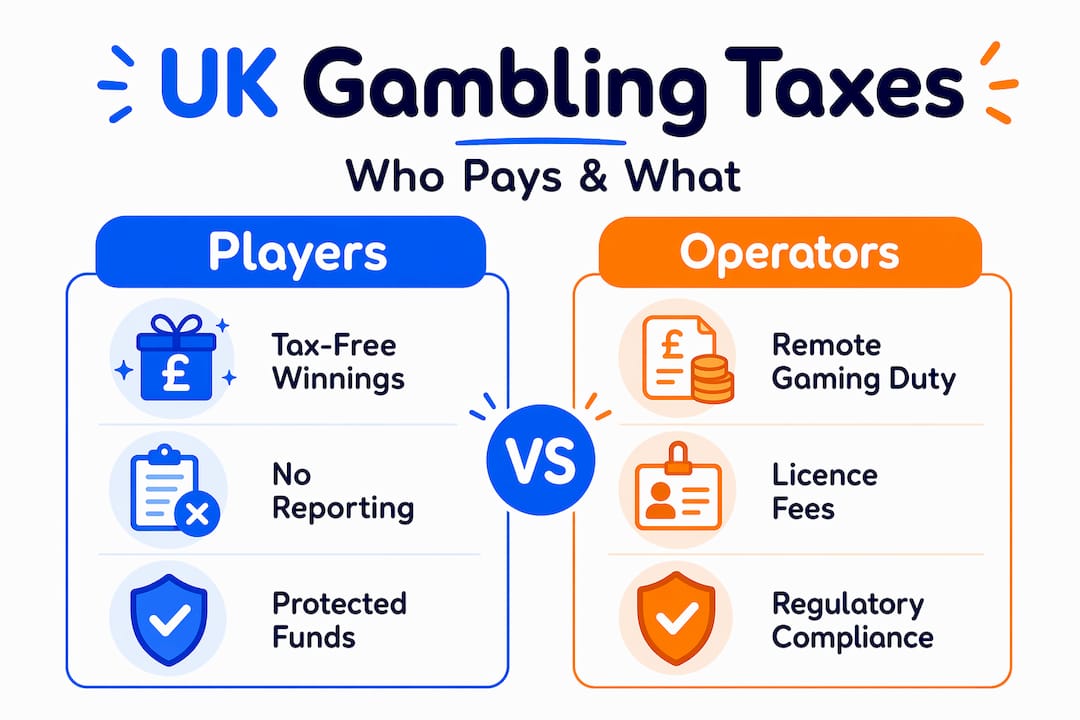
Operators who hold a UK Gambling Commission licence and offer services to UK residents are subject to a range of gambling duties administered by HMRC. The two most significant for online players are Remote Gaming Duty and General Betting Duty.

Infographic comparing gambling tax for players and operators

Duty type Who it applies to Rate (as of 2026) What it covers
Remote Gaming Duty Online casino operators 21% of gross gaming yield Slots, table games, live casino
General Betting Duty Bookmakers and spread betters 15% of net receipts Sports betting, fixed-odds wagers
Pool Betting Duty Pool operators 15% of net pool Football pools and similar

These gambling duties are borne by operators and built into the economics of the product. In simple terms, the house edge and margin you compete against already accounts for the operator’s tax burden. You never see the duty as a line item, because it is their responsibility, not yours.

This structure benefits players in several ways:

  • You receive your full winnings without any deduction at source
  • There is no administrative burden on you to report ordinary wins
  • Operators are commercially motivated to offer competitive odds and bonuses because their margins account for all costs including tax
  • The regulatory framework under gambling regulation and safety standards ensures operators meet their obligations before they can serve you

If you ever have a genuine query about your own tax position relating to gambling, HMRC provides a dedicated contact route for gambling duties enquiries. For personal tax questions, the Self Assessment helpline is the appropriate channel. Do not assume a gambling-duties contact will handle personal Income Tax queries, as these are handled separately.

The UKGC casino safety actions in recent years have further strengthened the framework, ensuring that licensed operators remain accountable to both players and HMRC simultaneously.

Why the myth of ‘tax-free winnings’ still trips up UK gamblers

Here is our honest take, having spent years covering the UK gambling landscape.

The confusion around gambling tax is not random. It is structural. Most gambling content online is produced for a global audience, and global usually means American. The US system, where you owe federal tax on every dollar you win and operators are legally required to report large payouts, gets treated as the default. UK players read that content and worry unnecessarily.

The second source of confusion is social. People who have had a big win sometimes do not tell anyone, partly out of superstition and partly because they assume the government will want a share. Friends and family perpetuate the myth by saying things like “you’ll have to pay tax on that.” They mean well but they are wrong, at least in the UK.

What genuinely does trip players up is the business-activity question. We have seen cases, both reported and anecdotal, where a player who was genuinely just a serious recreational gambler attracted unwanted attention simply because their bank account showed large, regular gambling-related transactions. The appearance of business-like behaviour, even without the underlying intent, can prompt enquiries. Keeping a simple record, even a basic spreadsheet of your sessions, gives you a credible paper trail that confirms the recreational nature of your activity.

The downstream income point also tends to catch people out after a substantial win. Winning £50,000 at an online casino is entirely tax free. Putting it in a high-yield savings account and earning £2,500 in interest is not. That distinction matters once wins reach a meaningful size.

Our advice is this: relax about the wins themselves, but stay thoughtful about what you do with the money afterwards. Visit our safer gambling guide to stay informed about the full picture of playing wisely in the UK.

Next steps: play smart and tap trusted resources

Now that you understand the tax picture clearly, you are in a strong position to enjoy online gambling in the UK with genuine peace of mind.

https://geekygambler.com

Playing with licensed UK operators means your winnings are already protected by the operator-pays duty model, and you have access to the full range of responsible gambling tools required by the UKGC. At Geeky Gambler, we review and verify casinos specifically for UK players, checking licensing, fairness, security, and payment reliability before recommending anything. If you want to make the most of your play, browsing our curated list of best online casino bonuses is a smart starting point. Every offer we feature is from a licensed operator, which means your winnings stay yours.

Frequently asked questions

Do UK gambling sites report my winnings to HMRC?

No, UK gambling operators do not report individual players’ winnings to HMRC because personal winnings are not taxed as income or capital gains for UK residents.

Do I need to declare gambling winnings on my self-assessment tax return?

No, you do not need to declare typical gambling winnings from UK licensed operators. The only exception is if HMRC determines that your gambling amounts to a trade, at which point self-employment income tax rules may apply.

Are foreign gambling winnings taxed differently in the UK?

Gambling winnings from foreign operators are generally not taxed for UK residents either, since UK tax law does not tax gambling income at the personal level. Always check whether a foreign jurisdiction applies withholding tax before you play abroad.

What should I do if I earn interest on my gambling winnings?

You must report any interest or other income earned on winnings through your usual Self Assessment tax return, as the income generated by gambling funds is fully taxable under standard rules.

Woman uses AI-powered online casino dashboard

How AI transforms online gambling: security, strategy and play


TL;DR:

  • AI drives online gambling growth by shaping odds, monitoring behaviour, and enhancing security for players. It enables real-time fraud detection, responsible gambling interventions, and personalised experiences while being regulated for fairness and data privacy. However, understanding AI’s subtle influence and ensuring responsible use remain essential for safe and fair betting.

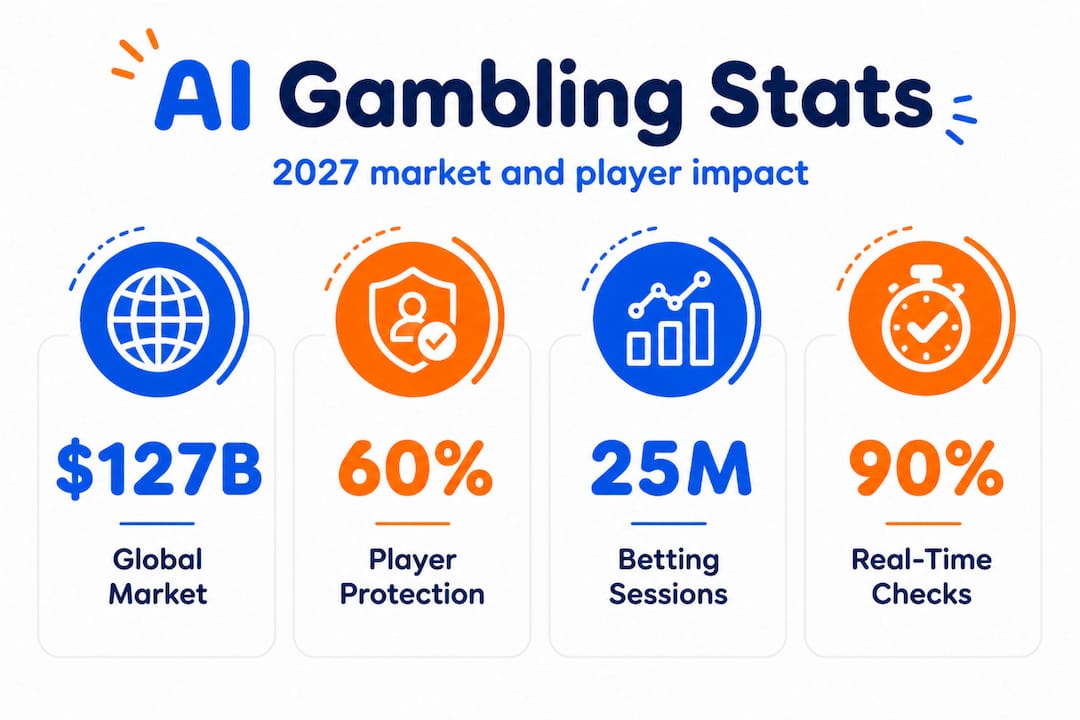
The global online gambling market is projected to exceed $127 billion by 2027, and a significant portion of that growth is being driven by artificial intelligence. Most players assume their results are purely down to luck and the spin of a reel, but behind every bet you place on a UK-licensed site, AI is quietly shaping the odds, monitoring your behaviour, and safeguarding your account. This article breaks down exactly how that works, covering everything from fraud detection and responsible gambling tools to smarter odds-setting and the regulation that keeps it all in check.

Table of Contents

Key Takeaways

Point Details
AI powers modern gambling From odds adjustment to player interventions, artificial intelligence shapes today’s UK online casinos.
Player safety boosted AI systems monitor behaviour to help prevent problem gambling and fraud more effectively than manual methods.
Regulation is crucial Strict UK rules mean AI must be fair, transparent, and respectful of player privacy at all times.
Stay in control Smart bettors use personal limits and ask about how AI on a site works before playing.

AI basics in online gambling: what you need to know

Artificial intelligence, in the gambling context, refers to software systems that learn from data, identify patterns, and make decisions with little or no human input. That covers a broad range of tools, from machine learning algorithms that adjust odds in real time, to natural language processing (NLP) systems that power live chat support. These are not futuristic ideas. They are running on UK casino sites right now.

The simplest way to think about AI in gambling is this: where a human analyst once reviewed data manually and made a decision, an AI system now does it in milliseconds and at far greater scale. Operators use AI for dynamic odds adjustment and risk management in betting, meaning the price you see on a market is influenced by machine learning, not just a bookmaker’s intuition.

Here is a clear comparison of how AI-driven tasks stack up against traditional manual processes:

Task Traditional approach AI-driven approach
Odds setting Human traders using spreadsheets Real-time machine learning models
Fraud detection Manual account reviews Automated anomaly detection
Customer support Human agents, limited hours 24/7 AI chatbots with NLP
Problem gambling detection Periodic manual checks Continuous behavioural monitoring
KYC verification Manual document review Automated image and data analysis

The core benefits AI brings to players include:

  • Faster, fairer games: Randomisation algorithms ensure game outcomes are genuinely unpredictable.
  • Quicker account checks: Automated KYC reduces delays when you sign up or withdraw.
  • More responsive support: AI chatbots handle common queries instantly, around the clock.
  • Personalised experience: Platforms surface games and offers that match your actual preferences.

For operators, the gains are equally significant. Reduced fraud losses, lower compliance costs, and the ability to serve millions of players simultaneously without a proportional increase in staff. Understanding these foundations helps you appreciate why the industry is investing so heavily in AI, and why keeping up with future trends in online gambling is increasingly important for every UK player.

How AI improves security and responsible gambling

Now that you know the basics, let’s look at how AI protects players and helps create a safer betting environment.

The most meaningful application of AI for UK gamblers is arguably in player protection. Rather than waiting for a player to self-report a problem, AI systems watch for the early warning signs automatically. These include a sudden increase in bet sizes, significantly longer session times, repeated deposits within a short window, and chasing losses after a run of bad outcomes.

Compliance officer monitoring AI gambling alerts

AI supports responsible gambling by monitoring behaviour for problem play signs and triggering interventions, such as automated messages, cooling-off prompts, or direct outreach from a welfare team. This happens in real time, not after weeks of manual review.

Here is how AI-powered protection compares to manual methods:

Measure Manual detection AI detection
Speed of identification Days or weeks Real time
Volume of players monitored Limited by staff capacity All players simultaneously
Consistency Variable (human error) Highly consistent
Intervention type Reactive, after complaint Proactive, before escalation
KYC / AML checks Slow document review Instant automated verification

AI also plays a vital role in Know Your Customer (KYC) and Anti-Money Laundering (AML) processes. When you join a UK-licensed casino, your identity documents are verified against databases in seconds. Understanding KYC in UK gambling is worth your time, because it directly affects how quickly you can deposit and withdraw. AML systems flag unusual transaction patterns that might indicate illicit funds.

However, the technology is not without flaws. The UK Gambling Commission highlights risks of poorly configured AI in AML, requiring oversight and effectiveness checks to ensure the system does not generate excessive false positives or miss genuine threats. A poorly calibrated model might flag a legitimate high-stakes player as suspicious, or worse, miss a genuine case of financial crime entirely.

A practical example: imagine a player who has been betting steadily for months suddenly doubles their deposit frequency over a weekend. An AI system flags this as a potential trigger. The operator’s responsible gambling team is alerted, and the player receives a personalised check-in message. That kind of proactive outreach would simply not be possible at scale without machine learning. You can learn more about casino licensing and regulations to understand the legal framework that makes this mandatory for UK operators.

Pro Tip: When evaluating a new casino, look for clear information about how they handle AI-driven interventions. A reputable operator will explain their responsible gambling tools, including whether those tools include automated monitoring and what happens if you are flagged.

AI in odds setting and smarter betting strategies

Beyond safeguarding players, AI is changing how odds are set and bets are placed, and here is what that means for your betting experience.

Odds-setting has traditionally been a blend of expertise, market data, and gut instinct. Modern sportsbooks have replaced much of that process with machine learning models that process thousands of data points simultaneously. Injuries, weather conditions, historical head-to-head records, in-play momentum, and even social media sentiment can all feed into the algorithm. The result is odds that shift faster and more accurately than any human trader could manage alone.

What does dynamic odds adjustment actually mean for you as a bettor? It means prices move quickly. A sharp bet placed by a professional punter in one part of the world can cause an operator’s AI to recalibrate odds within seconds, before you even see the change. It also means genuine value windows are shorter. The innovations in UK online casinos increasingly reflect this reality, with operators deploying AI not just to set prices but to offer personalised markets based on your betting history.

AI-powered tipster services and data tools are also growing in popularity. These platforms claim to use predictive models to identify value bets, analysing historical data far beyond what any individual could process. Key points to consider:

  • No system is infallible. Even the most sophisticated model cannot account for truly random events.
  • Overfitting is a real risk. A model trained too specifically on past data may perform poorly on new events.
  • Bias in training data can lead to systematically skewed predictions, particularly in lower-profile leagues or niche sports.
  • Unpredictability is inherent. Sports and casino games contain randomness that no algorithm can fully eliminate.
  • Operators have an edge. Their AI systems are more powerful than any consumer-facing tool, so be realistic about your advantage.

Pro Tip: No matter how convincing an AI-driven betting tool appears, always set your own deposit and loss limits before you start. AI can offer a useful steer, but it should never be treated as a guarantee of outcome.

The projected market size of $127 billion by 2027 reflects how central AI-driven market expansion has become to the industry’s growth story. Players who understand the mechanics are better placed to use these tools intelligently rather than being led by them.

Infographic showing AI gambling statistics and impact

Regulation, fairness and the risks of AI in UK gambling

With AI playing a growing role in every bet, it is vital to know how UK law and regulation aim to keep the system fair and transparent.

The UK Gambling Commission requires licensed operators to demonstrate transparency in how they use AI, protect player data under GDPR (the General Data Protection Regulation, which governs how your personal information is used), and carry out regular reviews of their AI systems. UK gambling regulation is among the strictest in the world, but the speed of AI development means regulators are constantly playing catch-up.

UK regulators emphasise transparency, data privacy under GDPR, and benchmarks for AI risk detection models to ensure fairness and effectiveness. This means operators cannot simply deploy an AI tool and walk away. They must prove it works, document how it makes decisions, and be prepared to explain those decisions to regulators.

Real-world AI failures in gambling have included:

  1. High-risk gamblers slipping through automated screening because their behaviour did not match the model’s trained patterns.
  2. AI chatbots inadvertently directing players towards unlicensed or illegal gambling sites through poor content moderation.
  3. AI-generated identity documents being used to defeat automated KYC systems, raising serious AML concerns.
  4. Intervention systems triggering incorrectly, applying time-outs to players who had not shown genuine signs of harm, causing frustration and complaints.

These failures are not hypothetical. They are documented risks acknowledged by regulators and operators alike. The UK Gambling Commission’s guidance is explicit: AI tools must be configured correctly and reviewed continuously, not set up once and left to run unchecked.

“Poorly configured AI in AML and responsible gambling tools creates significant risks for operators and players alike. Effectiveness checks, human oversight, and regular recalibration are essential to ensure these systems serve their intended purpose.” — UK Gambling Commission

When choosing a casino, look for these signs that their AI use is regulated and responsible:

  1. Clear responsible gambling policy available on the site.
  2. Evidence of third-party auditing of game fairness (eCOGRA, iTech Labs).
  3. GDPR-compliant privacy policy explaining how AI uses your data.
  4. Named self-exclusion and cooling-off tools that are easy to activate.
  5. Published AML policy with a named Money Laundering Reporting Officer.

Understanding UK gambling laws gives you a sharper lens for evaluating whether a site is genuinely compliant or simply ticking boxes.

What most guides miss: the subtle risks and rewards of AI in your betting life

Here at Geeky Gambler, we have reviewed hundreds of UK-licensed casinos, and we have noticed a persistent gap in how AI is discussed. Most coverage focuses on the headline benefits: faster fraud detection, personalised games, smarter odds. What gets far less attention is the subtler way AI can nudge your behaviour, often without you realising it.

Think about personalised bonus offers. An AI system knows your playing history intimately. It knows which games keep you engaged longest, which bonus formats make you deposit again, and how much of a nudge it takes to bring you back after a quiet period. While AI boosts personalisation and efficiency, ethical concerns include a lack of human oversight in interventions and the potential to promote harmful behaviours via targeted nudges. That is not a fringe concern. It is a documented risk acknowledged at industry level.

The practical implication is this: a promotional offer that feels perfectly tailored to you probably is perfectly tailored to you, by a system that has analysed your weaknesses as much as your preferences. That is not inherently sinister, but it does mean passive trust is not enough. You need to actively set your own limits and challenge offers that feel like they are pulling you back to the tables.

Chatbots are another area where the gap between perception and reality is wide. When you interact with a casino’s support chat, you may believe you are getting consistent, accurate advice. The reality is that chatbots in casino support vary enormously in quality. A poorly configured bot can give wrong information about withdrawal limits, self-exclusion processes, or bonus terms. If something important is at stake, always escalate to a human agent.

Our advice: before you sign up anywhere, activate deposit limits, set a session time reminder, and read the responsible gambling page. Do not wait for the AI to intervene. Take control first, and use the platform’s tools proactively rather than reactively. A genuinely well-run, AI-enabled casino should make those controls prominent and easy to use. If they are buried in a sub-menu, that tells you something.

Explore smarter, safer gambling with Geeky Gambler

Applying everything you have read here starts with choosing operators who take AI seriously, not just as a commercial tool, but as a genuine means of protecting players and delivering a fair, transparent experience.

https://geekygambler.com

At Geeky Gambler, we independently review and rate UK-licensed casinos with all of this in mind. Our assessments cover security credentials, responsible gambling tools, bonus terms, and the quality of the platforms behind the games. You can browse our curated selection of leading game providers to find out which studios are pushing the boundaries of fair and engaging play. We also keep our top casino bonuses page updated with the latest verified offers, so you can claim promotions from operators who meet our standards for transparency and player protection. Let us do the groundwork so you can play with confidence.

Frequently asked questions

How does AI detect problem gambling?

AI monitors betting patterns and session lengths to flag risky behaviours, such as sudden deposit increases or loss-chasing, and triggers automated interventions before problems escalate.

Can AI affect the fairness of online gambling?

Yes, and the risks are real: poorly configured AI in AML or responsible gambling tools can unfairly block legitimate players or miss genuine cases of harm, which is why UK law demands regular oversight and transparency.

Does AI give players an advantage in betting?

AI can surface dynamic odds adjustments and personalised insights, but outcomes are never guaranteed, and the operator’s AI systems will always have more data and processing power than consumer-facing tools.

Is my private data safe with AI-powered casinos?

UK regulators require GDPR compliance and strict benchmarks for AI risk models, meaning reputable licensed operators must explain how your data is used and protect it from misuse or unauthorised access.

Man responsibly gambling at home table

Step-by-step responsible gambling: Your guide to safer UK play


TL;DR:

  • Verify UKGC license and set personal limits before gambling starts.
  • Use responsible tools like reality checks and session time-outs consistently.
  • Self-exclusion is a key option when limits and tools no longer ensure safe play.

Online gambling is genuinely enjoyable when approached with a clear head and firm boundaries, yet the ease of access makes it all too simple to lose track of time, money, and intention. Gambling participation sits at 46% of UK adults in the past four weeks (2024, Wave 4), a figure that underlines just how mainstream it has become. That popularity is not a problem in itself. The problem arrives when players jump in without preparation. This guide walks you through every practical step, from checking a site’s licence to activating self-exclusion, so your gambling stays an entertainment choice rather than a financial burden.

Table of Contents

Key Takeaways

Point Details
Stick to strict limits Set hard boundaries on deposits, losses, and time to maintain control.
Use built-in safety tools Leverage all operator tools like time-outs, reality checks, and activity logs for safer play.
Self-exclusion is effective When in doubt, use self-exclusion schemes and extra support to reinforce quitting or pausing.
Stay vigilant for pitfalls Avoid chasing losses and be alert to signs of risky behaviour or loss of control.

Before you start: What you need for safe gambling

With the stakes clarified, it is crucial to know what to get in place before your first (or next) bet. Safe gambling does not begin the moment you click “deposit.” It begins well before that, in the choices you make about where you play and how you prepare.

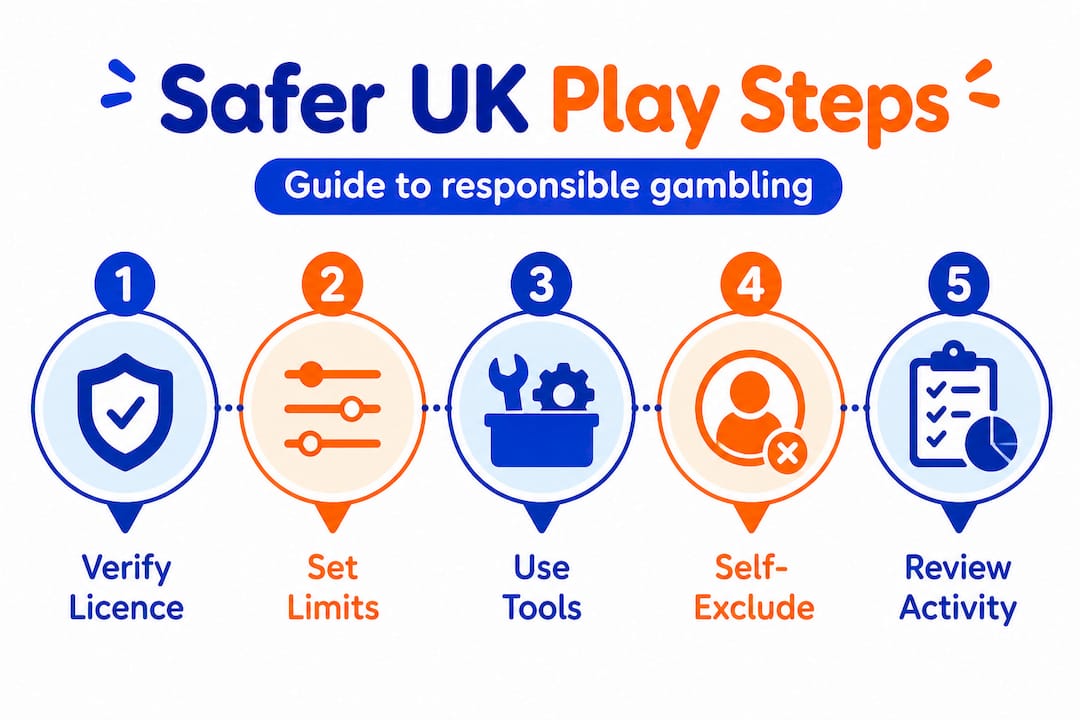
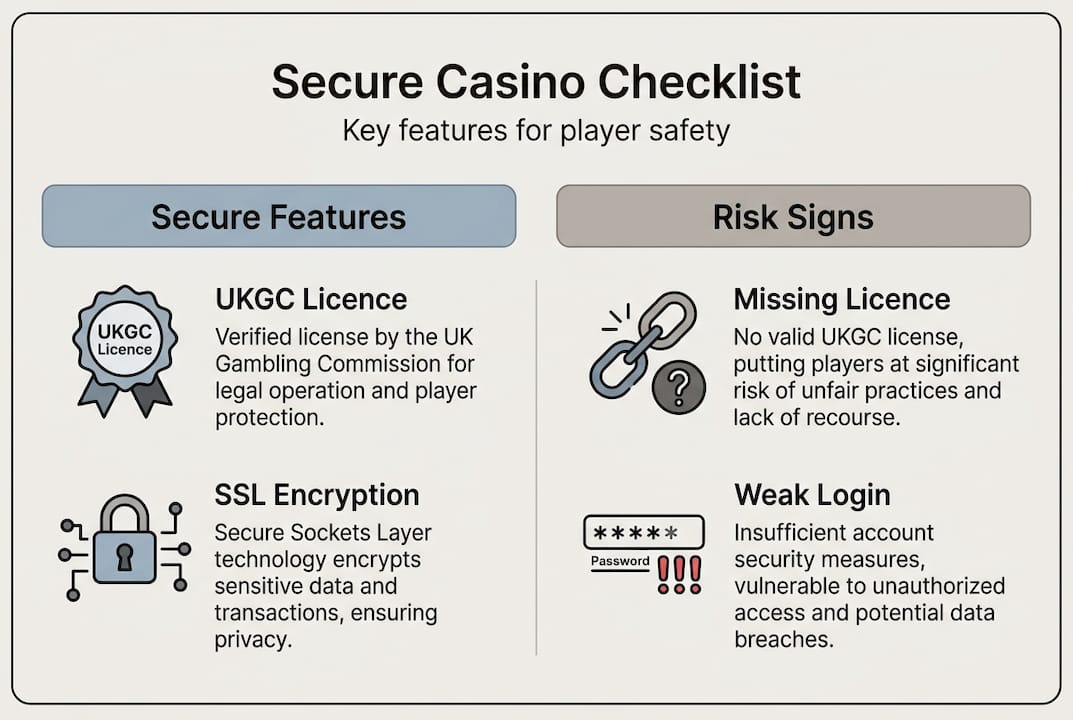
Verify the licence first. Every reputable UK site should display a Gambling Commission badge in its footer. UKGC-licensed sites are legally required to offer mandatory player protection tools, strict age verification, and a clear dispute resolution process. Playing on an unlicensed site removes all of those safeguards instantly. Understanding UK gambling laws gives you a clearer picture of what protections you are legally entitled to as a player.

Separate your gambling funds. Many experienced players use a dedicated e-wallet or a prepaid card loaded with only their gambling budget. Once that balance is gone, the session ends. There is no dipping into rent money, no “I’ll pay it back next week” reasoning. This single habit prevents the vast majority of financial harms associated with recreational gambling.

Check your mindset honestly. Are you gambling to have fun, or are you gambling to recover a previous loss? That distinction matters enormously. Gambling should be treated as paid entertainment, similar to buying a cinema ticket. You go in expecting to spend a fixed amount in exchange for an experience, not a guaranteed return.

Here is a quick pre-session checklist to run through every time:

  • Confirm the site’s UKGC licence is active via the public register
  • Set a hard deposit limit before you top up your account
  • Allocate a specific time window and stick to it
  • Log your starting balance so you can track actual spend
  • Confirm you are playing for enjoyment, not to solve a money problem
Preparation step Why it matters Time required
Verify UKGC licence Ensures legal protections apply 2 minutes
Set deposit limit Caps total spend automatically 1 minute
Separate gambling funds Prevents overspend into essential money 5 minutes
Check your mindset Reduces emotional gambling risk Ongoing
Log starting balance Creates a clear spending record 30 seconds

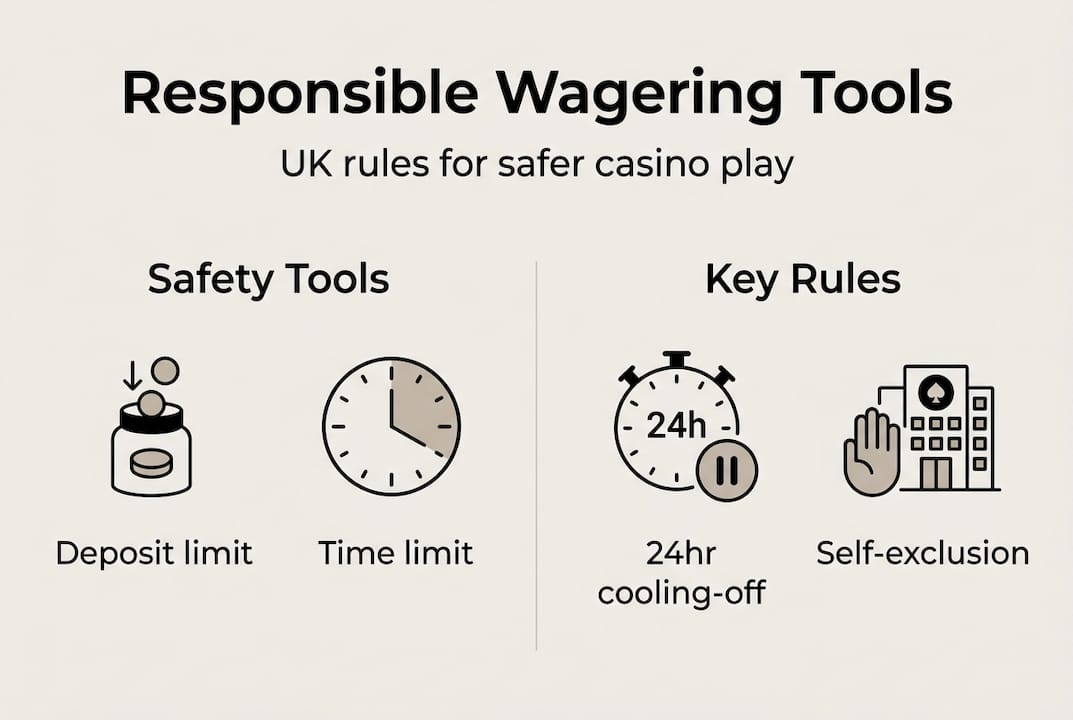
Pro Tip: Set your deposit limit before you fund your account. Most platforms apply new limits after a 24-hour cooling-off period, so configuring them early removes the temptation to override them mid-session.

Set up your limits: The foundation of responsible play

Once you have checked your preparations, the next step is to personalise your play with firm boundaries. Limits are not restrictions on your enjoyment; they are the architecture that makes enjoyment sustainable over weeks, months, and years.

Woman setting gambling deposit limit online

The 1% rule is your starting point. The principle behind responsible limits suggests you should deposit no more than 1% of your monthly take-home pay in any single gambling period. So if you earn £2,500 per month after tax, your gambling budget is £25. It sounds modest, but it reflects the reality that gambling is a form of entertainment spending, not investment. Stretch it to 5% and you are already risking money that should cover essentials.

Layer your limits for maximum protection. A deposit limit alone is useful, but it works best when combined with a loss limit and a session time limit. Consider this approach:

  1. Log in to your account settings and locate the “Responsible Gambling” or “Player Protection” section
  2. Set a daily, weekly, or monthly deposit limit that reflects your 1% budget
  3. Enable a loss limit at or below your deposit limit (many players set it at 75% of their deposit)
  4. Activate a session time limit of no more than 60 minutes per sitting
  5. Turn on a reality check notification every 20 or 30 minutes as an additional reminder
  6. Review all settings monthly and adjust only downward, never upward in the heat of the moment

The data backs this approach. Loss limits reduce session losses by 35% according to Gambling Commission research, a meaningful reduction that demonstrates these tools genuinely work when used consistently. During Safer Gambling Week 2023, 54% of first-time limit users chose deposit limits as their first protective step, showing that awareness campaigns do shift behaviour in a positive direction.

Statistic callout: Players who set limits before their first session are significantly more likely to maintain those limits long-term than those who attempt to set them mid-play. Preparation, not willpower, is the reliable strategy.

Exploring enabling safer play tools in more detail will show you exactly how to navigate these settings on the most popular UK platforms. If you want to understand the broader framework behind wagering responsibly, our responsible wagering guide covers the principles in practical depth.

Pro Tip: Never increase a limit during an active session. Most UKGC platforms enforce a 24-hour delay on limit increases precisely because impulsive decisions in the moment tend to override good intentions made in a calmer state.

Vertical infographic of responsible gambling steps

Make the most of built-in responsible gambling tools

With personal limits in place, get the most out of the technical defences UKGC-licensed operators provide. These tools exist because operators are legally obligated to support your ability to play responsibly, and the best platforms make them genuinely easy to find and activate.

Reality checks are pop-up notifications that appear at intervals you choose, typically every 15, 30, or 60 minutes. They display how long you have been playing and how much you have spent or won in that session. They are deliberately simple, designed to interrupt the flow state that makes it easy to lose track of time. Cooling-off periods range from 24 hours to 6 weeks and can be activated instantly, giving you a pause without the permanence of full self-exclusion.

Activity statements are often overlooked but deeply useful. These are downloadable logs of your gambling history, showing deposits, withdrawals, wins, and losses over a chosen period. Reviewing yours monthly is one of the most honest ways to assess whether your gambling behaviour is trending in a healthy direction.

Tool Best used when How to activate
Reality check Playing for more than 30 minutes Account settings, “responsible gambling” tab
Session time-out You need a firm stop time Set before each session begins
Activity statement Monthly review of spending Download from account history
Cooling-off period Feeling urge to chase losses Instant activation, cannot be reversed early
Deposit limit Every time you fund an account Mandatory to set on first deposit at many sites

Be aware of specific game mechanics that make these tools even more important. Near-misses in slots create false excitement, triggering a sense of “almost winning” that encourages continued play beyond what is rational. This is a deliberate feature of many slot designs, not an accident. Pre-set limits and reality checks act as a circuit breaker against this psychological pull. Sessions lasting over one hour significantly increase the risk of time distortion, where players genuinely lose track of how long they have been playing.

  • Enable reality checks at the start of every session, not after you feel you need one
  • Review your activity statement at the end of each month as a non-negotiable habit
  • Use cooling-off periods proactively, not just reactively, to build in planned breaks
  • Check UK player safety tools for a breakdown of which platforms offer the strongest built-in protections

“The most effective responsible gambling tools are not the ones that stop you in a crisis. They are the ones you set up before you ever feel like you need them.” This principle is central to how the Responsible tools guide frames safer play for UK players.

Taking action: When and how to self-exclude

Sometimes, the best safeguard is to step away, temporarily or for good. Here is what to know about self-exclusion.

Self-exclusion is not a sign of failure. It is a sign of self-awareness, and it is one of the most powerful tools available to any UK gambler who recognises that limits and time-outs are no longer sufficient. Knowing when to use it is just as important as knowing how.

Signs you may need to self-exclude:

  • You have exceeded your deposit limit more than once in a month
  • You are gambling to recover previous losses rather than for enjoyment
  • Gambling is affecting your sleep, relationships, or work performance
  • You feel anxious or irritable when you are not gambling
  • You have been lying to people close to you about how much you are spending

How to use GAMSTOP step by step:

  1. Visit the GAMSTOP website and create a free account with your name, date of birth, and email
  2. Select your exclusion period: six months, one year, or five years
  3. Confirm your registration and receive a confirmation email within 24 hours
  4. GAMSTOP applies across all UKGC-licensed sites automatically, without you needing to contact each operator individually
  5. For land-based venues, contact each venue’s self-exclusion scheme directly or use multi-operator schemes coordinated by your local authority
Self-exclusion type Duration options Coverage
GAMSTOP (online) 6 months, 1 year, 5 years All UKGC-licensed online sites
Land-based multi-operator Variable by scheme Betting shops, casinos, arcades in a region
Individual operator Varies Single operator only
Bank blocks Ongoing until removed Gambling merchant category codes

Self-exclusion works best as part of a wider support plan. Think of it as a speed bump rather than a permanent solution; it buys you time and removes immediate access, but it works most effectively when combined with cognitive behavioural therapy, blocking software like Gamban, and bank-level gambling blocks offered by most major UK banks.

Pro Tip: Activate your bank’s gambling block the same day you register with GAMSTOP. These blocks apply at the payment level, meaning even unlicensed sites become much harder to fund, adding a second layer of protection that does not rely on site-level controls.

Explore UK self-exclusion options for a full breakdown of how each scheme works and how to stack them effectively.

Common pitfalls and troubleshooting tips

Even with all the right steps in place, mistakes can creep in. Spot and fix these hiccups early to stay on course.

The most common responsible gambling failure is not ignorance. It is complacency. Players who set limits, use tools, and feel confident often let those habits slip gradually. One “exception” becomes a pattern before they realise it.

The chasing losses trap is the biggest single risk. After a losing session, the emotional impulse to “win it back” is powerful and almost always leads to worse outcomes. This is because gambling outcomes are independent of each other. Your next spin, hand, or bet has no memory of the previous one. Chasing is a logical error dressed up as a strategy.

Game type matters more than most players realise. Problem gambling can develop in months, not years, particularly with fast-paced games like slots and live casino options. These formats offer rapid repetition, near-miss effects, and high sensory stimulation, all of which compress the timeline from casual play to problematic behaviour.

“If you would not spend £100 on a theatre ticket and call it a loss to be recovered, you should not approach gambling losses any differently. The money spent bought the experience.” This reframe helps many players disengage from chasing behaviour more effectively than any technical limit alone.

Here is a troubleshooting checklist for getting back on track:

  • Review your activity statement to see actual figures, not memory-based estimates
  • Lower your deposit limit immediately if you have exceeded it recently
  • Take a minimum 48-hour break before your next session
  • Talk to someone you trust about your gambling habits
  • Consult the UK safe casino steps resource for a structured reset process

Pro Tip: Set a personal rule that you will never gamble within two hours of receiving a bad financial or emotional shock. Emotional states directly influence risk tolerance, and gambling under stress consistently produces worse decisions and larger losses.

Our perspective: Why responsible gambling requires more than tools

Here at Geeky Gambler, we have reviewed dozens of platforms and spoken to thousands of UK players, and we have noticed something that rarely gets said plainly: responsible gambling is treated almost entirely as an individual responsibility when it is actually a shared one.

The tools described in this guide are genuinely valuable. But they only function within a wider system. Operators bear significant legal duties around customer interaction, risk assessments, and proactive identification of at-risk players. Those duties are not always met with the same enthusiasm as marketing campaigns are run.

What we believe is that individual limits and self-exclusion work best when the culture around gambling also normalises talking openly about risk. When friends, families, and communities treat problem gambling as something shameful rather than something treatable, people delay seeking help. That delay costs them financially and personally.

The conversation is changing, slowly. Understanding what responsible gambling truly means in practice, rather than as a compliance checkbox, is where the real shift happens. We think operators who treat player protection as a genuine priority, not a regulatory burden, produce better long-term outcomes for everyone. They retain loyal, happy players who trust them. Players who feel protected are players who play sustainably.

The uncomfortable truth is that no tool replaces genuine care from operators and genuine awareness from players working together. Both sides have a role to play.

Looking for safe and innovative gaming?

If you have followed the steps in this guide, you are already ahead of most players in terms of preparation and self-awareness. The next step is choosing platforms and game providers who match your commitment to a safe, enjoyable experience.

https://geekygambler.com

At Geeky Gambler, we focus on operators and developers who take player safety as seriously as game quality. If you are keen to explore titles from studios with strong responsible gaming track records, our reviews of BGaming safe options and Endorphina casino games highlight providers known for fair mechanics, clear RTP disclosures, and honest game design. These are studios worth knowing about when you want the fun without the hidden risks.

Frequently asked questions

What is the ‘1% rule’ in responsible gambling?

The ‘1% rule’ means you should never deposit more than 1% of your monthly take-home pay for gambling, keeping it firmly in the realm of affordable entertainment.

How do I verify that an online gambling site is UKGC-licensed?

Look for the Gambling Commission badge in the site’s footer and confirm the licence via the UKGC’s publicly searchable online register.

What tools can help me control my gambling sessions?

Session time-outs, deposit limits, loss limits, reality checks, and cooling-off periods are all available on UKGC-licensed platforms and can be configured in your account settings.

How quickly can problem gambling develop?

Problem gambling can develop within months rather than years, particularly among players who favour fast-paced formats like slots and live casino games.

What extra support is available if I need a break from gambling?

GAMSTOP covers all UKGC-licensed online sites for periods between six months and five years, and you can strengthen this with bank gambling blocks and dedicated blocking software such as Gamban.

Man verifying casino blockchain on laptop

How blockchain makes online casinos fairer and safer


TL;DR:

  • Blockchain provides transparent, tamper-proof records for online casino transactions and game outcomes.
  • Provably fair systems enable players to independently verify fairness using cryptographic schemes.
  • UK players should prioritize licensed casinos for legal protections, as many blockchain sites are offshore.

Most UK players have wondered at some point whether online casino games are genuinely random or quietly tilted in the house’s favour. It’s a fair concern. Traditional casino software runs on hidden algorithms, and you’re largely expected to trust the operator. Blockchain technology changes that equation entirely. Instead of accepting a casino’s word, you can independently verify every bet, outcome, and payout using publicly accessible records. This guide explains exactly how blockchain works inside online casinos, what provably fair gaming means in practice, and what UK players genuinely need to watch out for before diving in.

Table of Contents

Key Takeaways

Point Details
Blockchain brings transparency Every bet and outcome is recorded immutably so players can verify fairness and payouts themselves.
Provably fair games explained Cryptographic tools let you check for tampering, giving more agency than traditional random number generators.
Regulatory challenges exist Most blockchain casinos aren’t UK-licensed, so legal protections and responsible gambling tools differ.
Security is enhanced Player funds and data are protected with blockchain’s advanced security and smart contract features.

What is blockchain and how does it work in online casinos?

Think of a traditional online casino as a locked filing cabinet. The casino controls the records, and you only see what they choose to show you. A blockchain flips that model completely. It’s a decentralised digital ledger, meaning records are stored across thousands of computers simultaneously rather than on a single server controlled by one company.

Every transaction, every bet placed, and every outcome is written into a “block.” Each block links to the one before it, forming a chain that cannot be altered without rewriting every block that follows. This makes falsification practically impossible. Nobody, not even the casino itself, can quietly edit a past result.

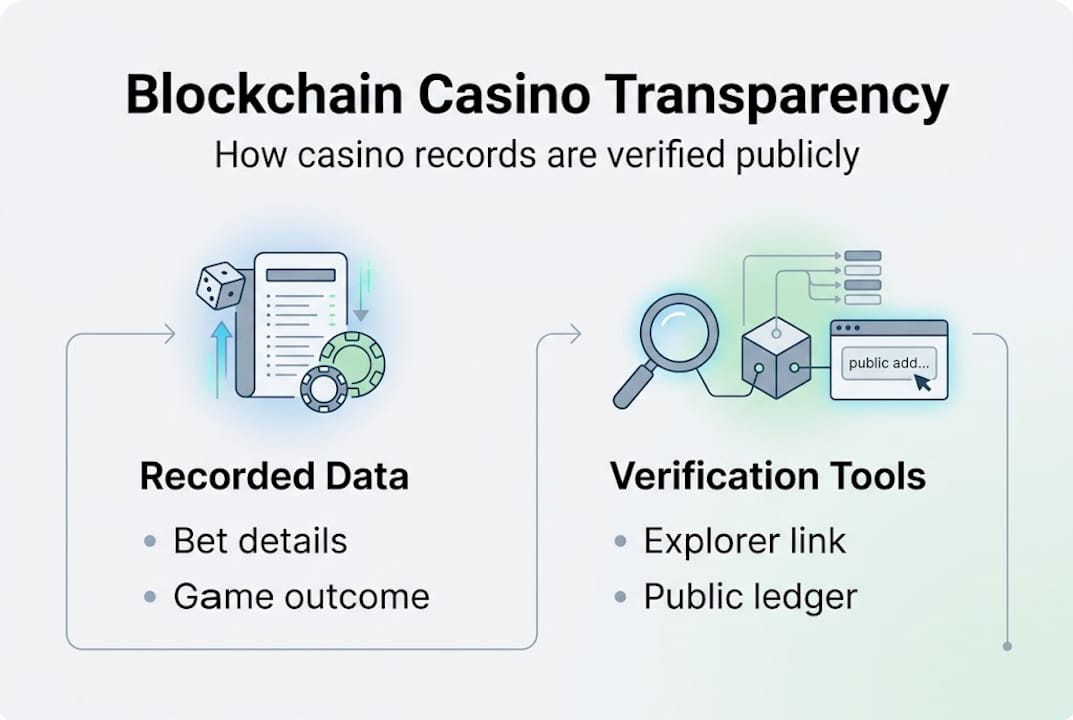
In online casinos, this means game data is recorded publicly. When you place a bet on a blockchain-based slot or dice game, that wager, the result, and the payout are all written to the ledger. As blockchain’s immutable ledger shows, this recording allows for independent player verification and public auditability, making it fundamentally different from anything traditional casino software offers.

Infographic showing blockchain transparency in casinos

Here’s a quick breakdown of how blockchain casino transactions differ from conventional ones:

Feature Traditional casino Blockchain casino
Transaction records Private, controlled by operator Public, on-chain ledger
Outcome verification Requires trusting the casino Independent verification possible
Data tampering Possible without detection Virtually impossible
Payment processing Days via banks or e-wallets Near-instant via cryptocurrency
Anonymity Full KYC required Partial or full anonymity

Key features that make blockchain stand out in gambling include:

  • Immutability: Once a record is written, it cannot be changed
  • Transparency: Any player can browse the public ledger using a blockchain explorer
  • Decentralisation: No single entity controls the database
  • Speed: Cryptocurrency payouts settle far faster than bank transfers
  • Smart contracts: Self-executing agreements that pay out automatically when conditions are met

If you’re new to this space, our cryptocurrency casinos guide covers the broader landscape of crypto gambling for UK players, including which coins are most commonly used and how deposits work in practice.

Pro Tip: Most blockchain casinos have a dedicated blockchain explorer link in their game history. Paste your transaction ID there and you’ll see a real-time, tamper-proof record of every bet you’ve made.

How blockchain ensures provable fairness in games

“Provably fair” is one of those phrases that gets thrown around a lot in crypto gambling circles, but it has a very specific technical meaning. It refers to a cryptographic system that lets players independently confirm that a game result was generated fairly, before and after the round takes place.

The provably fair mechanism works through a commit-reveal scheme combining three components: a server seed, a client seed, and a nonce.

Here’s how that actually plays out in a game round:

  1. Before the game starts, the casino generates a server seed and sends you a hashed (encrypted) version of it. Hashing means you can see a fingerprint of the seed without knowing the actual value, so the casino can’t change it later.
  2. You provide a client seed, either automatically by your browser or manually if you want maximum control. This is your input into the outcome.
  3. A nonce (a round counter that increases by one with every game) is added to ensure every round produces a unique result even if your seeds remain the same.
  4. After the round, the casino reveals the original server seed. You can combine all three values using the HMAC-SHA256 algorithm and confirm that the outcome matches what was declared. If it doesn’t match, you have cryptographic proof the game was tampered with.

This is a significant leap beyond traditional random number generation (RNG). Here’s how the two approaches compare:

Factor Provably fair (blockchain) Traditional RNG
Player verification Yes, independently verifiable No, must trust audit reports
Transparency Fully public Limited to third-party audits
Manipulation detection Mathematically provable Requires external regulator
Player seed control Yes No
Audit frequency Continuous, every round Periodic

It’s worth exploring the RNG vs provably fair comparison in more detail if you’re weighing up which type of casino to use. Traditional RNG is not inherently dishonest. Reputable operators have their software audited by independent labs like eCOGRA. But provably fair gives you the maths itself rather than asking you to rely on someone else’s audit.

Pro Tip: Look for blockchain casinos that let you manually input your own client seed before each game. This gives you personal control over your input into the result, making it even harder for any single party to influence the outcome.

Security and transparency: How blockchain protects your bets

Fairness and security are related but distinct concerns. A casino could be provably fair on results yet still mismanage your funds or expose your personal data. Blockchain addresses both, though in ways that require some explanation.

Woman reading casino security tips at home

Every transaction on a public blockchain is permanently recorded and publicly accessible. This applies not just to game outcomes but to deposits, withdrawals, and bonus payments. Records recorded immutably on the ledger allow any player to verify payouts independently, without relying on the operator’s internal reports or annual audits.

Smart contracts add another layer of security. These are self-executing pieces of code stored on the blockchain. When a jackpot is triggered or a bet wins, the smart contract pays out automatically according to pre-written rules. There’s no human intervention, no approval process, and no risk of the casino choosing to delay or withhold payment. The code runs as written.

“The key advantage of smart contracts in gambling is that the outcome and payout logic are determined by code, not by a person. No employee can override it, no manager can reverse it, and no financial crisis at the operator can delay it.”

Compare this to traditional online casinos, where your funds sit in the operator’s internal wallet. If a casino faces financial difficulty or decides to withhold withdrawals, you’re at the mercy of their goodwill and your local regulator.

Here are the core security features blockchain casinos offer UK players:

  • Immutable records: All bets and payouts are permanently stored and publicly verifiable
  • Smart contract payouts: Winnings are released automatically by code, not manually by staff
  • Pseudonymous play: Many blockchain casinos require only a wallet address, protecting personal data
  • Reduced custodial risk: Funds held in smart contracts rather than operator-controlled accounts
  • Transparent RTP: Return-to-player rates can be verified on-chain rather than simply stated

Before depositing at any online casino, reviewing general casino security tips is well worth your time. And if you want to understand how payment providers factor into your security picture, this breakdown of payment security at UK casinos is highly relevant, particularly for anyone moving funds between a crypto wallet and traditional banking methods.

Here’s where things get complicated. Blockchain’s benefits are genuine, but UK players face a specific legal landscape that makes many blockchain casinos difficult or even risky to use.

Most blockchain and crypto casinos operate offshore. They hold licences from jurisdictions like Curaçao or Malta but are not authorised by the UK Gambling Commission (UKGC). Regulatory barriers for UK gamblers mean that while offshore crypto casinos offer transparency benefits, they don’t carry the same protections as UKGC-licensed operators.

What does that actually mean for you? Quite a lot. A UKGC licence requires the casino to ring-fence your funds, participate in dispute resolution schemes, apply responsible gambling tools like deposit limits and self-exclusion, and submit to regular independent audits. Offshore casinos may offer none of these protections. Understanding UK gambling laws is essential before you hand over any money, especially when crypto is involved.

There are also implementation flaws worth knowing about. Not every provably fair system is equally robust. Some casinos reuse server seeds too infrequently, making it theoretically easier to reverse-engineer outcomes. Others rely on “oracles,” which are external data feeds that introduce a point of potential manipulation outside the blockchain. And in practice, very few players actually verify their results, which means the theoretical transparency advantage often goes unused.

KYC (Know Your Customer) procedures are another complication. Some blockchain casinos skip identity checks to preserve anonymity, which sounds appealing but removes a layer of protection against fraud and money laundering. Responsible platforms still carry out KYC verification even when using crypto, and this is actually a positive sign. Understanding the role of regulation in UK gambling clarifies why these checks exist and why bypassing them often signals a less trustworthy operator.

Dos and don’ts for UK players considering blockchain casinos:

  • Do check whether the casino holds a UKGC licence or another reputable licence
  • Do verify provably fair claims yourself rather than just taking the marketing at face value
  • Do use small test deposits before committing significant funds to any new platform
  • Don’t assume anonymity equals safety. Unlicensed sites have less accountability
  • Don’t ignore responsible gambling tools. If a site doesn’t offer deposit limits, that’s a red flag
  • Don’t gamble at offshore sites thinking blockchain transparency replaces regulatory protection. It doesn’t

The truth about blockchain casinos: What most guides don’t tell you

We’ve covered the technology honestly, and here’s what we at Geeky Gambler genuinely believe after reviewing the space carefully: blockchain is a real and meaningful improvement in casino transparency, but the industry routinely overhypes what it delivers in practice.

The uncomfortable truth is that most players never verify a single result. The tools are there, the maths works, and the logic is sound. But the verification rates are negligible. For the vast majority of users, a provably fair system functions identically to a trusted traditional casino because they’re not checking anything.

Meanwhile, UKGC-regulated casinos, while opaque on the technical mechanics, carry legally enforced protections you simply don’t get offshore. Dispute resolution. Fund segregation. Mandatory self-exclusion tools. These aren’t optional extras. They’re legal requirements.

Our honest take: use blockchain’s transparency features if you’re technically inclined and want that level of control. But never treat provably fair as a substitute for proper licensing. Before placing large bets anywhere, review casino audit standards to understand what genuine oversight looks like. Blockchain is a powerful tool. It’s not a regulatory framework.

Pro Tip: Treat provably fair verification like reviewing your bank statement. You may not do it every transaction, but run the check on any large win or suspicious outcome. The tools are free and take under two minutes.

Find safe and rewarding blockchain-friendly casinos

Ready to put your new understanding into practice? Here’s where to start your search for reputable, rewarding blockchain casino options.

At Geeky Gambler, we’ve done the hard work of reviewing and vetting casinos so you don’t have to guess. Whether you’re after exciting crypto-compatible titles or generous welcome packages, you’ll find handpicked recommendations from our team.

https://geekygambler.com

Browse our curated selection of best online casino bonuses to find offers that work alongside crypto deposits, including free spins and matched welcome bonuses from verified operators. If you want to explore blockchain-native game design, BGaming casino games feature some of the most innovative provably fair titles available to UK players right now. For a full picture of your options, our expert casino reviews cover licensing, security, and game quality in the detail you deserve.

Frequently asked questions

How does blockchain make online casinos fairer?

Blockchain records bets and outcomes on a public ledger, letting anyone independently verify every win and payout rather than simply trusting the operator.

What is a provably fair game system?

A provably fair game uses a cryptographic commit-reveal scheme combining server seed, client seed, and nonce via HMAC-SHA256, so players can mathematically confirm results haven’t been altered.

Most blockchain casinos are not UKGC-licensed, which means UK players may lack legal protections and should carefully check the operator’s licensing status before depositing.

Can I really verify online casino games myself with blockchain?

Yes, the tools exist and are free to use, though verification rates remain low in practice, meaning most players benefit from blockchain’s structure without actively checking results themselves.

Man reviewing responsible wagering at home

What is responsible wagering? A UK player’s guide


TL;DR:

  • Responsible wagering helps players enjoy gambling safely by setting limits and staying aware.
  • UK law mandates responsible gambling tools on licensed casinos to protect players long-term.
  • Using safety tools proactively gives players a strategic advantage and enhances their overall experience.

Most UK casino players assume responsible wagering is something the casino worries about, not them. That misunderstanding is costly. Responsible wagering is not a set of restrictions designed to limit your fun; it is a framework that keeps gambling enjoyable, financially sound, and legally protected. Every UKGC-licensed casino must offer it, and every player benefits from understanding it. This guide breaks down what responsible wagering actually means, why it matters more than most players realise, which tools are available to you right now, and how to put them into practice today.

Table of Contents

Key Takeaways

Point Details
Mandatory in the UK Responsible wagering is required by law for all online casinos in the UK to protect players.
Tools empower players Limits, time-outs, and self-exclusion features give you real control over your gambling experience.
Delay on limit increases UKGC rules enforce a 24-hour delay before you can raise deposit/spending limits online.
Support is readily available Organisations like GamCare and BeGambleAware offer free, confidential advice if you need help.
Responsible wagering boosts enjoyment Following these practices keeps gambling fun, safe, and under your control for the long term.

What does responsible wagering mean?

Responsible wagering is simply the practice of using strategies and tools to keep gambling safe, controlled, and enjoyable over the long term. It covers everything from setting a deposit limit before you play to recognising when gambling stops being fun and starts causing stress.

One of the most common sources of confusion is terminology. In the UK, responsible gambling meaning is identical whether you call it responsible wagering, responsible gambling, or safer gambling. These phrases are synonymous with responsible gambling in every practical sense. No single term carries a stricter or looser definition than the others.

Another persistent myth is that responsible wagering is about limiting your enjoyment. It is not. The goal is to protect you from harm so that gambling remains a leisure activity rather than a source of financial or emotional damage. Think of it like wearing a seatbelt. The belt does not stop you from driving fast; it just means you survive the unexpected.

BeGambleAware advice frames safer gambling around awareness and control, noting that variant phrasing aligns with safer gambling initiatives rather than introducing any new or stricter category of rules.

Here are the core principles every UK player should know:

  • Set limits on deposits, losses, and session times before you start playing
  • Stay self-aware and notice changes in your mood or motivation for gambling
  • Only play on licensed sites that carry a UKGC licence and display it clearly
  • Know where to seek help if gambling stops feeling like fun, from GamCare to BeGambleAware
  • Take regular breaks and use reality check tools that remind you how long you have been playing

“Responsible gambling refers to a set of social responsibility initiatives by the gambling industry… intended to prevent problem gambling and reduce negative impacts.” Source: Wikipedia on Responsible Gambling

Following safe casino play steps does not require you to become a cautious, joyless player. It simply means you stay in charge of your gambling rather than letting it creep into spaces it should not occupy.

Why responsible wagering matters for UK online casino players

Responsible wagering is not a suggestion. The UK Gambling Commission, which governs all licensed operators in the country, mandates responsible wagering tools for every casino it licences. Operators who fail to provide these tools face heavy fines, suspension, or loss of their licence entirely.

For players, this legal framework is genuinely protective. Safer play at UK casinos is not just a marketing phrase; it reflects a system of enforceable rules that gives you real recourse if a casino behaves irresponsibly.

Woman using responsible gambling tools UK

Beyond the legal dimension, responsible wagering has clear practical benefits. Players who use safety tools tend to spend more deliberately, lose less, and enjoy the experience more consistently. The stress that comes from chasing losses or exceeding a budget makes gambling miserable. Removing that stress is the point.

It is also worth understanding that UK gambling laws make the UK one of the most robustly regulated gambling markets in the world. That regulation exists because responsible gambling research consistently shows that unchecked gambling can escalate into serious harm for a meaningful minority of players.

The benefits of responsible wagering fall into three clear categories:

  • Emotional: Less anxiety, reduced regret, and a healthier relationship with risk
  • Financial: Predictable spending, no surprise overdrafts, and money kept for other priorities
  • Legal: Full access to dispute resolution and UKGC protections, which only apply on licensed sites

Players who genuinely engage with responsible wagering tools report enjoying their sessions more, not less. When you know exactly what you are prepared to spend, each bet feels like entertainment rather than a gamble with your rent money.

Key responsible wagering tools and rules in the UK

UK-licensed casinos must offer a standard set of responsible gambling tools, and understanding what each one does helps you choose which ones suit your style of play.

Infographic responsible wagering tools rules UK

Tool What it does Best suited to How to activate
Deposit limit Caps how much you can add to your account per day, week, or month All players Account settings or live chat
Time-out Temporarily pauses your account for a set period Players needing a short break Account settings; usually immediate
Self-exclusion Blocks you from the site for a minimum of six months Players with loss of control Account settings or customer support
Reality check Sends a notification after a set time played Players who lose track of time Account settings
GAMSTOP National self-exclusion covering all UKGC-licensed operators Players wanting a site-wide block Registered at gamstop.co.uk

One rule that catches many players off guard: under UKGC requirements, limit increases require 24-hour cooling-off. If you try to raise your deposit limit in the heat of a losing session, you physically cannot do it instantly. Decreasing a limit, by contrast, takes effect immediately. That asymmetry is deliberate and genuinely useful.

Using gambling tools for safer play works best when you set them up before your first session, not after a bad night. The tools keeping UK players safe are most effective as a proactive measure, and UKGC casino safety actions ensure that every licenced site maintains these safeguards consistently. Only gambling on UKGC-licensed sites guarantees you have access to all of these protections.

Pro Tip: Set your deposit and time limits when you are calm and away from the casino interface. Decisions made before play are always more rational than decisions made mid-session.

How to put responsible wagering into practice: A step-by-step guide

Knowing the tools is one thing. Actually using them is another. Here is a practical sequence to get started:

  1. Choose a UKGC-licensed casino. Check the footer of any site for the UKGC licence number. Unlicensed sites offer none of the protections covered in this guide.
  2. Set deposit and frequency limits before your first session. Do this during registration or in account settings. Be realistic about what you can afford to lose.
  3. Activate a reality check. Most casinos let you set a 30 or 60-minute notification. Use it. Time moves strangely when you are in a playing session.
  4. Track your wins and losses. Keep a simple note on your phone or a spreadsheet. Many players are genuinely surprised by the actual figures when they look.
  5. Reach out early if you feel uneasy. You do not need to hit rock bottom before seeking support. Seek support with BeGambleAware or contact GamCare on 0808 8020 133 for confidential, non-judgemental help.

The table below outlines where to find these tools on a typical licensed casino site:

Tool Where to find it Pro Con
Deposit limit Account or banking section Easy to set, immediate Requires discipline to keep low
Reality check Responsible gambling or settings menu Gentle reminder system Easy to dismiss notifications
Time-out Responsible gambling section Quick break with no long-term penalty Short duration may not be enough
Self-exclusion Responsible gambling or support section Powerful block Minimum period applies
GAMSTOP External site: gamstop.co.uk Covers all UKGC operators Takes 24 hours to fully activate

Support services like GamCare and BeGambleAware offer help long before self-exclusion becomes necessary. Early intervention is far more effective than waiting for gambling to become a serious problem.

Pro Tip: Review your gambling activity once a month. If the numbers surprise you, that is a signal worth taking seriously. Check your safe play steps and gambling responsibly resources for a full self-audit framework.

A fresh perspective: Why responsible wagering is your biggest casino edge

Most articles frame responsible wagering as a duty. We think that framing undersells it completely.

Consider this: the players who last longest at online casinos are almost never the ones taking the biggest risks. They are methodical. They set limits, they walk away when the session ends, and they return the following week with a fresh budget and a clear head. That consistency is what makes gambling genuinely enjoyable over months and years, rather than a brief, expensive spike of excitement.

The uncomfortable truth is that responsible wagering gives you a strategic advantage. A player with a hard deposit limit cannot tilt into chasing losses. A player using GAMSTOP is protected from impulsive decisions during high-stress periods. These are not restrictions; they are circuit breakers that keep you in the game long-term.

The safety benefits extend beyond avoiding harm. They actively improve your experience by removing the variables that make gambling stressful. If you have only ever seen responsible wagering as a checkbox, try reframing it as your personal edge over the house.

Take the next step: Find safe, rewarding UK casinos

You now understand responsible wagering better than most players ever will. The natural next step is finding casinos that make it easy to put these principles into practice from day one.

https://geekygambler.com

At Geeky Gambler, every casino we recommend holds a valid UKGC licence and offers the full suite of responsible gambling tools. We only feature operators who take player safety seriously, not just as a legal tick-box but as a genuine part of the experience. Browse our view best online casino bonuses to find rewarding, safety-first welcome offers, or explore top titles from trusted providers like those found at Hacksaw Gaming casinos. Safe play and great rewards are not mutually exclusive.

Frequently asked questions

Is responsible wagering required at all UK casinos?

Yes, it is mandatory for all UKGC-licensed casinos to offer responsible gambling tools and comply with social responsibility requirements. Casinos that fail to do so risk losing their operating licence.

Can I increase my limits immediately when gambling online?

No, any limit increase requires a 24-hour cooling-off period under UKGC rules. Decreases, however, take effect immediately to protect players from impulsive decisions.

What’s the difference between responsible wagering and responsible gambling?

In the UK, there is no difference. Both terms are synonymous in practice and refer to the same framework of safe, controlled, and enjoyable gambling.

Where can I get support if I’m struggling with gambling?

You can contact GamCare on 0808 8020 133 or visit BeGambleAware.org for confidential help and practical resources at any stage, not just in crisis.

Are all online casinos in the UK required to have GAMSTOP integration?

Yes, all UKGC-licensed operators must offer GAMSTOP self-exclusion as part of their mandatory safer gambling measures.

Man reviewing casino games on laptop at home

How to master casino game selection workflow: UK guide


TL;DR:

  • Smart game selection relies on understanding player profiles and matching RTP and volatility to goals.
  • Always verify game licensing and check in-game RTP and volatility before playing for informed choices.
  • Following a structured workflow enhances session enjoyment, prolongs playtime, and promotes responsible gambling.

Hundreds of new titles land on UK casino lobbies every month, and choosing where to start genuinely feels like a full-time job. The difference between a frustrating session and an enjoyable one often comes down not to luck, but to preparation. Having a clear game selection workflow means you spend less time scrolling and more time playing games that actually suit your style, budget, and risk appetite. Whether you are brand new to online casinos or a seasoned player looking to sharpen your approach, this guide walks you through every step of smarter game selection in 2025.

Table of Contents

Key Takeaways

Point Details
Match game to your style Choosing games that suit your risk level and play preferences leads to longer, more enjoyable sessions.
Understand RTP and volatility Evaluating both RTP and volatility gives you a truer picture of game risk and reward.
Demo and verify first Test games with demo play and always check real RTP and licensing before spending money.
Beware variable RTP slots Actual RTP may differ from advertised, so check in-game to avoid surprises in 2025.

Understand your player profile and preferences

Let’s start by looking at the most important factor: the type of player you are. Before you ever look at a game title or bonus feature, you need an honest picture of your own habits and goals. This single step shapes every decision that follows in your workflow.

Player types broadly fall into a few categories:

  • Beginner: Wants simple rules, steady action, and low financial pressure.
  • Casual spinner: Plays for entertainment, values fun features over big wins.
  • Experienced player: Comfortable with risk, may prefer skill-based games like blackjack or poker.
  • High-roller: Larger budgets, willing to absorb variance for the chance of significant payouts.

Once you know where you sit, you can connect your preferences to two critical game metrics: RTP (return to player, the percentage of wagered money a game pays back over time) and volatility (how often and how much a game pays out). New players prefer low-volatility slots for steady sessions, while experienced players favour high-volatility slots or skill games like blackjack.

Session length also matters. If you have 20 minutes and £20, a high-volatility slot could wipe your budget before the fun begins. Low-volatility games stretch your bankroll across more spins, giving you more play time per pound. Our slot volatility guide breaks down exactly how this works in practice, and browsing slot game examples helps you see how different titles compare side by side.

Pro Tip: Write down your session budget and target play time before opening the casino lobby. This simple habit forces you to match your game choice to your actual goals rather than impulse.

Essential criteria: RTP, volatility, and provider licensing

Now that you know your player type, learn how to use game metrics and credentials to shortlist suitable options. Three criteria form the backbone of any solid selection workflow: RTP, volatility, and licensing.

RTP tells you the theoretical long-term return. A UK game selection workflow centres on evaluating RTP in the 94 to 98% range, with table games like blackjack often sitting at the higher end and some slots dipping below 95%. Higher RTP is generally preferable, but it is not the whole story.

Woman studying RTP volatility casino printout

Game type Typical RTP range Volatility level Best suited to
Video slots 94 to 97% Low to high All player types
Blackjack 99%+ Low Experienced players
Roulette 94 to 97% Medium Casual to experienced
Live dealer games 95 to 99% Low to medium Casual to experienced
Progressive jackpots 88 to 94% Very high High-rollers

Volatility is where most players go wrong. Low volatility means frequent but smaller wins. High volatility means rare but potentially large wins. The UKGC emphasises transparency on RTP and volatility so players can make genuinely informed choices. Always look for this information in the game’s paytable or info screen before you stake real money.

“Understanding volatility is just as important as knowing the RTP. A 97% RTP slot with extreme variance can drain a modest bankroll faster than a 94% RTP game with low variance.”

Licensing is non-negotiable. Only play games from providers holding a valid UK Gambling Commission licence. This guarantees fair play, tested RNG (random number generator) outcomes, and recourse if something goes wrong. Check the footer of the casino site and the game’s info panel for licence details. Our guide on understanding casino RTP explains how to read these figures accurately.

Key things to verify before playing:

  • RTP is displayed in-game, not just on the casino’s marketing page
  • Volatility level is clearly labelled (low, medium, or high)
  • The provider holds a current UKGC licence
  • The game version matches the advertised RTP

Step-by-step workflow: How to select the right casino game

With the criteria in hand, it’s time to put the workflow into practice. Follow these steps every time you approach a new game or revisit your regular choices.

  1. Define your session parameters. Set your budget, target session length, and acceptable loss limit before logging in.
  2. Filter by game type. Use the casino lobby’s filter tools to narrow down by category (slots, table games, live dealer).
  3. Check RTP and volatility. Open the game’s info screen and confirm both figures. Always demo test, check in-game RTP, and align with your playstyle before committing real money.
  4. Verify provider licensing. Confirm the developer holds a valid UKGC licence.
  5. Play the demo version. Most UK casinos offer free play. Use it to assess the game’s pace, features, and feel.
  6. Evaluate features and bonus rounds. Do the bonus mechanics suit your style? Some players love complex free-spin rounds; others prefer straightforward gameplay.
  7. Make your final decision. Only move to real-money play once you feel comfortable with the game’s rhythm.
Workflow step What to check Time needed
Session setup Budget and loss limit 2 minutes
Game filtering Category and provider 3 minutes
Metric verification RTP and volatility 2 minutes
Demo play Feel and pace 5 to 10 minutes
Final selection Comfort and enjoyment 1 minute

Pro Tip: Browse leading slot games to build a shortlist before your session. Having three or four pre-vetted options saves time and reduces the temptation to pick randomly.

The best UK casino games in 2025 span a wide range of styles and providers, so this workflow applies whether you are picking a five-reel slot or a live blackjack table.

Common pitfalls and advanced tips for 2025

Even with a proven workflow, some stumbling blocks are common. Here’s how to avoid them.

The biggest mistake players make is treating RTP as the only metric that matters. RTP alone can be misleading; volatility and bankroll need to match, and variable RTP slots require in-game checking. A game advertised at 97% RTP might actually run at 94% on the setting your casino has selected.

Common pitfalls to watch for:

  • Ignoring variable RTP settings. Some slots allow casinos to adjust the RTP within a permitted range. Always check the in-game paytable, not the provider’s marketing materials.
  • Underestimating bankroll requirements for high-volatility games. These titles can go 50 or more spins without a significant win. If your budget cannot absorb that, choose a lower-volatility option.
  • Skipping demo play. Even if the metrics look perfect, a game’s pace or visual style might not suit you. Five minutes in demo mode saves real money.
  • Overlooking UKGC volatility guidance. The regulator publishes clear expectations around how risk is communicated. If a casino does not display this information, that is a red flag.
  • Chasing losses by switching to higher-volatility games. This is the most dangerous pattern in game selection. Stick to your pre-set workflow.

“The players who enjoy online casinos most consistently are those who match their game choice to their actual bankroll, not to their aspirational bankroll.”

For advanced players, consider tracking your results by game type over several sessions. Patterns emerge quickly, and you may find that certain volatility levels consistently suit your style better than others. Our slot volatility tips page covers this in more detail.

Pro Tip: Start new game types at the minimum stake. Even if you normally play at higher levels, a lower stake during the learning phase protects your bankroll while you assess whether the game fits your workflow.

Best practices and expected results for UK players

With pitfalls avoided, what can you realistically expect from following this workflow? The honest answer is: better control, more enjoyment, and fewer unpleasant surprises.

Infographic outlining casino game selection workflow

Slots dominate UK play at 65% of all casino activity, with average sessions lasting around 17 minutes. High RTP games above 97% exist but require savvy selection to find and access. This tells us that most UK players are already gravitating towards slots, but many are not applying any structured approach to which slots they choose.

Expected outcomes when you follow the workflow consistently:

  • Extended play time. Matching volatility to your budget means your bankroll lasts longer on average.
  • Reduced frustration. Knowing what to expect from a game’s variance removes the shock of a dry spell.
  • Smarter bonus use. Understanding RTP helps you evaluate whether a welcome offer or free spins deal is genuinely valuable.
  • More informed responsible gambling. Setting limits before play, rather than during, is a core principle of safe gambling in the UK.
  • Better game discovery. A structured approach leads you to titles you might never have found by browsing randomly.

For better slot selection and to benchmark your choices against industry standards, reviewing casino RTP benchmarks regularly keeps your workflow current as new games and providers enter the market.

Responsible play is not just a regulatory requirement. It is the foundation of a sustainable hobby. Review your game choices periodically, adjust your profile as your experience grows, and never treat a casino session as a source of income.

Why most players ignore workflow—and what actually works

Let’s reflect on why the workflow matters and why most players get it wrong. The honest truth is that high RTP numbers are seductive. A game advertising 98% RTP sounds like it will pay back almost everything you put in. But that figure is calculated over millions of spins, not your 20-minute session.

Most players skip the workflow entirely because they are drawn in by a game’s visual design, a friend’s recommendation, or the promise of a massive jackpot. None of those factors tell you whether the game suits your bankroll or playing style. Experts stress volatility matching over raw RTP, because player experience hinges on session variance, not theoretical long-term averages.

The sessions that players remember fondly are rarely the ones where they chased the highest RTP. They are the ones where the game’s pace, features, and risk level felt right. That alignment only happens when you apply the workflow. Explore slot volatility wisdom to understand why this matters more than any single metric.

Ready to upgrade your casino game selection?

Applying this workflow is far easier when you are working with quality game providers that publish clear RTP and volatility data. That is where Geeky Gambler’s provider reviews come in.

https://geekygambler.com

Explore our full breakdown of BGaming casino games to see a provider known for transparent metrics and strong RTP across its catalogue. If you prefer a wider range of styles, our Pragmatic Play slots page covers one of the UK’s most popular providers, with titles spanning every volatility level. Use these reviews as your starting shortlist, apply the workflow steps above, and you will be choosing games with confidence rather than guesswork.

Frequently asked questions

What is the safest way to choose a UK casino game in 2025?

Check for a UKGC-licensed provider, verify RTP and volatility in-game, and demo test before using real money. The UKGC emphasises transparency on RTP and volatility so players can make genuinely informed choices.

How important is RTP compared to volatility?

Both matter, but matching volatility to your bankroll and risk profile often has a bigger impact on your session experience than chasing the highest RTP. Volatility matching over raw RTP shapes player experience far more than theoretical return figures.

Are there games with variable RTP in 2025?

Yes, some slots offer variable RTP settings; always check the in-game or paytable information to see the actual RTP being used. Variable RTP slots require in-game checking as the advertised figure may differ from what is actually applied.

What types of games are best for new casino players?

Low-volatility slots and live dealer games with clear rules offer steadier play for beginners. New players prefer low-volatility slots because they deliver more consistent sessions without large swings in bankroll.

Casino security manager monitoring screens

Why casino security matters: Stay safe with UK sites

Most UK players assume that any casino holding a licence is automatically safe. That’s a dangerous misconception. Cyber threats affect over half of UK gambling firms yearly, and poor security can cost you more than just a bad gaming session—it can mean stolen funds, compromised identity, and unresolved disputes. Understanding how casino security works isn’t just smart; it’s essential for protecting your money and personal data in 2026.

Table of Contents

Key Takeaways

Point Details
UK standards matter Choosing UKGC-licensed casinos means better protection for your money and personal data.
Threats are real Cyber attacks and fraud affect over half of the UK’s gambling platforms every year.
Tech safeguards you Encryption, two-factor authentication, and regular audits are essential for player safety.
Check before playing Look for a UKGC licence, HTTPS connection, and secure payment methods before you deposit.
Stay ahead Pick casinos using advanced security and monitoring tools for a safer gaming experience.

What is casino security and why it matters

Casino security covers everything from data protection and fair play to safeguarding your funds. For UK players, this means preventing fraud, protecting your identity, and ensuring you actually receive your winnings. The UK Gambling Commission (UKGC) sets binding standards that require ongoing monitoring and robust policies, but not all operators meet these equally.

When security fails, the consequences are severe:

  • Account theft and unauthorised access to your funds
  • Loss of savings with no recourse
  • Identity theft leading to long-term financial damage
  • Disputes that never get resolved

The UKGC mandates high standards, but enforcement varies. Some casinos exceed requirements, whilst others do the bare minimum. Knowing the difference protects you from operators who cut corners. Check our UK security checklist to understand what separates safe sites from risky ones.

“Security isn’t just about technology—it’s about accountability. A casino that takes security seriously will be transparent about its measures and quick to respond when issues arise.”

For a deeper dive into how these standards work in practice, explore our security overview. You can also learn more about verifying casino safety before depositing.

The real threats: Cyber attacks, fraud, and player risks

The numbers tell a stark story. 55% of UK gambling firms experienced cyber incidents in the past year, with breaches averaging $4.88 million each. These aren’t abstract corporate problems—they directly impact your account security and financial safety.

The most common threats UK players face include:

  • Phishing attacks: Fake emails or texts designed to steal login credentials
  • DDoS attacks: Overwhelming casino servers to disrupt service or cover fraud
  • Insider fraud: Staff or vendors accessing player data illegally
  • Ransomware: Locking casino systems until payment is made
  • Unauthorised access: Hackers breaking into player accounts
Threat Type Player Impact Frequency
Phishing Stolen credentials, account takeover Very High
DDoS Service disruption, delayed withdrawals High
Data breach Identity theft, financial loss Medium
Insider fraud Unauthorised transactions, data exposure Medium
Ransomware Frozen accounts, lost access Low

When breaches occur, the cost isn’t just financial. Your personal data—including banking details, address, and identification documents—can be exposed and sold on dark web markets. This leads to identity theft that can haunt you for years.

Woman checking online casino account security

Pro Tip: Only use casinos offering two-factor authentication and regular third-party security audits. These features dramatically reduce your risk of account compromise and ensure the casino is actively monitoring for threats.

Understand the specific data protection steps leading operators take, and review our casino security tips for practical protection measures. For technical details on cyber attack types, external resources provide comprehensive breakdowns.

How top casinos protect you: Technology, policies, and real safeguards

Leading UK casinos deploy multiple layers of protection that work together to keep your information and money secure. The technology stack includes AES-256 encryption and SSL/TLS protocols, which scramble your data so it’s unreadable to anyone intercepting it. Think of it as a secure tunnel between your device and the casino’s servers.

Modern security features you should expect:

  • AES-256 encryption: Military-grade data protection
  • TLS/SSL certificates: Verified secure connections (look for HTTPS)
  • Biometric authentication: Fingerprint or face recognition for logins
  • Two-factor authentication: Extra verification beyond passwords

Beyond technology, UKGC mandates comprehensive policies including money laundering risk assessments, customer due diligence, and high-risk transaction monitoring. These aren’t optional—they’re legal requirements that protect both you and the casino from criminal activity.

Feature Secure Casino Insecure Casino
UKGC Licence Visible, verifiable Missing or fake
Encryption AES-256, SSL/TLS Basic or none
Authentication 2FA available Password only
Privacy Policy Clear, detailed Vague or hidden
Payment Methods Recognised providers Unknown processors
Third-party Audits Regular, published None listed

The difference between secure and insecure sites is obvious once you know what to check. Secure casinos display their UKGC licence number prominently, use HTTPS throughout the site, offer two-factor authentication, and publish clear privacy policies. Insecure operators hide these details or provide fake credentials.

Infographic showing casino security checklist points

Learn how casino encryption works in practice, understand SSL security implementation, and review our casino licensing overview for comprehensive guidance.

What most people miss: Advanced threats and future-proofing your safety

Whilst most players focus on basic security, emerging threats require deeper awareness. Insider threats account for 73% of security incidents, meaning staff or vendors pose greater risk than external hackers. This includes employees accessing player data without authorisation or vendors with weak security creating backdoors.

Quantum computing represents a future threat that could crack today’s encryption methods. Whilst not an immediate concern, forward-thinking casinos are already exploring quantum-resistant algorithms and zero-trust security models that assume every access attempt could be malicious.

“The casinos that survive the next decade will be those investing in AI-driven monitoring, behavioural analytics, and predictive threat detection today—not those waiting for regulations to force their hand.”

Artificial intelligence is transforming casino security through:

  1. Real-time monitoring: AI systems detect unusual patterns instantly
  2. Player profiling: Behavioural analytics identify problem gambling and fraud
  3. Predictive alerts: Machine learning forecasts potential security incidents
  4. Automated responses: Systems can freeze suspicious accounts immediately

To future-proof your safety, choose casinos that use layered security approaches. This means multiple independent systems working together—if one fails, others catch the threat. Look for operators conducting regular third-party audits and publishing results transparently.

Pro Tip: Check whether a casino uses advanced authentication methods like biometrics or hardware tokens. These are far more secure than SMS-based two-factor authentication, which can be intercepted.

Explore how biometric authentication elevates security and understand why two-factor authentication matters for your account protection.

Your checklist: Choosing a safe UK online casino

Putting knowledge into action requires a systematic approach. Before depositing at any UK casino, work through these verification steps:

  1. Verify the UKGC licence: Visit the Gambling Commission website and search for the operator’s licence number—never trust a logo alone
  2. Check for HTTPS: The address bar should show a padlock icon and begin with https://
  3. Review the privacy policy: It should clearly explain data collection, storage, and sharing practices
  4. Test payment methods: Recognised providers like PayPal and Visa indicate legitimacy
  5. Look for third-party audits: eCOGRA, iTech Labs, or similar certifications prove independent verification
  6. Enable two-factor authentication: If the casino offers it, activate it immediately
  7. Read recent reviews: Check for security complaints or unresolved withdrawal issues

Red flags that signal danger:

  • No visible contact information or customer support
  • Payment providers you’ve never heard of
  • Missing or expired security certificates
  • Vague terms and conditions
  • No mention of responsible gambling tools
  • Pressure to deposit quickly

Pro Tip: Always verify the licensing page on the UKGC website directly—never just trust a logo on the casino site. Fake logos are common, but the official register never lies.

For practical implementation, review our casino site security tips and use our full security checklist before making your first deposit.

Play smarter: Find trusted, secure UK casinos with Geeky Gambler

You now understand what separates genuinely secure casinos from risky operators. The next step is finding sites that meet these standards without spending hours researching each one.

https://geekygambler.com

Geeky Gambler tests and reviews licensed UK casinos specifically for security, fairness, and player protection. We verify UKGC licences, check encryption standards, and assess customer support quality before recommending any operator. Our reviews highlight which casinos offer two-factor authentication, regular audits, and transparent policies.

Explore our curated selection of trusted casino bonuses from operators meeting strict security standards. If you’re interested in specific providers known for secure gaming, check out BGaming secure casinos. For comprehensive reviews of the safest UK sites, visit our best UK casino picks.

Frequently asked questions

How do I know if an online casino is secure?

Check for a UKGC licence, HTTPS in the website address, and two-factor authentication for player accounts. Verify the licence number on the Gambling Commission website directly.

What happens if a casino is hacked or loses my data?

You risk personal and financial data theft, loss of funds, and issues withdrawing winnings. UK gambling breaches average $4.88 million per incident and have led to millions of compromised records.

Why do casinos need to collect personal and financial information?

Strict UK laws require casinos to verify identity, prevent money laundering, and protect players through customer due diligence and risk assessments.

Are biometric logins and AI-powered monitoring safe?

Yes, when properly implemented, they add security layers and detect unusual behaviour in real time. These technologies improve monitoring and safety for online gambling platforms.

Man checking slot machine RTP screen

What is casino RTP and how to use it in 2026

You have probably heard other players mention RTP percentages when discussing online slots or table games, but what does this actually mean for your gameplay? Many UK casino enthusiasts misunderstand return to player figures, treating them as guarantees rather than statistical averages. Understanding RTP properly transforms how you select games, manage your bankroll, and set realistic expectations. This guide breaks down casino RTP in plain terms, explains how it affects your chances, and shows you exactly how to use this knowledge to make smarter betting decisions in 2026.

Table of Contents

Key takeaways

Point Details
RTP definition Return to player represents the percentage of total wagers a game returns to players over millions of spins
Long-term metric RTP predicts outcomes across extended play, not individual sessions or short-term results
Typical ranges Slots typically offer 94-97% RTP, whilst table games like blackjack can exceed 99% with optimal strategy
Selection tool Choosing games with higher RTP improves your expected returns when playing regularly
Not a guarantee RTP reflects averages, so volatility and luck still determine individual session outcomes

Understanding what casino RTP means

Return to player is a percentage that tells you how much of all money wagered on a game will theoretically be paid back to players over time. If a slot has 96% RTP, it means that for every £100 wagered collectively by all players, the game will return £96 on average. The remaining 4% represents the house edge, which is how casinos maintain profitability.

RTP calculations rely on complex mathematical models tested over millions of spins. Game developers programme each title with specific probabilities for different outcomes, and independent testing laboratories verify these figures before games receive licensing approval. Return to player (RTP) percentages represent the average theoretical return on wagers over time, ensuring players understand what to expect from extended gameplay.

The crucial distinction is that RTP measures long-term statistical probability, not short-term results. You might deposit £50 and win £200 in one session, or lose your entire stake in minutes. Neither outcome contradicts the game’s stated RTP because these percentages only become accurate across enormous sample sizes. Think millions of spins by thousands of players, not your personal 100-spin session on a Friday evening.

Random number generators ensure every spin is independent and unpredictable, which means past results never influence future outcomes. The role of RNG in online casinos UK guarantees fairness by producing genuinely random results that align with the programmed RTP over sufficient trials.

Here are the key components that determine RTP:

  • Mathematical probability models built into game software
  • Symbol frequencies and payout values on reels
  • Bonus feature mechanics and their trigger rates
  • Independent laboratory testing and certification
  • Regular audits by licensing authorities

Pro Tip: Always check the game information screen or paytable before playing, as most reputable slots display their RTP percentage clearly. If you cannot find this information easily, consider choosing a different game from a more transparent provider.

How casino RTP affects your chances

RTP directly influences your expected value, which is the average amount you can anticipate winning or losing per wager over extended play. A game with 97% RTP gives you better long-term prospects than one offering 94% RTP, even though both will produce winning and losing sessions. The difference compounds significantly when you play regularly, making game selection genuinely important for frequent players.

Consider two slots: Game A has 94% RTP whilst Game B offers 97% RTP. If you wager £1,000 on each over multiple sessions, Game A theoretically returns £940 whilst Game B returns £970. That £30 difference might seem modest, but it represents a 50% improvement in your expected outcome. Over thousands of pounds wagered throughout a year, choosing higher RTP games substantially impacts your overall results.

Woman comparing slot RTP rates

Game Type Typical RTP Range House Edge Best For
Online Slots 94-97% 3-6% Entertainment and bonus features
European Roulette 97.3% 2.7% Simple gameplay with decent returns
Blackjack (optimal strategy) 99-99.5% 0.5-1% Players willing to learn basic strategy
Video Poker (optimal play) 98-99.5% 0.5-2% Strategic players seeking skill-based games
Baccarat (banker bet) 98.94% 1.06% Low house edge with minimal decisions

Selecting games with higher RTP percentages improves your expected returns in the long run, particularly when combined with disciplined bankroll management.

Follow these steps to assess and choose games with favourable RTP:

  1. Check the game information screen or help section for stated RTP before playing
  2. Compare similar games from different providers to identify the highest RTP options
  3. Research whether table games require optimal strategy to achieve advertised RTP
  4. Verify that bonus features do not significantly reduce base game RTP
  5. Consider volatility alongside RTP, as high variance games produce less predictable results

Volatility describes how a game pays out, which is equally important as RTP. A low volatility slot with 95% RTP might provide frequent small wins, whilst a high volatility game with 97% RTP could deliver rare but substantial payouts. Your bankroll size and playing style should influence which combination suits you best.

Pro Tip: Combine RTP knowledge with session budgets and loss limits. Even games with excellent RTP can produce losing streaks, so never chase losses or exceed predetermined spending limits regardless of theoretical return percentages.

Variations and nuances in RTP across game types

RTP varies dramatically between casino game categories, and understanding these differences helps you select games that match your priorities. Slots typically offer the widest RTP range because thousands of titles exist with different mechanics, features, and target audiences. Budget slots might sit at 94% RTP, mainstream titles cluster around 96%, and premium games can reach 97-98%. Table games generally provide higher RTP, especially when you employ optimal strategy.

Blackjack stands out as offering the best RTP in most casinos, frequently exceeding 99% when you follow basic strategy charts. However, this figure drops significantly if you make poor decisions like hitting on 17 or ignoring dealer upcards. Roulette RTP depends entirely on the variant, with European roulette at 97.3% and American roulette falling to 94.74% due to the additional double zero.

Bonus features and game variants substantially impact RTP within the same title. Some slots offer multiple RTP settings, allowing casinos to choose configurations between 94% and 96% for the identical game. RTP can vary within games due to bonus features, game variants, and casino adjustments, which is why checking specific RTP at your chosen casino matters.

Infographic: casino RTP breakdown by game type

Game Category Average RTP RTP Range Key Factors
Classic Slots 95% 92-97% Simple mechanics, fewer features
Video Slots 96% 94-98% Bonus rounds, free spins, multipliers
Progressive Jackpots 92-95% 88-96% Portion of RTP allocated to jackpot pool
Live Dealer Games 97-99% 95-99.5% Real-time gameplay with human dealers
Scratch Cards 95% 90-97% Instant win mechanics

Software providers significantly influence RTP standards. NetEnt and Play’n GO typically maintain RTP above 96% across their portfolios, whilst some providers offer configurable RTP that casinos can adjust within regulatory limits. Always verify the specific RTP at your chosen casino rather than assuming it matches figures quoted in reviews.

Factors that alter RTP include:

  • Bonus buy features that change base game mathematics
  • Progressive jackpot contributions that reduce regular payout RTP
  • Game rule variations like blackjack payout ratios or roulette wheel configurations
  • Casino-selected RTP settings where providers offer multiple options
  • Special promotional modes or tournament formats with modified payout structures

When choosing the right online casino, prioritise operators that display RTP clearly and select higher configuration options when available. Transparency around return percentages indicates a casino that values player trust and operates with integrity.

Using RTP to make smarter bets

Incorporating RTP into your gameplay decisions requires a systematic approach that balances theoretical returns with practical considerations like volatility, bonus terms, and personal entertainment preferences. Start by establishing your priorities, whether maximising playing time, chasing big wins, or optimising long-term value. Your goals determine which RTP and volatility combination suits you best.

Follow this step-by-step process to evaluate games effectively:

  1. Access the game information screen and locate the stated RTP percentage
  2. Compare this figure against category averages to assess whether it represents good value
  3. Check volatility ratings to understand payout frequency and size distribution
  4. Review bonus terms if using promotional funds, as wagering requirements interact with RTP
  5. Verify the casino holds valid UK Gambling Commission licensing for regulatory protection
  6. Start with small stakes to experience gameplay before committing larger amounts

Verifying RTP information requires checking multiple sources. Reputable casinos display RTP in game information screens, but you can cross-reference these figures on provider websites or independent testing laboratory reports. eCOGRA, iTech Labs, and Gaming Laboratories International publish audit certificates that confirm stated RTP percentages match actual game performance.

Combining RTP knowledge with strategic play and casino bonus awareness helps maximise your advantage when playing regularly. Understanding how wagering requirements interact with game RTP prevents choosing titles that make bonus clearing unnecessarily difficult.

Bankroll management remains essential regardless of RTP. Allocate specific session budgets, set win and loss limits, and never chase losses even when playing high RTP games. A 98% RTP game still has a house edge, meaning extended play favours the casino mathematically. Treat gambling as entertainment with costs, not an income strategy.

Pro Tip: Track your results across multiple sessions to see how your actual returns compare to theoretical RTP. This practice builds realistic expectations and helps you recognise when variance is producing unusual results. Most players experience returns within 5-10% of stated RTP over hundreds of gaming sessions.

Prioritising games with RTP above 96% provides measurable advantages for regular players. The difference between 94% and 97% RTP might seem small, but it compounds significantly across thousands of spins. If you play slots frequently, this single factor can determine whether you enjoy extended entertainment or deplete your bankroll quickly.

Consider volatility alongside RTP when selecting games. Low volatility titles with 96% RTP often provide better value for recreational players than high volatility games at 97% RTP, because frequent small wins extend playing time and reduce the risk of rapid losses. Match your game selection to your bankroll size and risk tolerance rather than chasing the absolute highest RTP regardless of other factors.

Discover top online casinos with high RTP games today

Now that you understand how RTP works and why it matters, you can apply this knowledge to find the best gaming opportunities available to UK players in 2026. Geeky Gambler provides comprehensive reviews of licensed online casinos, highlighting operators that offer transparent RTP information and excellent game selections from top providers.

https://geekygambler.com

Explore our curated best online casino bonuses to find welcome offers, free spins, and cashback deals that complement high RTP gameplay. We verify every promotion for fair terms and genuine value, ensuring you start with advantages that enhance your entertainment budget.

Discover premium game providers known for player-friendly RTP percentages. BGaming casino games consistently deliver engaging titles with competitive return rates, whilst Pragmatic Play casinos and games offer extensive portfolios featuring some of the industry’s most popular high RTP slots. Our detailed provider guides help you identify which studios prioritise player value through transparent mathematics and fair gameplay.

Frequently asked questions

What exactly is casino RTP?

Return to player is a percentage showing how much of all wagered money a casino game pays back to players over millions of spins. A slot with 96% RTP returns £96 for every £100 wagered collectively by all players, with the remaining 4% representing the house edge. This figure represents long-term statistical averages, not guaranteed outcomes for individual sessions.

Can high RTP guarantee I will win?

No, RTP reflects long-term averages across millions of spins, not short-term results for individual players. You might win substantially or lose your entire stake in a single session regardless of RTP. Random number generators ensure every spin is independent, so past results never influence future outcomes. RTP simply indicates better expected value over extended play.

Where can I find RTP information for casino games?

Most reputable online slots display RTP in the game information screen, accessible through a settings or help button. Table games typically show RTP in their rules sections. You can also check game provider websites or independent testing laboratory reports for verified figures. If a casino does not display RTP clearly, consider this a red flag regarding transparency.

What is the difference between RTP and house edge?

RTP and house edge are complementary figures that always total 100%. If a game has 96% RTP, the house edge is 4%. RTP represents the percentage returned to players, whilst house edge shows the casino’s mathematical advantage. Both describe the same relationship from different perspectives, with higher RTP meaning lower house edge.

Does RTP vary between different online casinos?

Yes, some game providers offer configurable RTP settings, allowing casinos to choose between multiple options for the same title. A slot might be available in 94%, 95%, and 96% RTP versions. Always check the specific RTP at your chosen casino rather than assuming it matches figures from reviews. Reputable operators display this information transparently in game screens.

How does RTP affect bonus wagering requirements?

Games with higher RTP generally make bonus wagering more efficient because you retain more of your balance through each betting cycle. However, many casinos exclude high RTP games from bonus play or weight them differently in wagering calculations. Always review bonus terms to understand which games contribute fully and whether restrictions apply to titles exceeding certain RTP thresholds.

Casino affiliate manager working in London office

Role of casino affiliates: how they help UK players in 2026

Many UK players misunderstand casino affiliates’ role or view them with suspicion, assuming they’re merely biased promoters chasing commissions. In reality, affiliates are crucial partners in player acquisition and compliance, helping you navigate the crowded online casino landscape to find trustworthy, licensed operators with lucrative bonuses. The casino affiliates impact UK players significantly by acting as independent guides who must follow strict regulations to protect your interests. This article clarifies how affiliates operate, their benefits, and the regulatory safeguards in place throughout 2026, so you can make informed choices about online casinos.

Table of Contents

Key takeaways

Point Details
Casino affiliates connect players with trustworthy UK online casinos while ensuring compliance They bridge the gap between operators and players, promoting licensed sites that meet strict regulatory standards.
They help players access lucrative bonuses and safe gambling environments Affiliates negotiate exclusive offers and verify casino credentials to ensure players receive genuine value and protection.
Operators and affiliates must follow strict UK regulations to protect players The UKGC and ASA enforce comprehensive rules that hold both parties accountable for marketing practices.
Successful affiliates use SEO and data-driven marketing to generate value Strategic optimisation and tracking technologies ensure players find the best casino matches for their preferences.
Compliance and accurate tracking underpin trust in affiliate marketing Transparent systems prevent fraud and guarantee fair attribution, protecting both players and affiliates.

What casino affiliates do and why they matter to UK players

Casino affiliates are partners who promote online casinos to players and drive traffic to licensed operators through various marketing channels. They recruit players, manage campaigns across multiple platforms, and drive conversions by highlighting attractive bonuses, game variety, and security features that matter most to UK gamblers. Affiliates create genuine value by connecting you to reliable casinos with offers you might otherwise miss, acting as independent guides who research and verify operator credentials before recommending them.

The impact of affiliates on the online gambling ecosystem is substantial. Many large iGaming companies report that a majority of their new customers arrive via affiliate channels, demonstrating their critical role in player acquisition. This volume gives affiliates significant influence, which is why regulatory oversight is so important. When you discover a new casino through an affiliate site, you’re benefiting from their market knowledge and research efforts.

Affiliate management is a multi-disciplinary process involving compliance monitoring, tracking technology, relationship management, and continuous performance optimisation. Licensed operators oversee affiliate marketing to ensure responsible promotion and player protection, creating a system of checks and balances. You might encounter affiliate content through:

  • Casino review sites comparing bonuses and game libraries
  • Comparison tools highlighting payment methods and withdrawal speeds
  • Educational guides explaining bonus terms and wagering requirements
  • News updates about industry developments and new casino launches

This collaborative approach benefits everyone involved. Operators gain access to targeted audiences without massive upfront advertising costs, affiliates earn commissions for successful referrals, and you receive curated information that helps you choose casinos matching your preferences and budget. The best affiliates prioritise long-term relationships over quick commissions, recommending only casinos they’ve thoroughly vetted for fairness, licensing, and player satisfaction.

Pro Tip: Look for affiliate sites that clearly disclose their commercial relationships and provide detailed, balanced reviews rather than purely promotional content.

The casino affiliates impact UK players extends beyond simple promotion. They act as intermediaries who can negotiate exclusive bonuses, provide customer support guidance, and even advocate for players when disputes arise. This advocacy role has become increasingly important as the online casino market grows more competitive and complex.

Affiliate negotiator discussing exclusive casino offers

Ensuring compliance and player protection in UK casino affiliate marketing

The UK maintains one of the strictest regulatory environments for gambling marketing worldwide, with comprehensive oversight that protects players from misleading or harmful advertising. The UK Gambling Commission requires licensed operators to take full responsibility for the actions of third-party marketers, creating a clear accountability chain. This means casinos cannot distance themselves from affiliate misconduct, they must actively monitor and control all marketing activities conducted on their behalf.

ASA rules apply to betting affiliates, requiring compliance with the CAP Code, which sets standards for advertising content, placement, and targeting. Key compliance requirements include honest representation of bonus terms, prohibition of claims suggesting gambling solves financial problems, mandatory age-gating on all gambling content, and clear labelling of advertising material. The UKGC safety actions 2026 have further strengthened these protections.

Responsible advertising requirements are particularly stringent. Affiliates cannot target under-18s through content, imagery, or placement strategies. They must avoid suggesting that gambling is a solution to financial difficulties or that it guarantees social or professional success. Bonus terms must be prominently displayed, not hidden in fine print, and any restrictions or wagering requirements clearly explained before players click through to register.

Essential compliance steps that affiliates and operators take together include:

  1. Regular content audits to ensure all promotional material meets current regulatory standards and accurately represents casino offerings.
  2. Age verification systems that prevent minors from accessing gambling content through robust gating mechanisms and identity checks.
  3. Clear disclosure of commercial relationships, including affiliate commission structures and partnerships with promoted casinos.
  4. Safer gambling messaging integrated into all content, with links to support organisations like GamCare and BeGambleAware.
  5. Continuous monitoring of advertising placement to prevent exposure in contexts frequented by vulnerable individuals or children.

Consequences of non-compliance are severe and multifaceted. Operators face substantial fines from the UKGC, potential licence suspension or revocation, and significant reputational damage that can drive players to competitors. Affiliates risk being dropped by casino partners, losing income streams, and facing their own regulatory penalties. The casino affiliates UK compliance landscape requires constant vigilance and adaptation.

Continuous monitoring and audits enforce these standards through regular compliance reviews, mystery shopping exercises, and automated content scanning. Operators employ dedicated compliance teams who review affiliate marketing materials before publication and conduct ongoing spot checks. This creates a culture of accountability where cutting corners simply isn’t worth the risk.

Pro Tip: Reputable affiliates will prominently display their commitment to responsible gambling and provide easy access to safer gambling resources, demonstrating their compliance focus.

The regulatory framework also requires affiliates to maintain detailed records of all marketing activities, including creative assets, targeting parameters, and performance metrics. This transparency enables regulators to investigate complaints and verify compliance claims. For you as a player, this means the affiliate sites you encounter have undergone scrutiny and must maintain high standards to continue operating.

How casino affiliates use data and marketing strategies to benefit players and casinos

Tracking methods form the foundation of affiliate marketing, ensuring precise attribution of player referrals and fair commission payments. Affiliates use tagged links containing unique identifiers, UTM codes that capture traffic source information, and first-party tracking technologies that respect privacy regulations whilst maintaining accuracy. Affiliates expect reliable tracking and fair credit, whilst operators need accuracy, fraud controls, and data portability to manage their programmes effectively.

Infographic on UK casino affiliate strategies

Affiliates optimise campaigns through sophisticated techniques that improve both player experience and conversion rates. Affiliates use various strategies including automated bidding, A/B testing, and landing page optimisation to improve ROI and deliver better results for casino partners. These methods aren’t just about driving traffic, they’re about connecting the right players with the right casinos based on preferences, playing styles, and bonus appetites.

Strategy Purpose Player Benefit
SEO content Organic traffic through educational articles and reviews Access to comprehensive, unbiased casino information
PPC advertising Targeted promotion of specific bonuses and offers Discovery of time-sensitive deals matching search intent
Email marketing Personalised casino recommendations and exclusive bonuses Curated offers based on previous interests and activity
Social media Community building and real-time updates Engagement with other players and instant bonus alerts
Comparison tools Side-by-side casino feature analysis Quick identification of best options for specific needs

Affiliates analyse traffic and conversion data continuously to understand which casinos resonate with different player segments. They track metrics like click-through rates, registration completions, first deposit amounts, and player retention to refine their recommendations. This data-driven approach means the casinos you see promoted most prominently are often those that have proven popular and reliable with players similar to you.

Pro Tip: Select affiliate sites that use trusted tracking technology and clearly explain how they earn commissions, this transparency indicates they prioritise fair attribution and player trust over manipulative tactics.

Player benefits from improved targeting are substantial. Rather than encountering generic casino advertisements, you see offers matched to your interests, whether that’s slots, live dealer games, sports betting, or specific payment methods. Affiliates segment their audiences and tailor content accordingly, saving you time and helping you discover casinos you’re more likely to enjoy.

Collaboration between affiliates and compliance teams ensures safe and responsible marketing throughout the player journey. Before launching campaigns, affiliates submit creative materials for approval, verify that landing pages meet regulatory standards, and implement required safer gambling messaging. The casino auditing fairness 2026 standards extend to marketing practices, ensuring consistency across all player touchpoints.

Advanced affiliates employ predictive analytics to forecast which casino features will appeal to emerging player segments. They monitor industry trends, regulatory changes, and player feedback to stay ahead of market shifts. This forward-thinking approach means you benefit from recommendations that consider not just current offerings but also a casino’s trajectory and commitment to innovation.

Earning potential and choosing affiliates to trust in the UK online casino space

Affiliate income ranges vary dramatically based on experience, traffic volume, and marketing sophistication. Beginners typically earn modest amounts whilst building their audience and learning effective promotion strategies. Intermediate affiliates with established traffic sources can generate sustainable income, whilst advanced operators can exceed £100,000 monthly through diversified traffic channels and optimised conversion funnels.

Profile Traffic Strategy Monthly Earnings Key Success Factors
Beginner Basic SEO, social media £500 – £2,000 Niche focus, consistent content, learning analytics
Intermediate Established SEO, email list, some PPC £5,000 – £20,000 Quality backlinks, audience engagement, conversion optimisation
Advanced Multi-channel SEO, large email lists, strategic PPC £50,000+ Brand authority, exclusive deals, sophisticated tracking

SEO plays a vital role as the primary traffic source for 78% of successful affiliates, providing sustainable, low-cost player acquisition that compounds over time. Ranking for competitive keywords like “best UK online casinos” or “no wagering bonuses” requires significant expertise and ongoing optimisation. This is why established affiliate sites often dominate search results, they’ve invested years building authority and trust with both search engines and readers.

Criteria to evaluate affiliate sites’ trustworthiness include:

  • Clear disclosure of commercial relationships and commission structures
  • Comprehensive reviews that discuss both strengths and weaknesses of promoted casinos
  • Regular content updates reflecting current bonuses, game libraries, and regulatory changes
  • Prominent safer gambling messaging and links to support organisations
  • Transparent contact information and responsive customer support
  • Evidence of UKGC and ASA compliance in all promotional materials

Pro Tip: Check if affiliates comply with UKGC and ASA regulations by looking for clear advertising disclosures, age-gating mechanisms, and responsible gambling resources on every page, these signals indicate a commitment to player protection over pure profit.

The betting affiliate industry demonstrates rapid growth opportunities, with projections suggesting the sector will exceed £500 billion by 2030 globally. However, this growth brings intense competition, with thousands of affiliates competing for player attention and casino partnerships. Success requires differentiation through unique content, exclusive bonus negotiations, or specialised expertise in particular casino categories.

Choosing affiliates who prioritise compliance and transparency ensures a safe gambling experience because these operators have aligned their business models with long-term player satisfaction rather than quick commissions. They invest in detailed research, maintain relationships with reputable casinos, and provide ongoing support even after you’ve registered. The online gambling trends 2025 show increasing player preference for transparent, educational affiliate content over purely promotional material.

Reputable affiliates also offer value beyond casino recommendations. They provide educational content about responsible gambling, explain complex bonus terms in plain language, and help you understand the mathematics behind different casino games. This educational approach builds trust and demonstrates that they view you as a long-term audience member rather than a one-time commission opportunity.

Discover top UK online casino bonuses and trusted game providers

Now that you understand how affiliates operate and protect your interests, exploring curated casino offers becomes your next logical step. Geeky Gambler’s selection of up-to-date best online casino bonuses includes free spins, match offers, and cashback deals from licensed UK operators who’ve passed rigorous vetting processes. We feature innovative game providers like BGaming casino games and Endorphina slot games for quality gameplay experiences you can trust.

https://geekygambler.com

Using affiliate-vetted offers ensures safe and rewarding play because we’ve already verified licensing, tested payment processing, and confirmed bonus terms are fair and achievable. Benefits of our curated approach include:

  • Trustworthy updates reflecting current promotions and regulatory changes
  • Best deals negotiated exclusively for our readers
  • Expert reviews highlighting genuine value, not just attractive headlines
  • Transparent terms explanations so you know exactly what you’re claiming

FAQ

What is a casino affiliate?

A casino affiliate is a person or company promoting online casinos to players, earning commissions for driving new customers through referral links and marketing campaigns. They help players find trustworthy casinos and offers by researching operators, verifying licensing, and explaining bonus terms in accessible language.

How do casino affiliates ensure compliance with UK gambling laws?

Affiliates must follow UKGC and ASA regulations, including the CAP Code, which governs advertising content, targeting, and disclosure requirements. Operators oversee affiliates to ensure no misleading advertisements or underage targeting occur, with age-gating and safer gambling messaging mandatory on all content. The UKGC safety actions 2026 have strengthened these protections further.

Can I trust casino affiliates to recommend safe and lucrative casinos?

Trusted affiliates comply with regulations and clearly disclose terms, working exclusively with licensed casinos and providing verified bonus offers. Player protection and transparency are priorities in reputable affiliate programmes, with continuous monitoring ensuring recommendations remain current and accurate. The casino affiliates UK trust framework provides additional safeguards.

What marketing strategies do casino affiliates use to benefit players?

Affiliates use SEO, PPC, and A/B testing to target suitable audiences efficiently, ensuring you encounter casino promotions matching your interests and playing style. They optimise landing pages to help players find the best offers and casinos quickly, whilst data tracking ensures accurate rewards and fair promotions. These strategies create a more personalised discovery experience than generic advertising.

How much do casino affiliates earn from player referrals?

Affiliate earnings vary dramatically, from a few hundred pounds monthly for beginners to over £100,000 for advanced operators with established traffic channels and optimised conversion strategies. Income depends on traffic volume, conversion rates, commission structures, and the quality of casino partnerships, with successful affiliates diversifying across multiple operators and marketing channels.